
Learn how Midwestern elite universities challenge coastal dominance, foster academic excellence, and nurture a new generation of leaders by blending academic achievement with Midwestern values.
When imagining America’s elite collegiate institutions, what comes to mind?
Is it the deep chestnut interiors of historic lecture halls, the allure of secret societies, or the conversational reference to a school so prestigious that it’s humbly described as a “small school” in a given city on the East Coast?
While schools like Harvard, Princeton, and Yale lead the conversation about the nation’s premier educational institutions, the Midwest is often forgotten.
National rankings, however, show the Midwest offers the same, if not better, educational experiences than the nation’s elite coastal schools.
According to the U.S. News and World Report, the Midwest is home to five of the country’s top 20 universities, more casually referred to as ‘T20s.’ These institutions are ranked by their wide program offerings, acceptance rates, and commitment to industry research.
Midwestern schools that make the cut include Northwestern University, the University of Chicago, the University of Notre Dame, Washington University in St. Louis, and the University of Michigan-Ann Arbor.
Prestigious as these rankings are, they only tell a fraction of the story year after year.
Midwestern students’ narratives and lived experiences help define these institutions as socially valuable and worthy of conversation.
MJ Nidea
Meet MJ Nidea, 22, a 2024 graduate of Northwestern University in Evanston, Illinois.
Raised in Chicago, he attended Chicago Public Schools throughout his K-12 education, beginning rigorous high school application processes in seventh grade. Getting accepted and attending a prestigious school opened the doors to attending an elite undergraduate school.
Originally, Nidea had every plan of going off to California for college.
“I told my parents I want to be by the water,” Nidea said. “I want to push myself off to see somewhere that’s different than Chicago.”
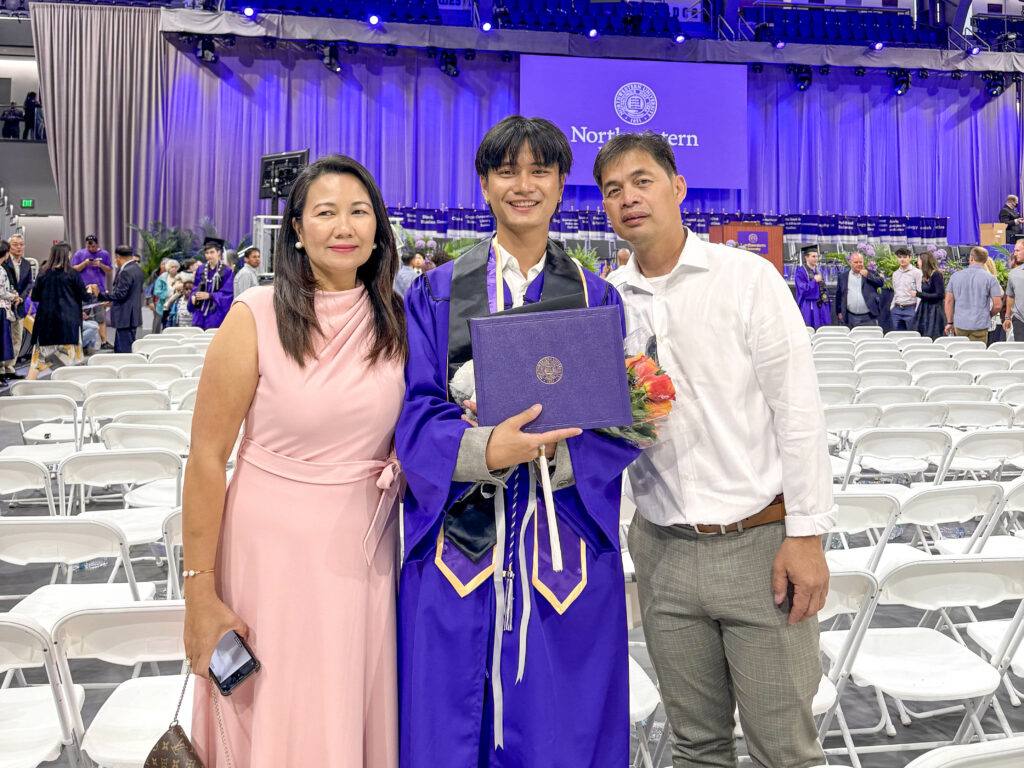
Being a child of Filipino immigrants, Nidea said that family is at the root of his culture which ultimately influenced his decision to stay in Chicago.
“It’s my family that keeps me grounded. So, I took them into consideration when it came to applying to college. I gave Northwestern a shot, knowing that it might not be my first choice, but to at least try on their behalf,” Nidea said.
After touring Northwestern’s campus (about 40 minutes from his home) right before the pandemic struck, Nidea “quickly fell in love with the campus.” Graduating four years later with a degree in computer science and a minor in Asian American studies, he found abundant opportunities and resources that enhanced his college experience.

Whether reviving Northwestern’s Filipino Students Association– Kaibigan– through vibrant folk dance workshops or turning three internships into a full-time consultancy after graduation, Nidea pushed himself socially and academically by remaining in Chicago.
Staying in the Midwest helped Nidea avoid sacrificing his close family connection for a robust, elite education. As a bonus, Nidea still got to be near the water with Lake Michigan.
Taylor Robinson
This winning compromise of family and opportunity also rings true for Taylor Robinson, 21 a senior at Washington University (WashU) in St. Louis.
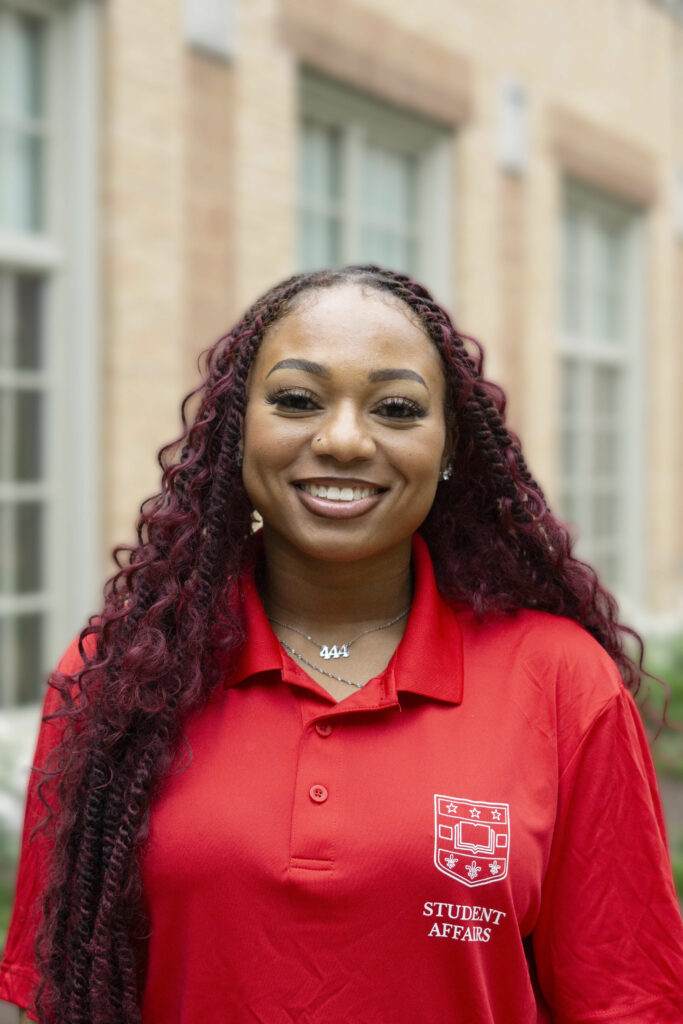
“Staying here kept me grounded. It kept my butt in check so that I wouldn’t derail,” Robinson said. The St. Louis native was aware of the 30 colleges in the city but never seriously considered WashU for her education. Robinson says her institution doesn’t usually have a large pool of native St. Louisans in its prestigious student body.
“Every institution has its ups and downs, and everybody has their critiques about everything, but so far, I would say it’s been a privilege,” Robinson said. “Given the fact of me being in this space, identifying as a Black, African American woman, we were historically excluded from places like this.”
While Midwest institutions still struggle to find their place in the national conversation about elite institutions, students of color face an additional challenge–underrepresentation inside their institutions. With 7% of WashU’s student body identifying as Black, Robinson knew connecting with members of her community would be crucial to her visibility and sense of belonging.
Joining various minority-focused affinity groups, the pre-med and anthropology major sought out communities that would foster her social and academic growth. By her junior year, she became the president of the WashU Association of Black Students (ABS), the overarching governing body for Black organizations on her campus.
Under her leadership, her campus courtyards—quietly pristine botanical gardens—were transformed into the “Welcome Black BBQ,” for a celebratory evening filled with laughter, food, and fellowship for incoming Black students.
Most notably, Robinson challenged her institution to actualize its slogan “In St. Louis, For St. Louis” by fostering inclusive connections between campus and underrepresented students in the city. With ABS, she helped create the WashU Reaches program.
“We sent out emails to counselors, for high schoolers to have a day at WashU, see what’s obtainable because I think that representation matters,” Robinson said.“Bring them in, tell them about WashU, the financial aid we offer, scholarship programs, have them talk to different faculty and staff, and give them a personalized campus tour.”
Bridging her many identities together, Robinson’s relationship with the city has inspired her various leadership roles to uplift minority communities.
Brook Elston
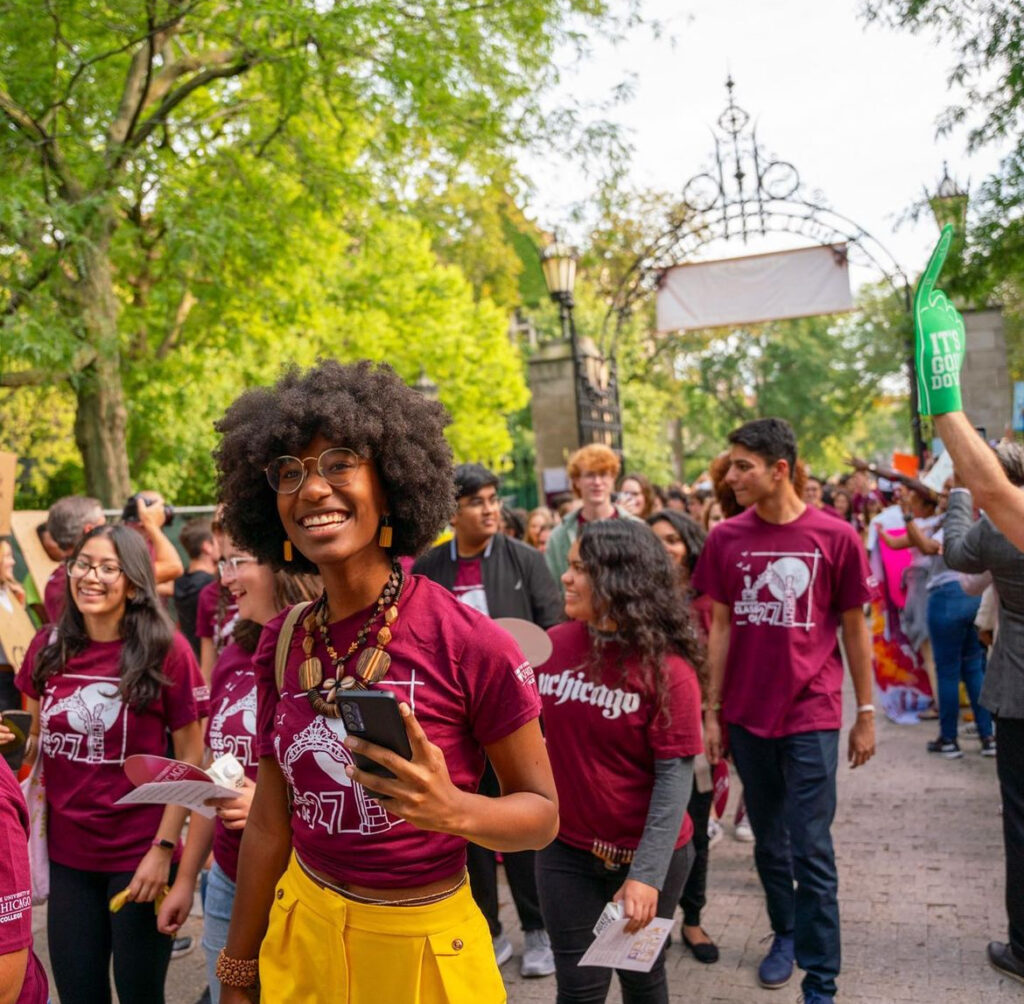
Rounding out with University of Chicago sophomore Brooke Elston, 19, choosing an institution surrounded by a lively, multicultural, and creative hub was just as important, if not more important, than the availability of their major.
Much like Robinson, Elston grew up in St. Louis and strived to maintain a connection to their Midwestern upbringing.
“I have family here in Chicago, so if something ever happens to me, I have an aunt or two that can come in and help right away. It gave my family peace of mind,” Elston said.
Elston attributes Chicago as the ideal locale for discovering themself, uncovering their passions, and exploring their independence.
Elston is one of only a few minority students in their rigorously immersive major: History, Philosophy, and Social Studies of Medicine, or HIPS. Despite the underrepresentation in their program, Elston actively applies their advantages as a ‘T20’ student to live and work in the surrounding community.
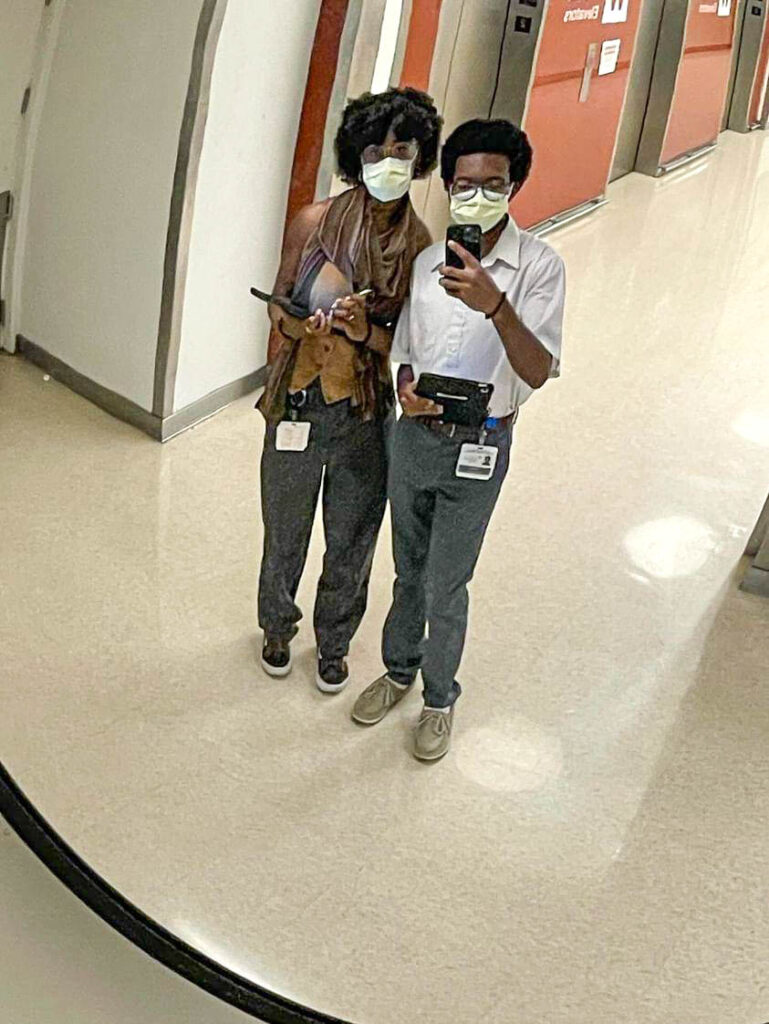
“Working at UChicago Hospital as a research assistant, I do quality care interviews for Black and brown patients on the South Side, making sure that they’re being treated well and equitably,” Elston said.
Believing just two years ago that attending UChicago was a “reach,” Elston’s focus on the city’s Black history and creativity fortified their decision to attend UChicago and explore the city as often as possible.
From fostering student-led communities through the Organization of Black Students or participating in the UChicago Palestinian Liberation encampment, Elston insists that their campus is a part of the city, not the other way around.
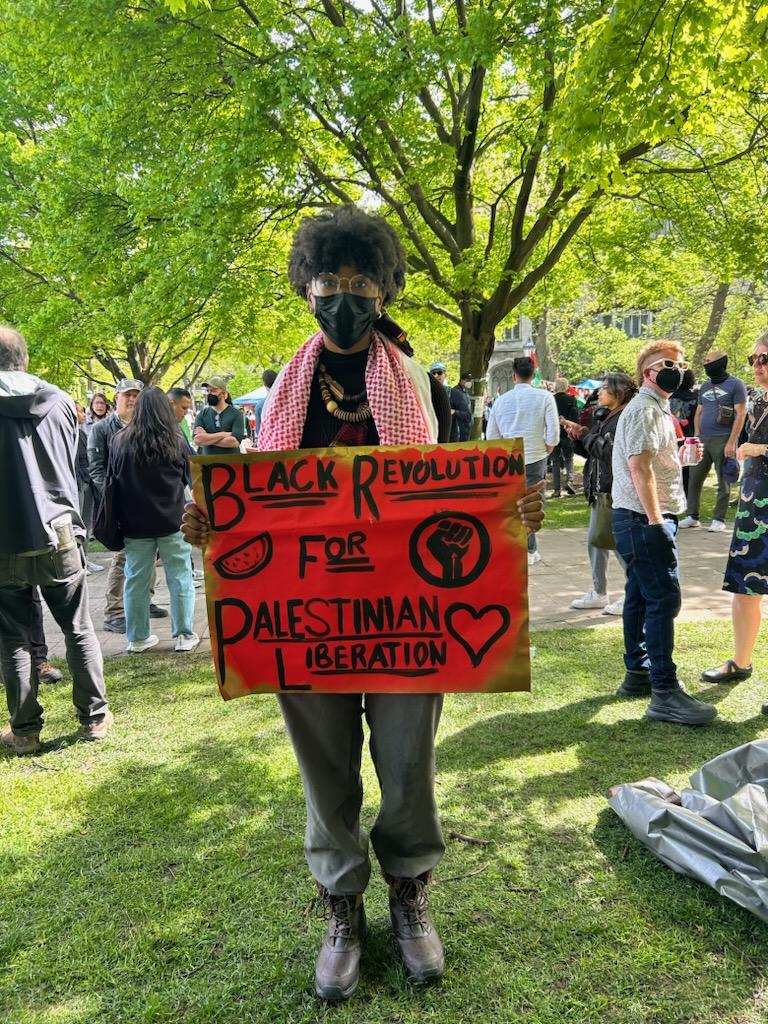
Exerting their independence, often traveling solo on the Amtrak between Chicago and St. Louis, Elston continues to seek the beauty in the region even when others overlook it.
“It feels like some sort of old-school movie where some young girl is traveling all the time,” Elson said. “I get to see small parts of rural Illinois and meet lots of people of color who use the train.”
Describing a sense of “fluidity” between Illinois and Missouri, illustrating the two states as siblings, Elston says the Midwest offers a cyclical view of the United States, both geographically and culturally.
“You get to see what’s happening to the west and to the east of you. A lot of the country is impacted by the Midwest because lots of people go through it all the time,” Elston said. “Because everyone has either come here to seek refuge or getaway, it just gives a central outlook.”
Undoubtedly, elite Midwestern students are no monolith. Nidea, Robinson, and Elston are a microcosm of thousands of students with diverse experiences. To that same effect, their relationships with their historically exclusive institutions are rightfully complex.
While academic achievements are still worthy of note, these students’ narratives bring the true nuance and dimension of Midwest Ivies to the national table.
“Give us some flowers, we’re here too. I feel like there is just that focus on the East Coast and West Coast,” Nidea said. “There is a whole subset of people that have so much to contribute, the Midwest is what connects the two.”