
Non-scientists across the Midwest are collecting and sharing data to better understand butterflies — and they don’t need any fancy lab equipment.
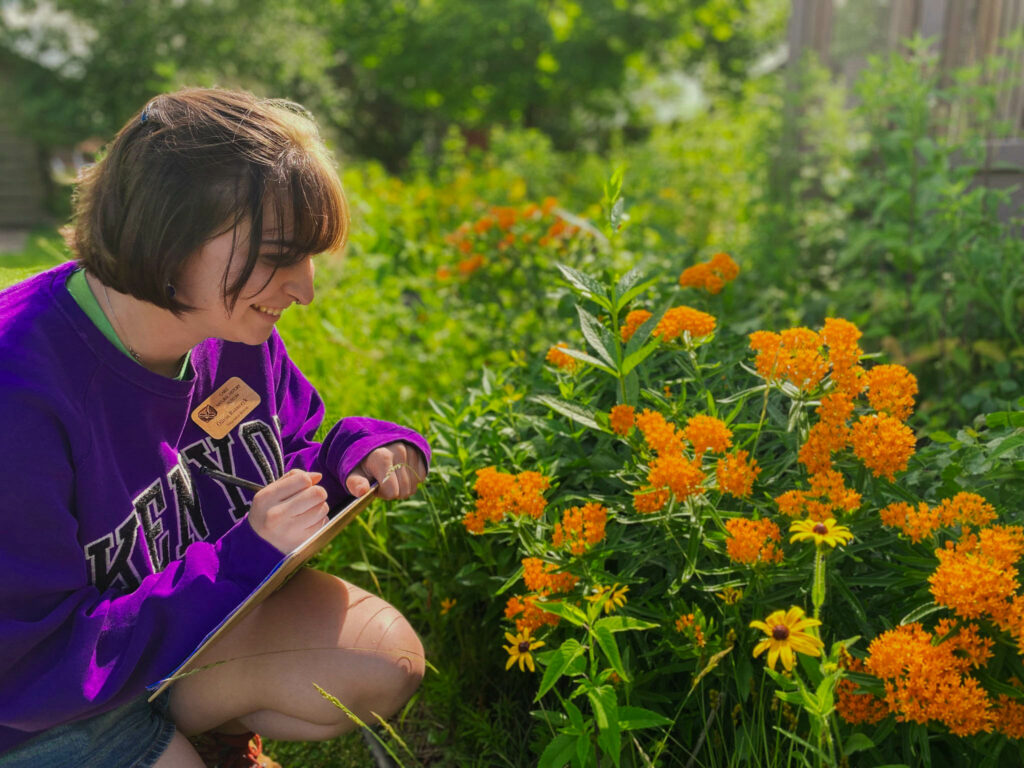
Every year between the beginning of April and the end of September, a woman makes rounds at Ada Hayden Heritage Park. She always scans the ground in front of her with intense focus, her gaze barely wandering from her footpath. Starting on the paved trail,
she loops around the park’s wetland complexes then returns on the westernmost paved trail.
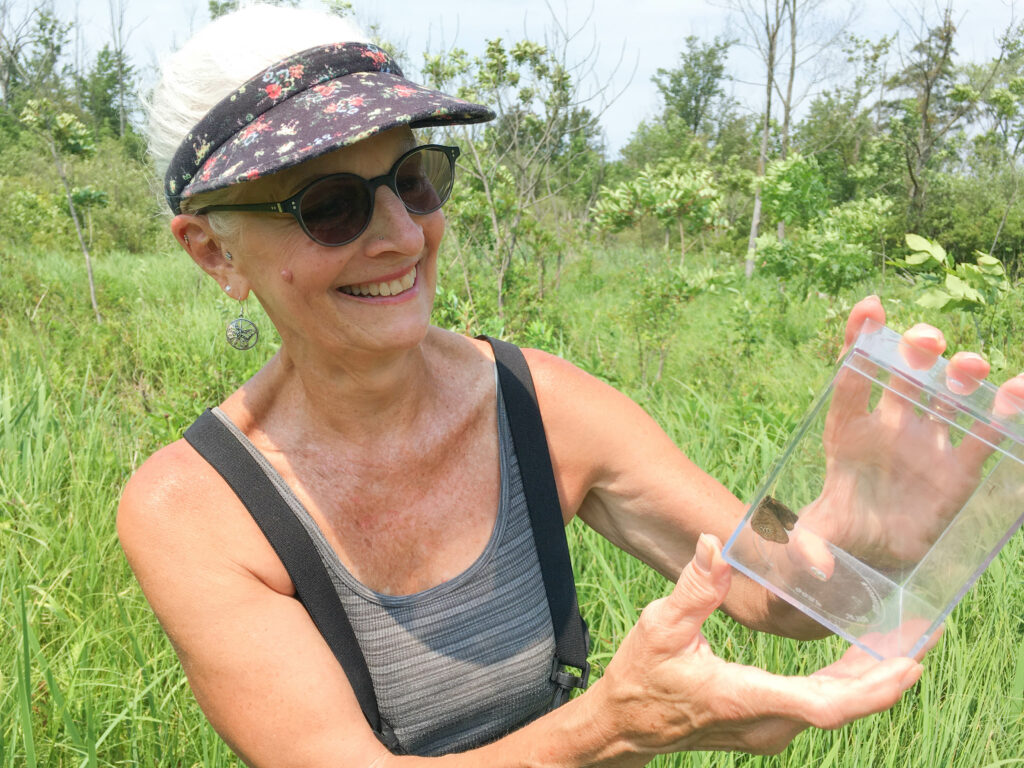
Unbeknownst to most passersby, Stephanie Fox is on a mission. She’s determined to catch a glimpse of some of the park’s smallest but flashiest visitors, some of whom nearly escape even her focused gaze. After each sighting, she scribbles their species on a sheet of paper.
Fox is a volunteer for the Iowa Butterfly Survey Network. Her meandering stroll and sweeping gaze are the hallmarks of the Pollard method, which has been used to survey butterfly populations for over a century.
The Pollard method revolutionized butterfly surveying — and not for its efficiency, accuracy, or any other scientific criteria. Rather, the Pollard method caught on because it allowed almost anyone to collect data about butterflies.
“A lot of my cohort group were into birding, and I was like, ‘I can never learn all these birds like they do, but there’s so much fewer butterflies to learn,’” Fox said. “I’m like, ‘Hey, that could be my niche, and I could be the butterfly lady.’”
Participants walk a specific route on a selected site, counting all the butterflies they see within 20 feet of each other. They complete this route at least six times during the butterfly season, which varies by climate.
100 years after the Pollard method’s debut, non-scientists still play a vital role in collecting data about butterflies. The emergence of numerous identification guides and smartphone apps has made butterfly surveying more accessible than ever.
Hardcore hobbyists and citizen scientists
Fox became acquainted with butterfly surveying 10 years ago while volunteering at the Reiman Gardens in Ames, Iowa, which also runs the Iowa Butterfly Survey Network (IBSN). She has surveyed the same site, Ada Hayden Heritage Park, since she started.
“I had never heard the term citizen scientist before, and I had always wished I had gone into the sciences,” Fox said.
Citizen scientists are members of the general public who volunteer to collect and analyze data related to the natural world, often with little to no professional training. Thanks to citizen scientists using the Pollard method, butterflies are more extensively documented than most insects.
“[The founders of the Pollard method] wanted something where the data could be collected by people who did not necessarily have formal training,” said Illinois Butterfly Monitoring Network Lead Douglas Taron.
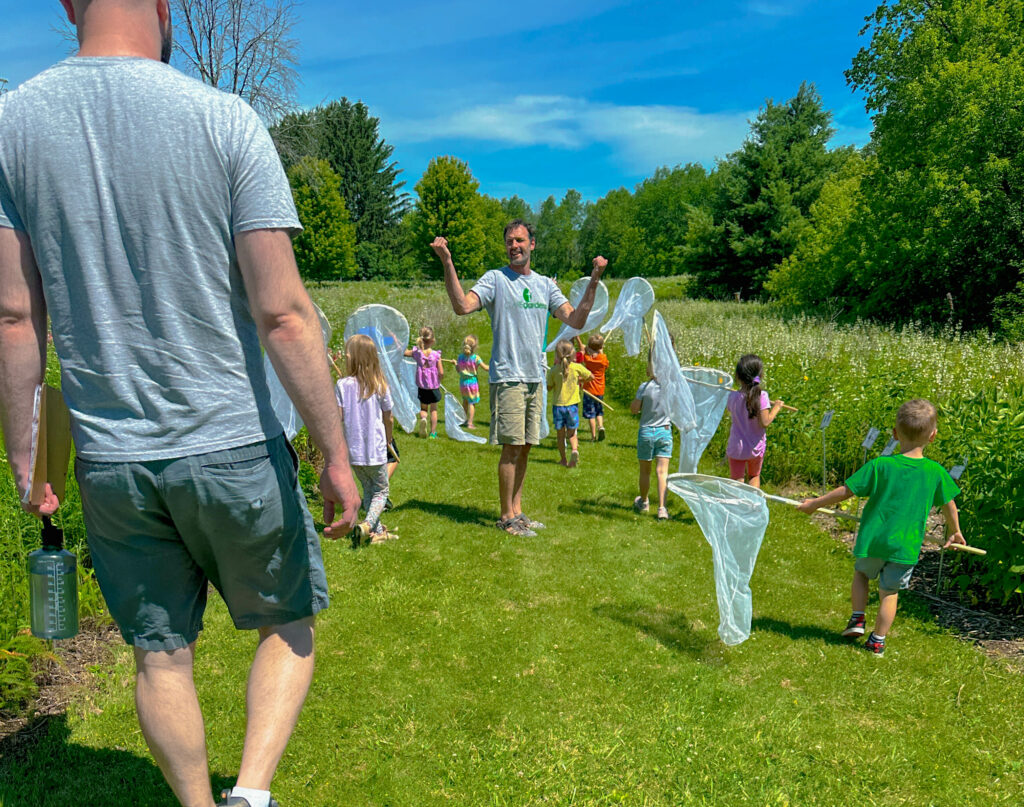
The Illinois butterfly dataset, for instance, houses over 20,000 surveys — a number Taron described as “enormous.”
“Hardcore hobbyists may spend more time in the field surveying than a paid 40-hour-a-week field tech,” said Nathan Brockman, the coordinator of the IBSN and Director of Entomology at Reiman Gardens. “You can’t really ignore the power of citizen science data because there’s just no way we’ll ever be able to get that amount of data without [citizen science],”
More and more butterfly studies are using citizen science as their base. Due to the high year-to-year variation in butterfly populations, studies often require large quantities of data — especially data collected over long periods of time — to draw conclusions about population trends.
Graduate student researchers are often limited in their ability to collect large amounts of data or long-term data. Unlike graduate students, citizen scientists often reside in an area for longer than four years, making them the perfect observers.
“It’s very easy, comparatively, to recruit people to study [butterflies],” Taron said. “I think the fact that a lot of them are very beautiful doesn’t hurt.”
Butterflies also have size, color, and speed in their favor, so they don’t require specialized equipment to identify. Plus they’re accessible, frequently making stops at Midwesterners’ home gardens and local parks.
“We’ve had people monitoring for over 25 years here in the Illinois program,” Taron said.
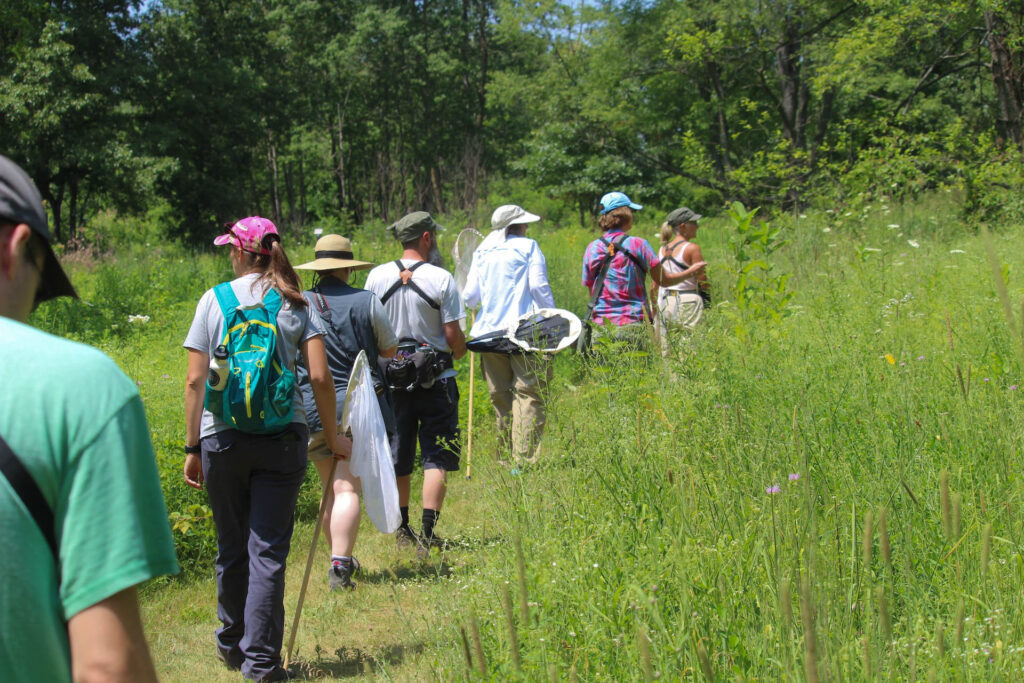
Kathryn Sullivan has also witnessed the popularity of butterflies as a survey subject first-hand. As a graduate student researcher at the Milwaukee Public Museum, Sullivan has spearheaded the Wisconsin Butterfly Monitoring Program’s citizen science efforts through the Wisconsin Statewide Community Science Project. The project doesn’t see the same level of engagement with its non-butterfly insect surveys, which, in turn, affects the volume of scientific literature devoted to these species.
For butterflies, though, citizen science not only contributes to academia — it keeps it afloat.
“There’s no money these days for a lot of hardcore professional field biologists to be doing long-term studies on lots of sites,” Brockman said. “Citizen scientists’ work fills in those holes.”
Surveying goes digital
Thanks to technology, the days of scientists poring over handwritten scribbles are over.
The internet allows researchers and citizen scientists to share butterfly data, and apps further simplify this collaborative process.
Butterflies and Moths of North America, a centralized website used by researchers across the world, “had a real prevalence” at one point, Brockman said, but fell out of favor when apps like iNaturalist and eButterfly came around. These apps further encouraged the rise of citizen-collected butterfly data.
“The IBSN network is extremely easy to use,” Fox said. “I take my surveys on paper and then use the apps when I get back home.”
Unlike handwritten notes, however, apps and websites are prone to instability and turnover. Researchers must select their database carefully.
“You don’t want to put all your energy into some database that’s just going to collapse on itself in a few years,” Sullivan said. “Not to say that iNaturalist is immune from that, but when you have a lot of backing going into it and now that they’re at hundreds of millions of records, it’s a better way for us to ensure that our data is going to have a longer lifespan.”
The Wisconsin Butterfly Survey Network has opted for iNaturalist due to its popularity. Though Sullivan regrets that it doesn’t allow users to describe their methodology, which explains whether surveyors use the Pollard method or other butterfly surveying techniques, she’s happy to have the extra data.
“We just try to make things as easy as possible for people with the most flexibility,” Sullivan said. “I say, ‘If you put your data on the internet, we’ll find it somehow, some way.’”
Ronda Spink, who leads the Michigan Butterfly Network, trains citizen scientists on the Pollard method and butterfly identification before they enter the field. She said easy butterfly identification and data collection help attract more citizen scientists.
Abundant, easily accessible data also attracts a different audience: butterfly collectors. Some collectors browse apps like iNaturalist, looking for a “perfect specimen” of a specific rare species, which can harm these butterflies’ populations. Collectors also sometimes seek endangered butterflies, the sale of which is illegal.
“If it’s just one butterfly you saw that hasn’t been seen since 2016, for instance, you don’t want to tell somebody where you saw it,” Spink said. “Some collectors out there will just go right out and try to find that butterfly and collect it.”
Monarch fever — and the future
One particular butterfly species receives special attention from the general public: the monarch. Monarchs are a classroom favorite, making them many people’s introductions into the butterfly world.
It doesn’t hurt that Monarchs are large, flashy, relatively easy to identify (though other butterflies are often confused for monarchs), and appear in the Midwest in abundance during their annual migration. Like interest in butterflies as a whole, recognition — both natural and classroom-driven — drives more recognition.
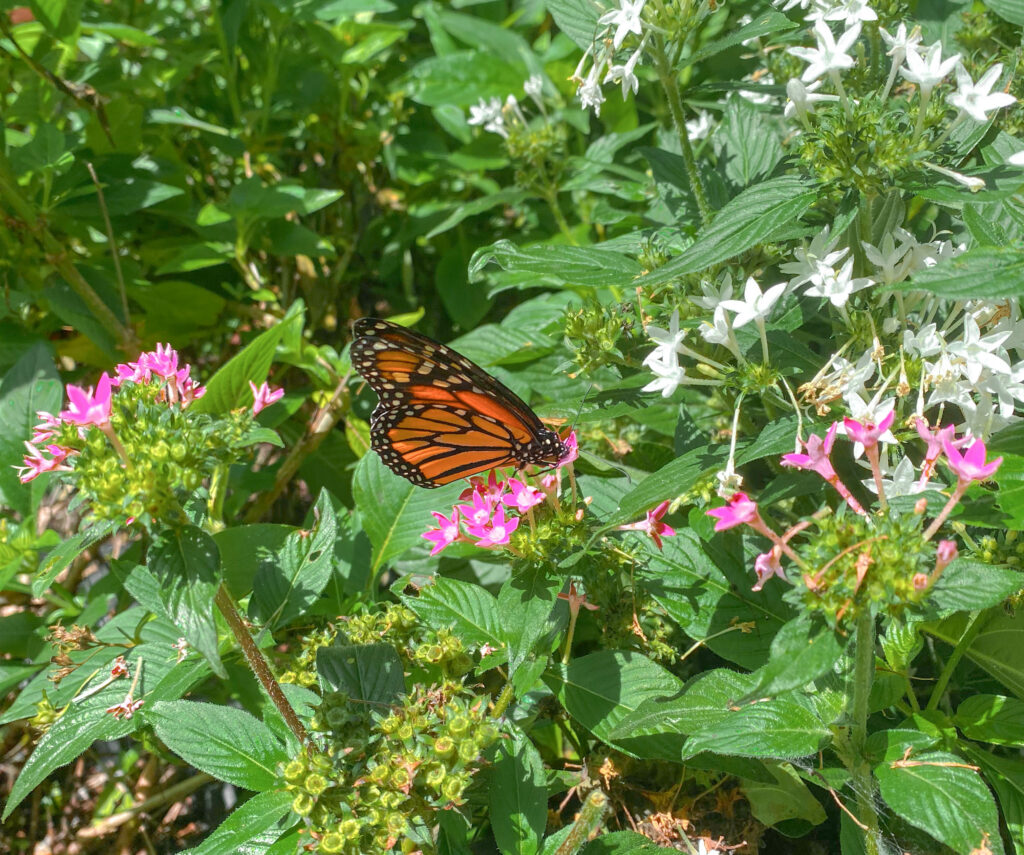
Monarchs receive outsized attention, but about 150 butterfly species call the Midwest home. Brockman is often dubbed a “monarch hater,” but he insists he wants to look out for all butterfly species. Casual observers often base their assumptions about the well-being of butterflies solely on the number of Monarchs they see in a given year — but this is often inaccurate.
Many factors influence the populations of individual butterfly species, including weather, land use, barometric pressure, and pesticide usage. Each affects individual species differently.
“The only way we can truly get a picture of what’s going on in our state is if we are looking all the time, and it’s best if we’re looking at a lot of different species,” Brockman said. “Certain years, some species are doing great, while other species are not.”
If he had to choose one butterfly family to raise awareness for, Brockman would choose the skippers. Despite no obvious habitat loss, these inconspicuous species are disappearing from the Iowa landscape.
“There’s a bunch of different species in the skipper families that have drastically declined, and we don’t know why. They’re just vanishing,” Brockman said.
Though species’ populations ebb and flow, data suggests that fewer individual butterflies call the Midwest home.
“Butterflies have declined over the last 35 years, particularly over the last 20 to 25 years. We can be fairly confident in saying that,” Taron said.
Butterflies’ decline is part of a broader decrease in insect populations worldwide. According to a meta-analysis by the University of California, Riverside, insect populations have declined by about 45% in the last 40 years.
“Insects do a lot of things for our world. They’re decomposers. They are the base of the food web. They are pollinators,” Brockman said. “I always like to say, if all insects disappeared off the face of the earth, we would not be far behind.”
Like with butterflies, increasing awareness of insect decline starts with noticing. Then, education. Next, sharing that information with others. Thus begins a cycle of interest and recognition.
“I’ll point something out, and they’ll say, ‘How in the world did you see that?’ Well, it’s because I’m looking,” Spink said. “And if you get people out in nature and get them to start looking, then they can’t help, they just continue to look.”
A look eighteen feet to the left, another eighteen feet to the right: this is the basis of the Pollard method of butterfly surveying so many researchers rely on. The more citizen scientists are involved in tracking data, the more comprehensively researchers can understand these vital insects.
“We want people to be able to share data,” Sullivan said. “So that we have an all-hands-on-deck approach.”