
Adaptive solutions in agriculture technology offer new opportunities and independence to all farmers.
As Program Director of the Easterseals Rural Solutions and Assistive Technology Center, Tracy Keninger has worked with hundreds of Iowa farmers who have experienced a life-changing disability. Easterseals Iowa is a nonprofit organization that helps farmers with disabilities or special needs and their families. The organization partners with farmers with limb differences, who use wheelchairs, who are deaf, and more to help them navigate their return to farming.
Before Easterseals Iowa was created in 1926, many medical providers would tell farmers with disabilities to “quit and move to town,” Keninger said. Easterseals aims to provide hope to those farmers who want to continue doing what they love. Keninger said that when they are dealing with farmers who have a sudden-onset disability, like one obtained in an accident, they routinely ask Easterseals to help them return to what they love— farming— something they didn’t believe was possible.
“It’s not continuing a job. It’s continuing a way of life, and not just a way of life for them but for their entire family unit,” Keninger said.
Each farmer has unique needs and utilizes Easterseals Iowa’s services differently. The organization adapts to each client and listens to what best suits their needs when making recommendations and connecting them with necessary accommodations.
Keninger said there is no standard practice at EasterSeals Iowa. Iowa’s community is becoming more diverse, so the organization helps everybody, from small-time blueberry and honey bee farmers to farmers who grow 3000+ acres of soybeans and corn. They also have to account for the wide variety of disabilities they serve.
“What’s most important is that we assist a farmer and their family wherever they need help,” Keninger said. “It might be accessing the equipment, getting on and off a tractor. It might be operating their computer, whatever it may be, that allows them to be fully engaged in the operation and for them to do so safely.” One of the best parts of Keninger’s job is meeting with each farmer and establishing trust and rapport with them. Keninger and her team travel to each farm to see the operation’s layout first-hand.
During their meetings, Easterseals Iowa asks the farmers where they need help to feel safer on the job and what tasks they wish to begin completing independently but currently require assistance with.
“For many, the onset of this disability has been life-changing. They thought it was something that happened to other people but not to them,” Keninger said. “And so really, how we gear those unique services is meeting with them, meeting at their farm, and working with them side by side to identify the obstacles for them to continue to farm. It’s about establishing a relationship and having them guide us and direct us on how we can be of greatest impact to them.”
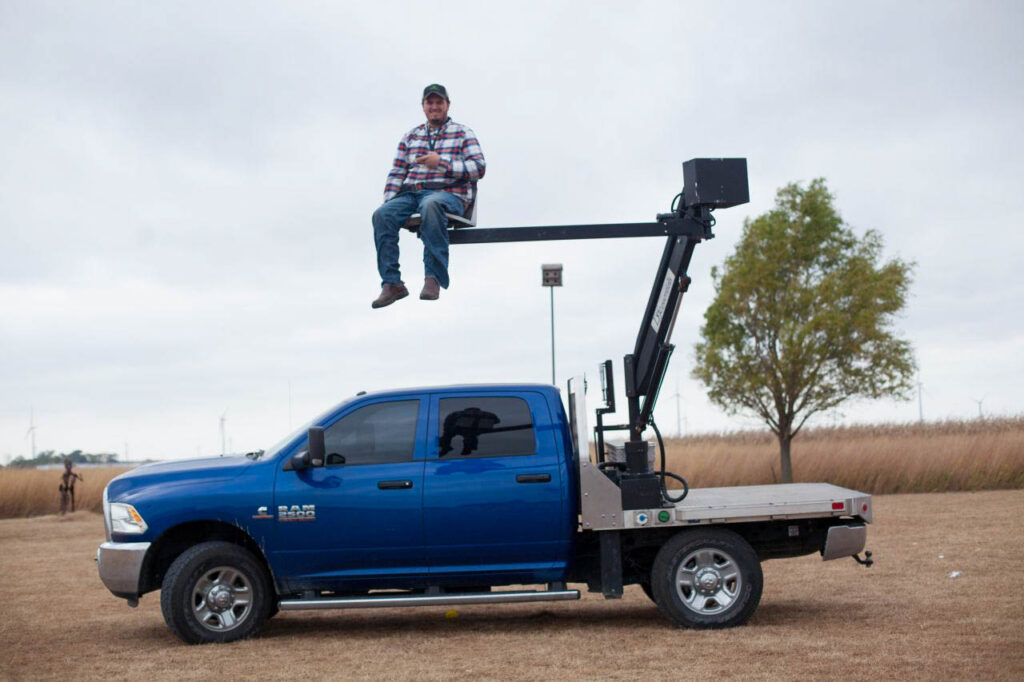
Technological advancements have done wonders in helping farmers with disabilities. Organizations like LifeLyfts, AgriAbility, and Easterseals Iowa work together to make agriculture more accessible. Additionally, accessible tools are now more readily available. Lowered steps, wider steps, and additional grab bars for tractors are also now commercially available.
Companies like LifeLyfts by Life Essentials make lifts for the mobility impaired. Their agricultural product line includes mobility aids like pilot lifts, agriculture hand controls, and platform lifts, all tools that make accessing and using farming equipment easier.
Karen Evans, the administrative lead at LifeLyfts, said they see many mobility impairments from agricultural injuries or natural deterioration due to the farming lifestyle. After years of jumping out of combines, many farmers’ knees and hips “aren’t working as they did when they were 30,” she said. LifeLyfts strives to make work easier for farmers’ bodies who have mobility issues.
LifeLyfts was created in collaboration with Purdue University and AgriAbility Indiana, a national agriculture accessibility organization. When a farmer with a spinal cord injury approached Purdue University requesting assistive technology, the team worked together and invented the first life lift mounted on a tractor, according to Evans.
The company has expanded its product line and now serves all 50 states. Many of its products are also customizable in various ways. For example, it has three different sizes of lifts that mount on tractors, and its lifts range from standing platforms for those who can still stand but lack the knee and/or hip strength to climb the traditional tractor ladders to AG Lifts for wheelchair users.
Evans said the organization’s mission is to get farmers to access their equipment safely, regardless of their mobility impairment, to ensure they can keep doing what they love after an injury or accident leaves them hopeless.
“They think they can’t farm anymore, and to see the face of that individual when all of a sudden they realize they can still support their family — they can still work, they can still do this — there isn’t a better feeling,” Evans said.
Evans said LifeLyfts also wants to provide technical assistance for all areas of the farm, which is why they build truck lifts, running board lifts, RV lifts, and portable lifts.
Evans had heard many stories about farmers with mobility issues using unsafe ways to access their equipment before they had access to LifeLyft’s equipment.
For example, their brother might get on a forklift and lift them on a pallet, and then they crawl onto the equipment and get on the seat. Evans said this could cause further injury.
“The result is when the people come and pick up their trucks, we do the truck lift installations here, and the relief it gives the family members is that they don’t have to worry quite so much about their loved one with mobility issues getting onto a piece of equipment because they can now do it very safely,” Evans said.
Expanding on this spirit of collaboration, Ed Sheldon, outreach and engagement coordinator for AgriAbility Indiana, said the organization routinely connects with providers like LifeLyfts and connects farmers with their statewide organization to help them access all the available resources.
“We all share the same goal, and that is to help farmers improve their lives, whether it’s through connecting them with appropriate assistive technology to help them do their job or providing education, resources, peer support, whatever it takes to give folks hope to continue on,” Sheldon said.
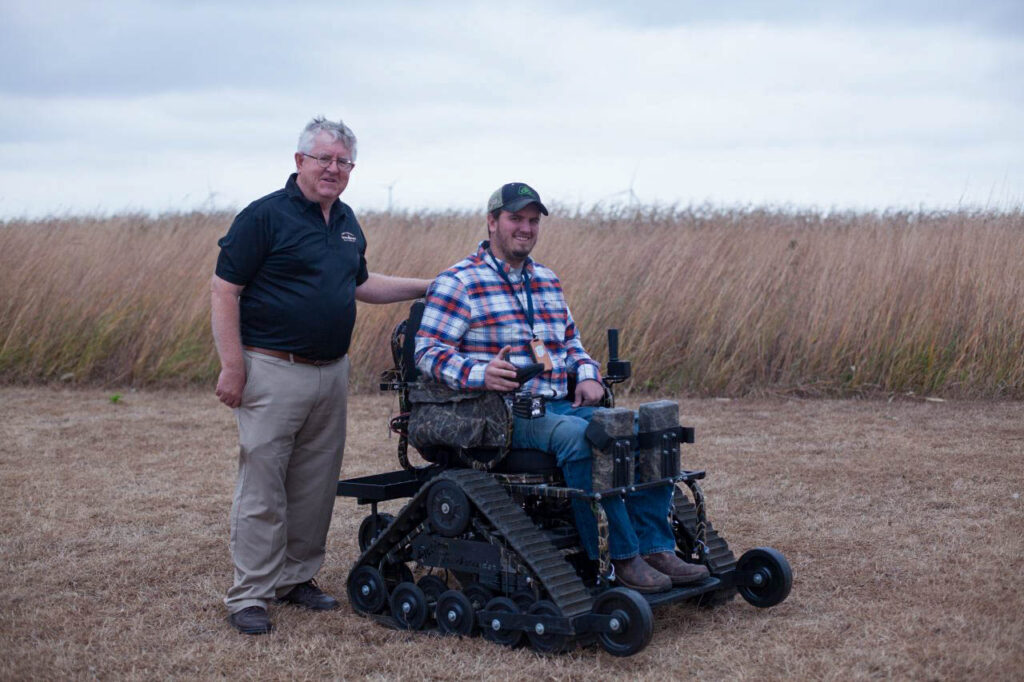
Easterseals Iowa and AgriAbility Indiana collaborate beyond equipment by connecting farmers with similar experiences. Sheldon said this type of connection provides many farmers with necessary community support.
“I think the most important thing we do is just provide that spark and peer-to-peer support,” Sheldon said. “We do a lot of connecting folks with other individuals who have been through the same thing.”
Keninger said that this is sometimes where Easterseals gets its most relevant and helpful information. Nobody knows more than the person experiencing the disability, she said. Her team members can encourage and give them hope, but they will listen to someone with lived experience and prioritize that information.
“Sometimes we’re connecting people more for the psychological adjustment to a disability,” Keninger said.