
A behind-the-scenes look at the precision and craftsmanship of creating road signs.
In the college town of Ames, Iowa, visitors will find a charming brick building responsible for creating almost every sign on the Iowa Department of Transportation’s maintained roadways. This sign shop creates parking, traffic, information, and even national park signs at the request of the Department of Transportation.
While many do not think about road sign development, it plays an essential role in keeping roadways accessible and safe. Urban Plains spoke with Cory Anderson, the public service supervisor at the Office of Traffic and Safety Sign Shop, to learn more about the in-depth process of printing signs and how a mid-sized community plays a large role in the safety of Iowa’s roadways.
Blueprints
The creation of a sign begins in an office. Each sign’s blueprint is designed on a computer using simple layout software to map the sign’s size, shape, and lettering.
“We get blueprints down from Traffic and Safety… it tells us what size the letters are and what font, so it’s a Highway Gothic 2000c font,” Anderson said.
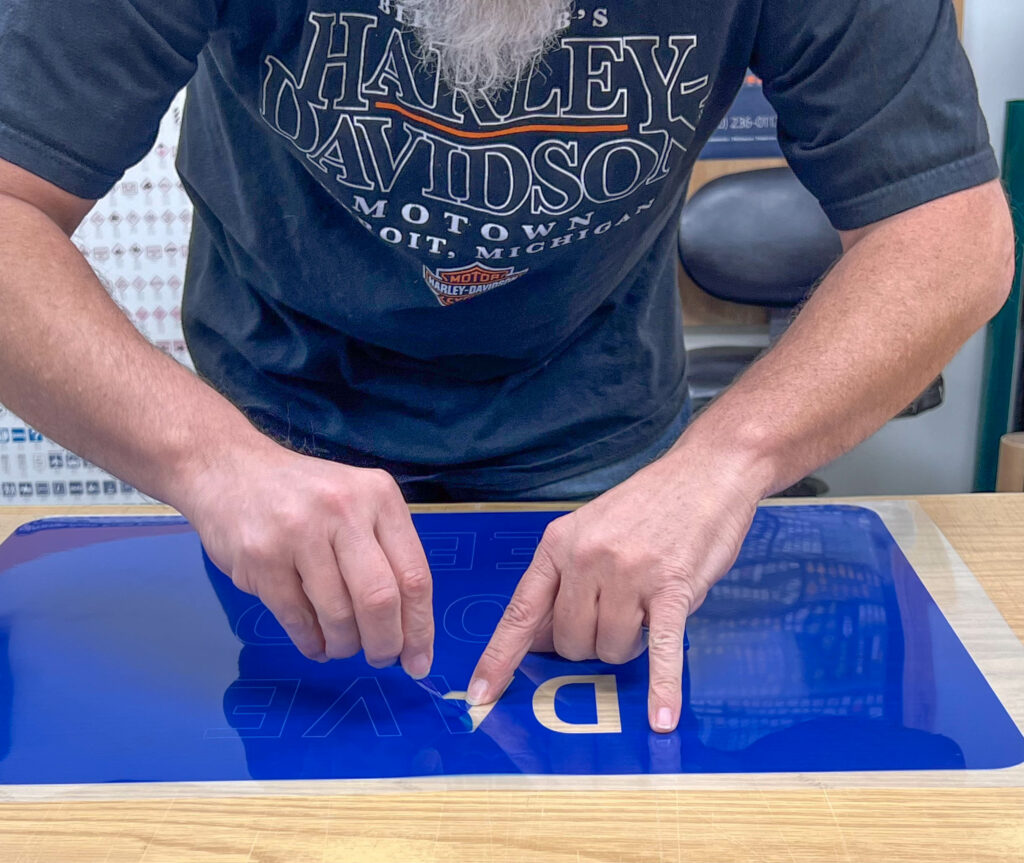
The blueprints are sent from the computer directly to “a Cricut on steroids,” Anderson said. This machine, manufactured in Switzerland for $130,000, cuts the sign’s information onto a piece of vinyl using the specs from the blueprint. Once the machine is finished cutting, the extra pieces of vinyl are peeled away, leaving only the wording for the sign.
Reflectivity
Each piece of pre-cut metal is called a blank. Before the vinyl lettering can be transferred onto the sign, it must be coated in a reflective wrapping so drivers can see the sign late at night. The reflective coating is made from glass beads and micro prisms, resulting in a lot of scrapes, and cuts throughout the process.
“We go through a lot of Band-Aids here,” Anderson said.
Vinyl Transfer
After the vinyl lettering has been pre-cut and the aluminum board has been coated in reflective material, the lettering is transferred onto the board using transfer tape. After lining the vinyl stencil up with the aluminum sign, the entire sign is covered in transfer tape. The tape is smoothed down and then peeled back to reveal a fresh sign.
Mass Production

Signs that are made frequently don’t require a special blueprint, so they go through a slightly different assembly process — the sign shop has almost 100 pre-made screens. Stop signs, speed limit signs, yield signs, and other common highway signs have screens so that ink can be transferred onto aluminum backing quickly.
After these signs are screen printed, they are placed onto large metal racks and rolled under a fan to dry.
Distribution
The cost of sign production varies depending on the size and shape of the sign. Equipment cost, labor cost, vinyl, and aluminum sheeting are all factors in sign production. Signs are only available for purchase within DOT jurisdictions, making it difficult to pinpoint the exact totals.
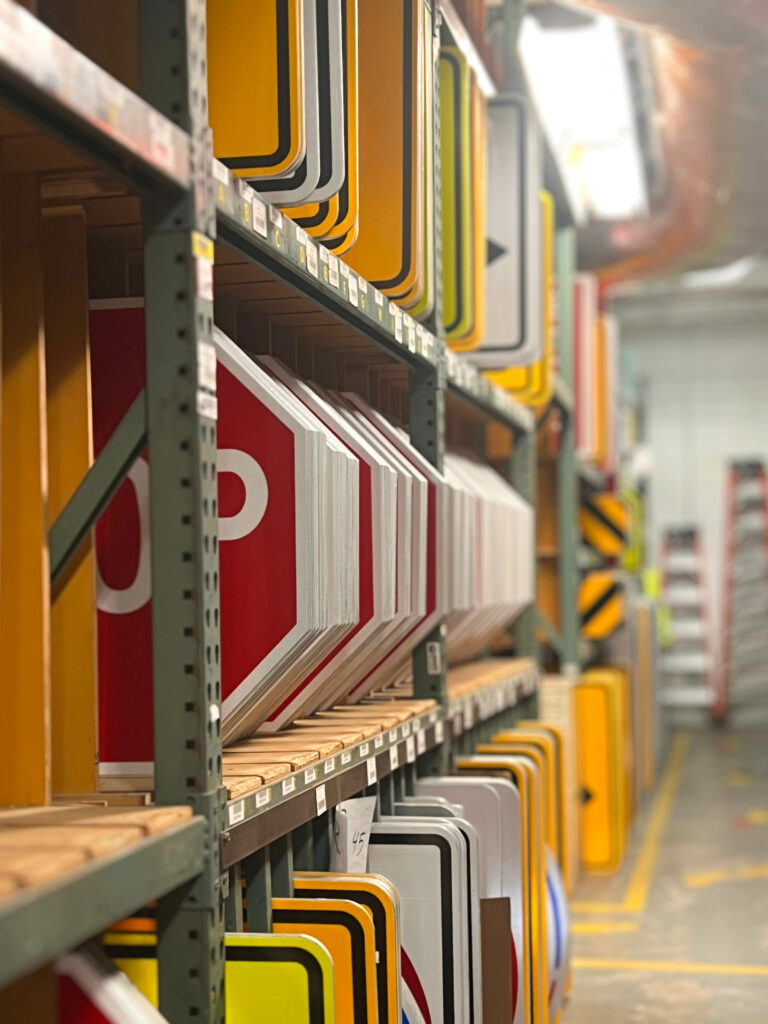
After the signs are made, they are moved to a different part of the building for storage. Every type of sign has an associated barcode, which a digital scanner can scan. This system allows the shop to locate and categorize each sign easily.
“A lot of our signs, they’re called critical signs, that we have to have in stock at all times,” Anderson said. “Those are your big safety signs, like your do not enter signs, one ways, stop signs, and no passing signs.”
The Department of Transportation Sign Shop supplies road signs for the state of Iowa, counties, and public universities. To track the distribution, the state is divided into six districts. Signs are distributed bi-weekly. The Iowa DOT warehouse picks up all signs produced in the sign shop.
“If a town orders from us, DOT will drop their signs off at the nearest DOT garage, and then the city goes to pick them up,” Anderson said.
The process of manufacturing a street sign is similar in sign shops around the country, but the Ames DOT sign shop plays an essential role in furthering the state’s infrastructure. Without this small sign shop in Iowa, hundreds of roadways across the state would remain unmarked.
“There’s a lot more that goes into it than people realize,” Anderson said.