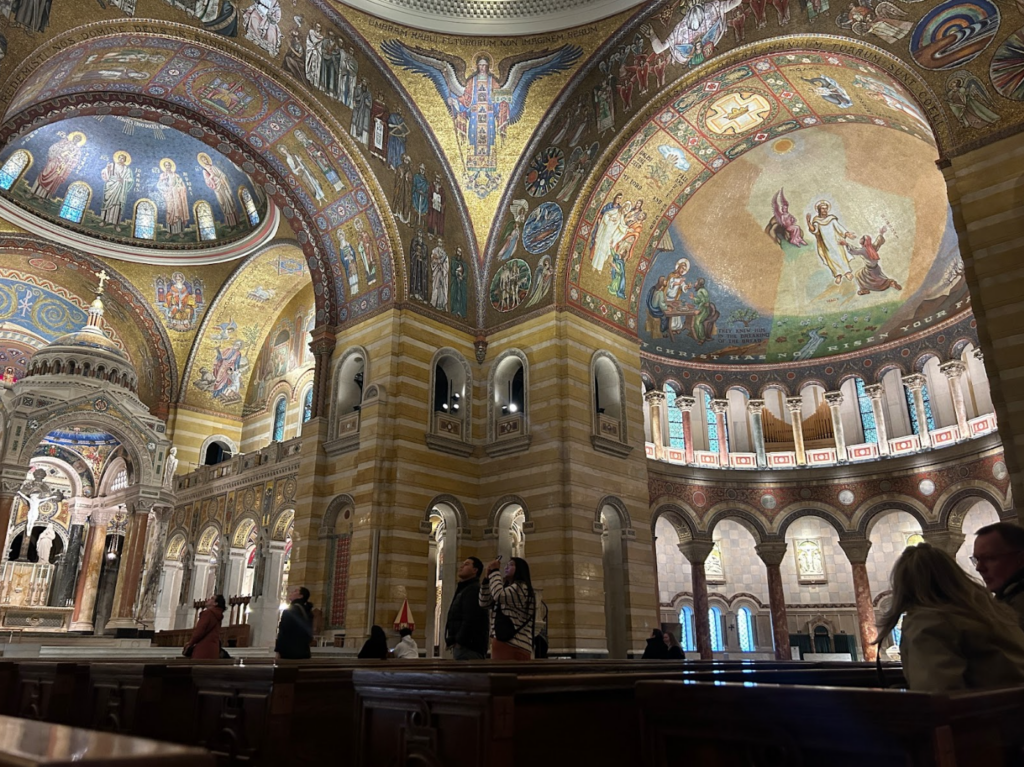
How a historic cathedral emboldens visual complexity in the heartland.
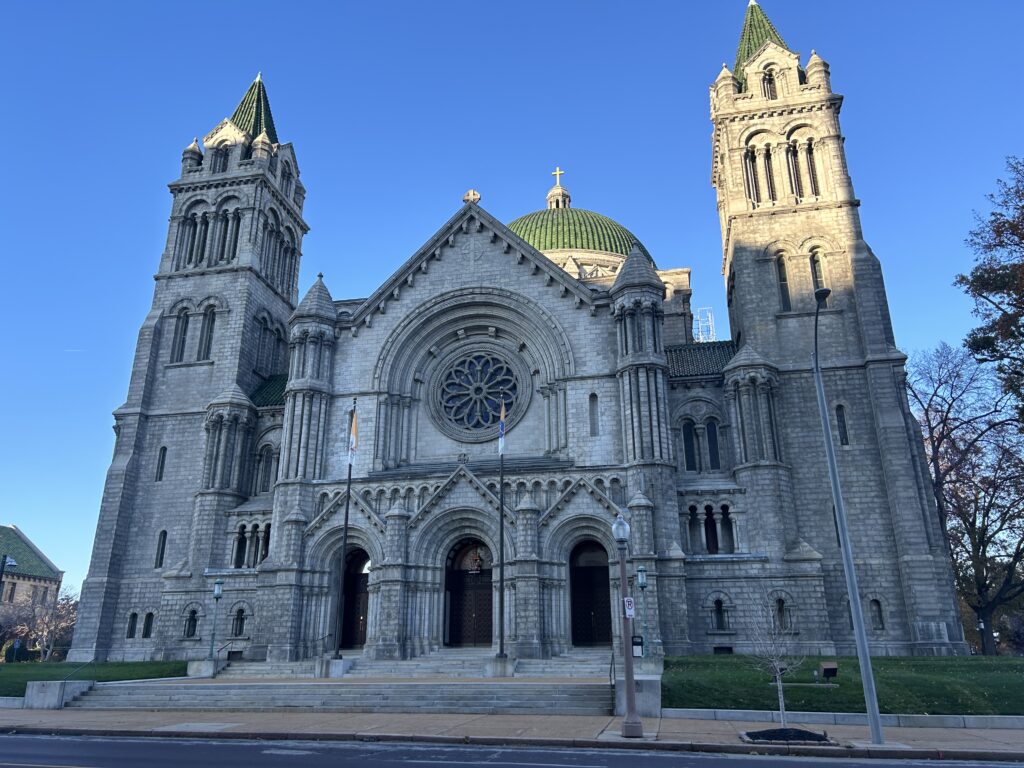
The decline of Christianity in the United States has continued well into the emerging decade. In the Midwestern metropolitan center of St. Louis, Missouri — named after the Catholic monarch King Louis IX of France— the religious population is similarly following suit. According to the St. Louis Archdiocese, the Roman Catholic population in St. Louis fell below 500,000 in 2021, its lowest since the 1960s.
Mitigating the declining population, the diocese began closing and merging parishes throughout the metropolitan area in 2023.
Catholic churches in St. Louis continue to close, merge, and reorganize. Still, the community maintains its identity and connection to history — including one of the largest collections of mosaics in the world.
In this photo essay, Urban Plains takes a glimpse into the epicenter of the city’s archdiocese. Like the Midwest, the Cathedral Basilica of St. Louis’ imagery delights in a similar dissonance between architectural awe and artistic grandeur with its implications for wealth inequality in the region amid cultural change.
The first iteration of the city’s Catholic center, the Basilica of St. Louis, King of France, is located on the Mississippi Riverfront. It holds the historic title of the “oldest cathedral west of the Mississippi.” Decades after erecting it in 1831, the Archdiocese set its sights on a new central edifice.
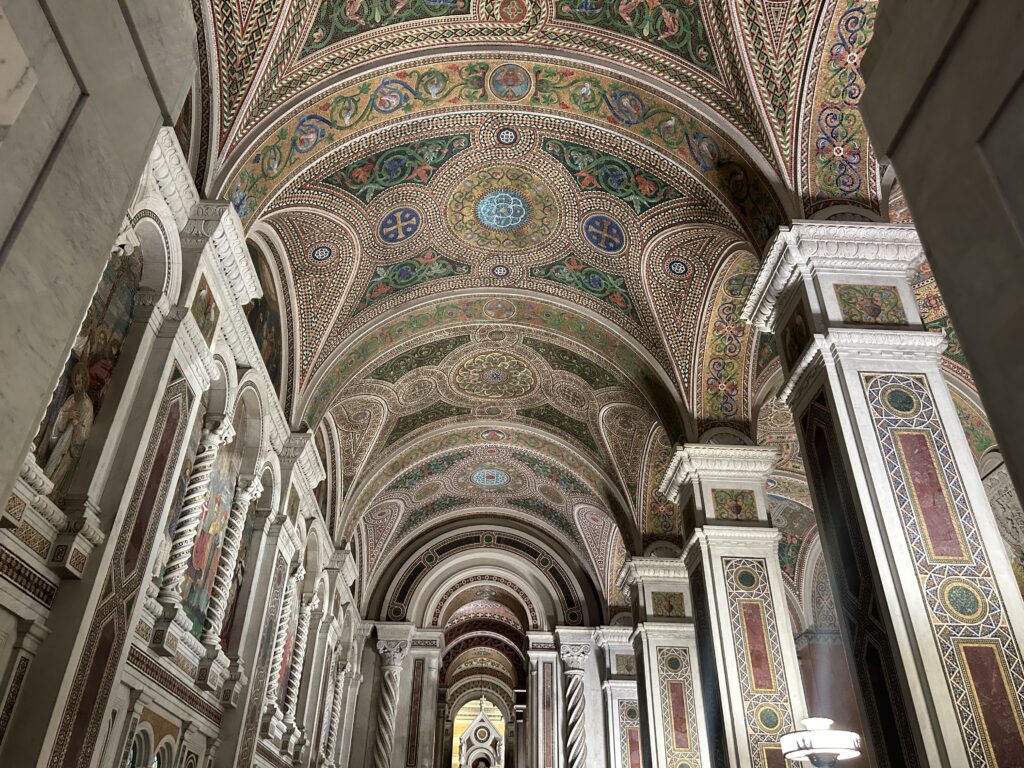
Completed in 1914, the present-day Cathedral is in the historic Central West End neighborhood. The Basilica houses three dome rotundas and nearly 42 million Byzantine-style mosaic pieces or tesserae — covering around 83,000 square feet — comparable to the mosaics of Russia’s Church of Spilled Blood and the Vatican.
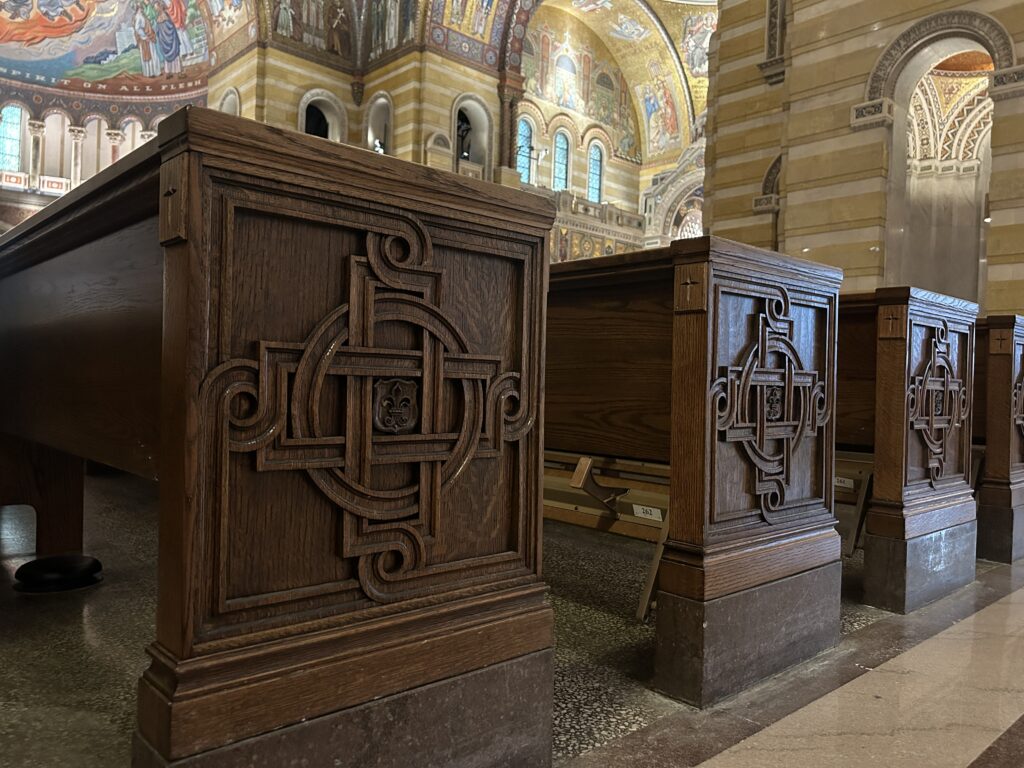
Photo credits: Candace Carr.
The church’s empty pews and spacious vestibule do not always reflect the number of parishioners served. As the city’s centralized church, the Basilica does not have a set number of patrons each week. Hosting mass three times on weekdays and daily staff-guided or self-guided tours, these engraved walnut pews seat hundreds weekly for those stopping in to pray, waiting to speak with clergy, or simply marveling at the artistry.
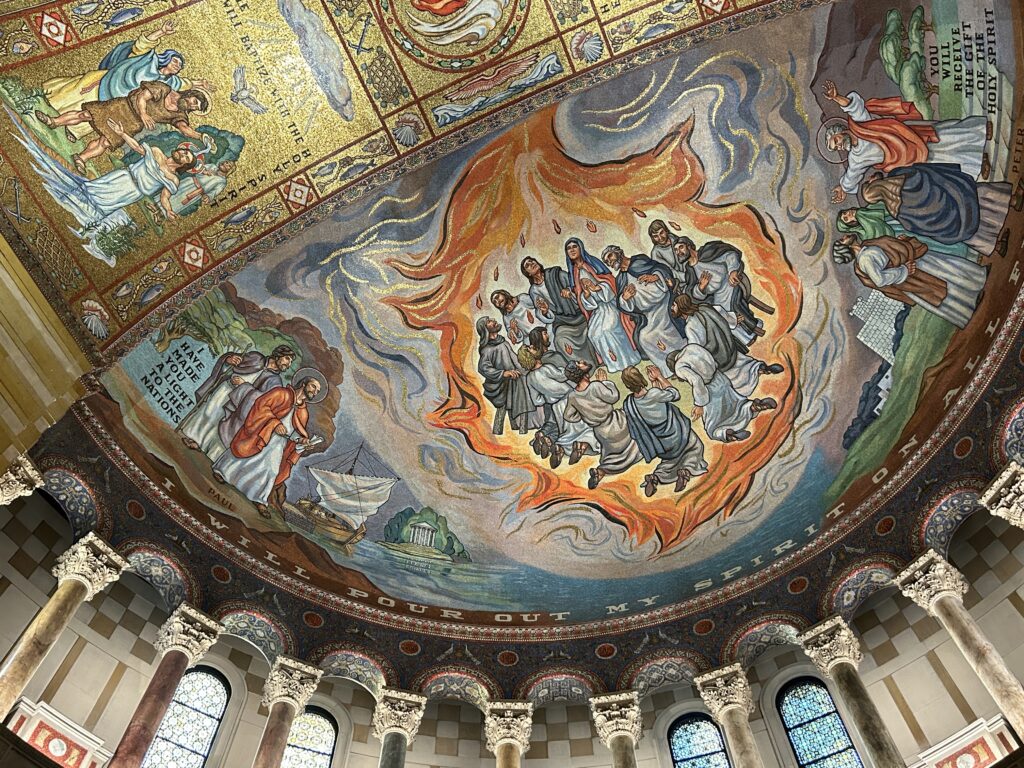
The mosaic above serves as the backdrop as the Basilica hosts papal visits, weddings, choral concerts, graduations, and funerals for select parishioners, military personnel, and other fallen first responders.
Teresa Everson, a theology teacher at Rosati-Kain High School, the Archdiocesan next-door neighbor to the Basilica, attends her fair share of graduation ceremonies there.
Everson utilizes the Basilica in tandem with her classroom to help students analyze the imagery in the space and reflect two to three times per semester.
“The Cathedral is the history of salvation re-presented, made present again in visual art that is not only amazingly beautiful but also practically very helpful,” Everson said.
In teaching courses on Roman Catholic history, world religions, and social justice, the Basilica becomes not merely a museum but a tool to understand how faith shifts within an ever-evolving society.
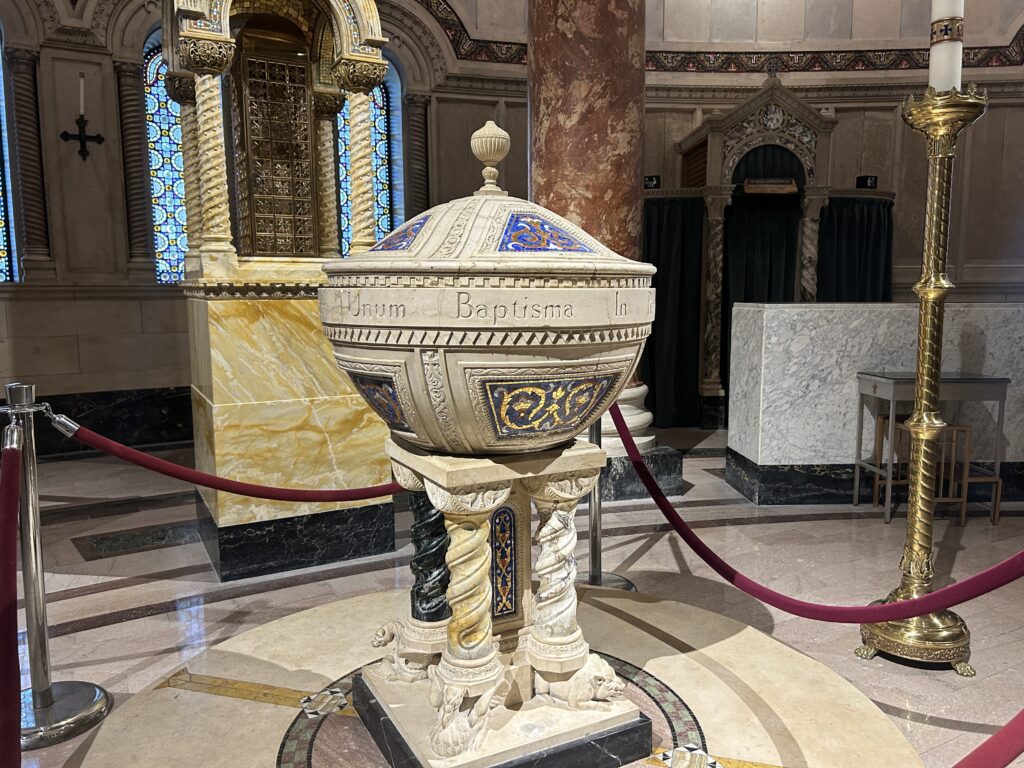
Photo credits: Candace Carr.
In Catholic theology, seven Sacraments or rites of passage are practiced throughout a parishioner’s life. Baptism, one of the sacraments of initiation is celebrated shortly after birth.
“Symbols speak when words fail us. So when the baptismal font in the Cathedral is sitting atop symbols of chaos: a dragon, a wild boar, a serpent, and the weight of the waters of baptism in the font is crushing chaos, suddenly the meaning of baptism becomes clear,” Everson said.
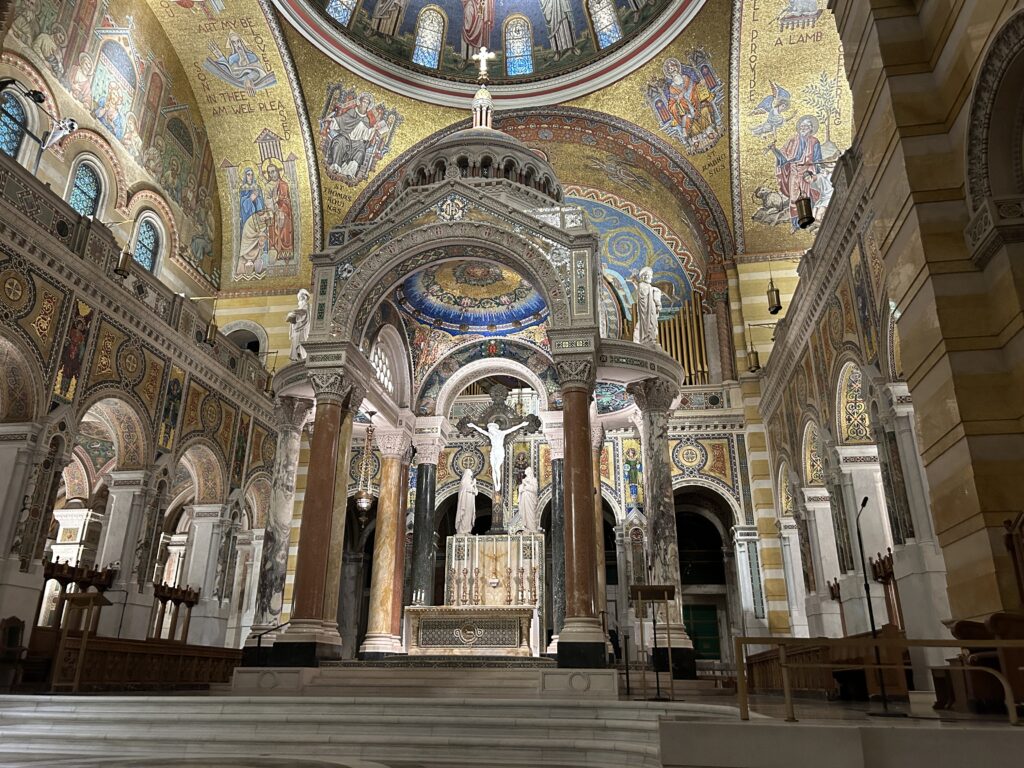
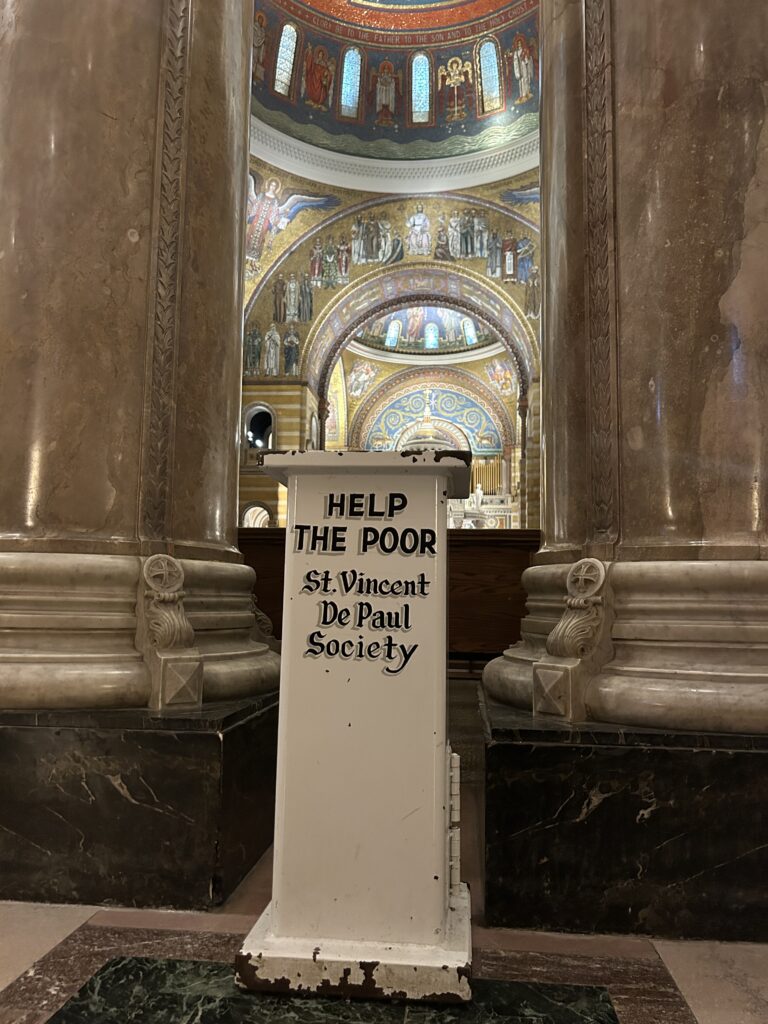
Central Basilica Chapel (left) donation box for St. Vincent DePaul Society (right) Credits: Candace Carr.
Amidst the architectural grandness, however, the iconography can strike a dissonant chord at times. Ornate gold interiors, marble columns, and pristine facility upkeep are juxtaposed with a small “Help The Poor” donation box nestled between grand columns.
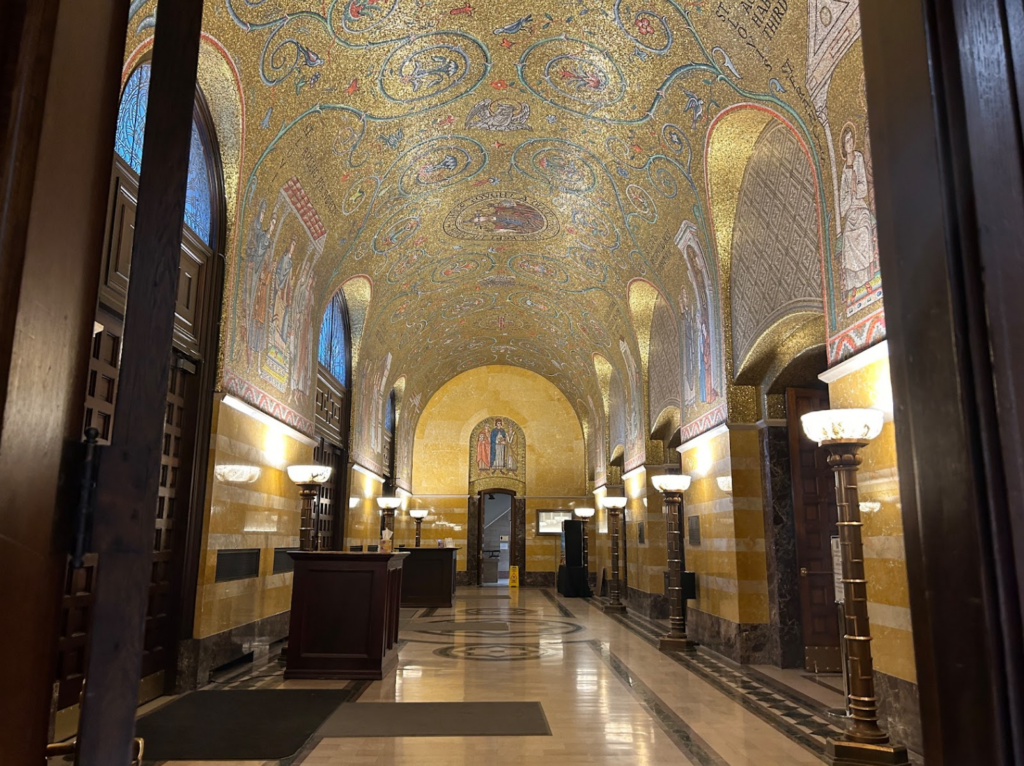
Photo Credits: Candace Carr.
Everson clarifies her complex relationship with the church, finding the space both beautiful and contrary to her beliefs on Jesus Christ’s priority of simplicity and attending to those most vulnerable.
“I think our church has done good things in education and healthcare in particular, but we have also tolerated social ills of inequity and division way too long,” Everson said. “Rightfully so, institutional religion continues to decline. Perhaps eventually a humbled, purified remnant will be able to carry God’s dream along most authentically whether in buildings or tents or simply the dwelling places of our hearts.”