
From Iowa’s Vietnamese Tai Dam community to Minnesota’s Somali population, refugee resettlement is reshaping the heartland.
According to 2022 data from the Pew Research Center, only 11% of the nation’s immigrants live in the Midwest. Most of this population lives in only four states: California, Texas, Florida, and New York. Yet, immigration plays an essential role in revitalizing the Midwest.
In 2017, Rob Paral published an analysis with The Chicago Council of Global Affairs detailing the impact immigration has had on the Midwest.
“Innumerable new reports have described today’s immigrants reviving city neighborhoods, becoming an important part of the local labor force, buying homes, and opening businesses,” Paral wrote. “Young working-age immigrants have played an important role in filling gaps in the Midwest’s native-born labor force. Foreign-born workers ensure the vibrancy of key Midwestern industries, including healthcare, agriculture, and hospitality.”
An important group that makes up that immigrant population is refugees. The term “immigrants” is the overarching term for someone living outside their birth country. Some are here by choice, and others are not. Refugees are those forced out of their home country who seek safety in another.
States on the East and West Coasts bring in the most refugees, similar to overall immigration patterns. However, Midwestern states top the list of refugee arrivals per capita. Research conducted by the Immigration Research Initiative shows five Midwest states in the top ten: Michigan in tenth, Minnesota in ninth, South Dakota in fifth, and North Dakota in second. Nebraska tops the list with 379 refugee arrivals per 100,000 state population.
Refugee arrivals significantly impact any region, but Urban Plains focused on two in particular: Iowa and Minnesota. Iowa is the home to the largest population of Vietnamese Tai Dam people anywhere outside of Asia, and Minnesota is home to the country’s largest population of Somalis.
How do refugees end up in the Midwest?
Refugee resettlement in the United States begins on the international level. The United Nations High Commissioner for Refugees (UNHCR) and other agencies identify individuals who qualify for refugee status. They are then referred to the U.S. Refugee Admissions Program, which vets and approves qualifying applicants. Three priorities determine who is accepted: first, individuals referred by the (UNHCR), a U.S. Embassy, or certain non-governmental organizations; second, groups of special humanitarian concern, like Afghans who supported U.S. operations before they pulled out of the region; third, family reunification cases. A Presidential Determination decides how many refugees are admitted to the country — and from where.
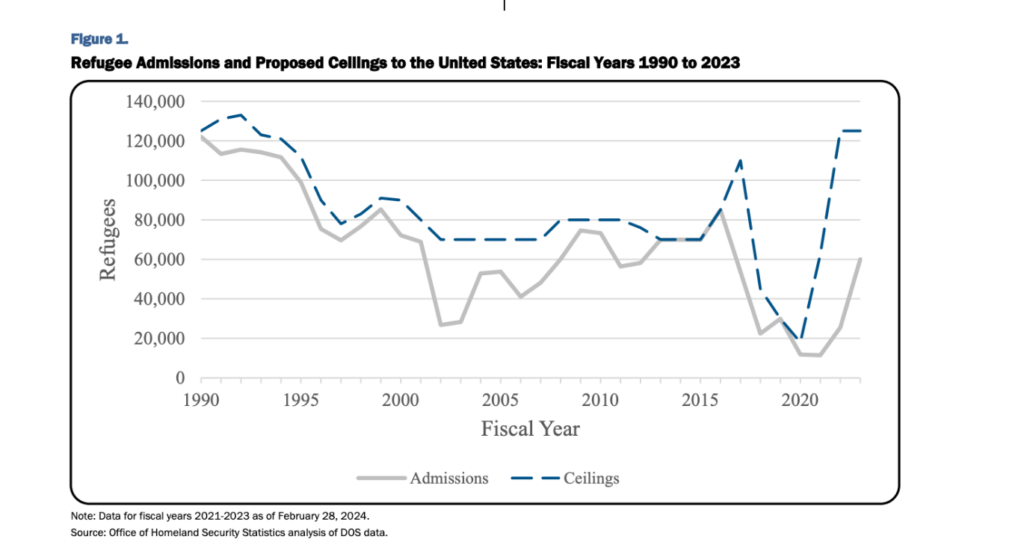
The Trump Administration drastically slashed the number of refugees admitted to the country. The last ceiling set by Obama was set to admit up to 110,000 refugees, and President Donald Trump’s last ceiling was 15,000. The Biden Administration reversed restrictions and set the most recent final target of 125,000 refugees for fiscal year 2025 on Sept. 30.
However, the actual number of admitted refugees hardly ever reaches the limits set by the president. According to the Department of Homeland Security (DHS), the U.S. has only admitted 65,000 refugees on average per year since the ‘90s. Low points were reached in 2002 — after the Sept. 11, 2001, terrorist attacks — and in 2017, after the Trump Administration implemented new screening and vetting processes.
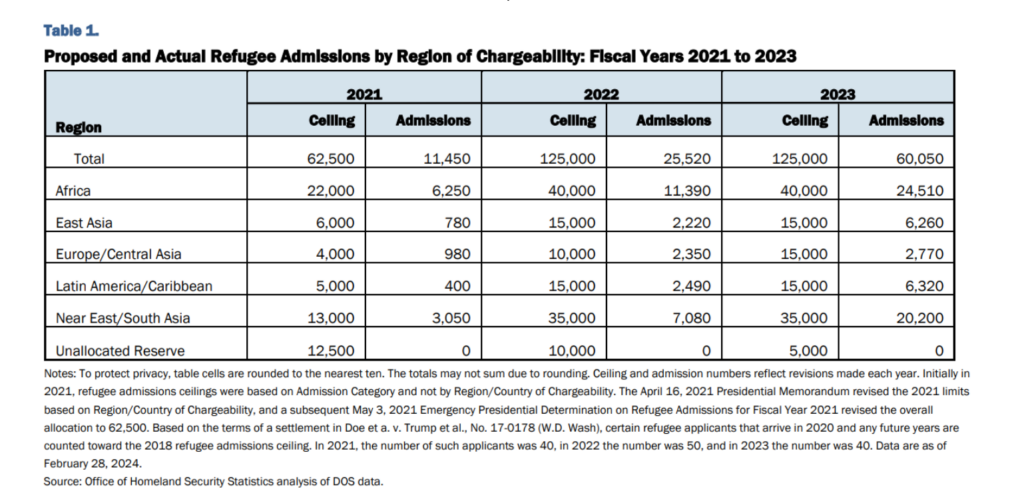
Once a refugee and their family are accepted, they are partnered with one of ten National Resettlement Agencies, which receive federal funding. These agencies then determine where to place refugees nationwide across 350 local affiliates.
Factors determining where a refugee will end up include housing availability, school capacities, work opportunities, family ties, existing ethnic communities, and more. From there, local agencies have 90 days to settle refugees into their new lives.
Iowa
Vinh Nguyen’s connection to Iowa’s immigrant and refugee community goes beyond professional; it’s personal. Today, he is the Education and Workforce Manager at Lutheran Services of Iowa — a local resettlement affiliate in Des Moines. Nguyen is a refugee himself, a member of the Vietnamese boat people who fled their home country after the Vietnam War ended in the 1975. Nguyen witnessed the impact of former Iowa Governor Robert D. Ray on the state and immigration policy as a whole.
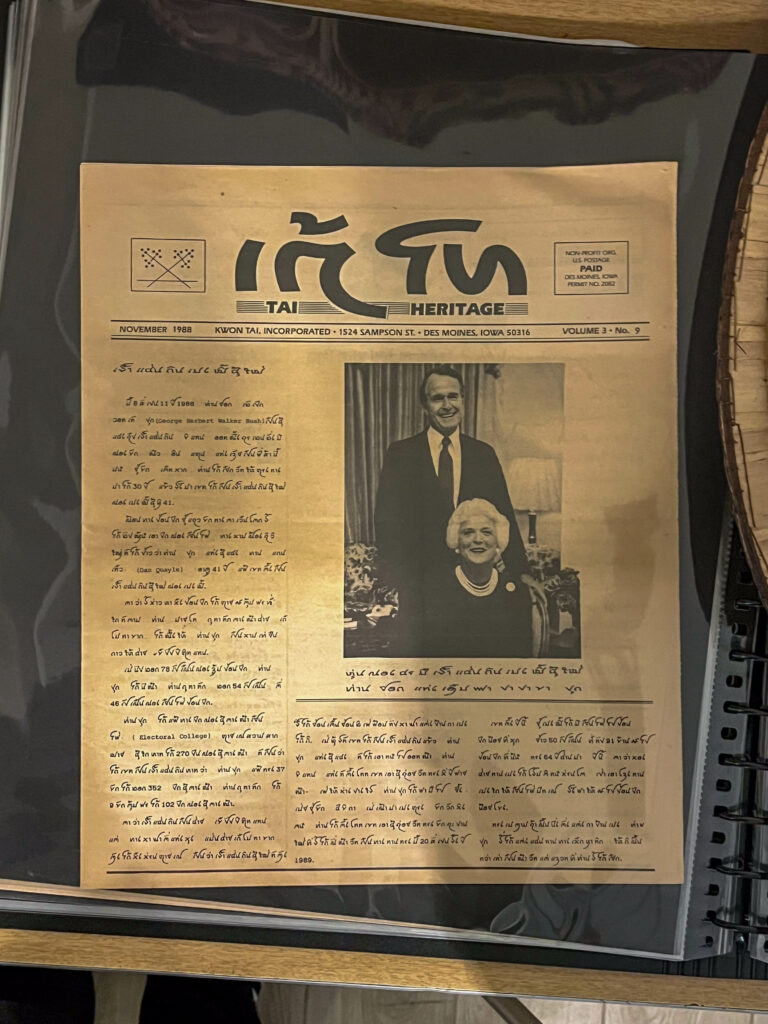
“It was his big heart, welcoming the refugee population to Iowa,” Nguyen said. “One of the biggest achievements of his work is the resettlement of the Vietnamese Tai Dam people.”
Four months into Ray’s fourth term as Governor in 1975, a humanitarian crisis occurred in Southeast Asia as South Vietnam fell. In the Summer, Ray received a plea on behalf of a distinct Vietnamese ethnic group looking to resettle together, the Tai Dam. Ray answered the call. At the time, restrictions limited large numbers from settling in one location, but Ray worked with President Gerald Ford and the State Department to make an exception. By 1977, almost 1,400 Tai Dam called Iowa home.
“That’s why you see [Vietnamese] people scattered throughout Iowa,” Nguyen said. “People said, ‘Why [are] the Vietnamese in this teeny tiny town? That’s the reason.”
Minnesota
Numbers from the Migration Policy Institute show more than 98,000 Somali immigrants living in Minnesota. That’s close to 40% of America’s immigrants from Somalia. Many of them sought refuge in the ‘90s and early 2000s due to the ongoing Somali Civil War. At the time, Minnesota was best equipped to handle thousands of refugees from the contentious region.
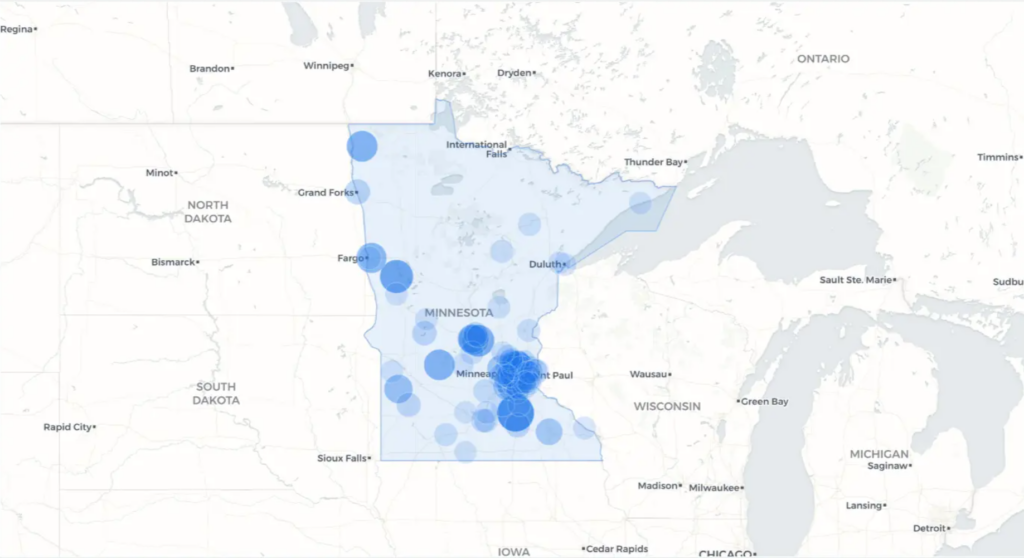
“Minnesota had established infrastructure, and it was very easy for [Somali refugees] to be accommodated by these existing programs compared to other states,” Ibrahim Hirsi, a research assistant at the Immigration History Research Center at the University of Minnesota, said. “That’s just one [reason] we have this large population here. Another is that the Midwestern states, including Minnesota, are a lot cheaper compared to the West Coast and East Coast.”
According to Hirsi, traditional Somali families are between five and ten people. Refugees needed a place to affordably house large families. Another reason was job opportunities in rural Minnesota at meat plants and factory jobs. They were entry-level positions that did not require English.
“After working there for a while, learning the language, being able to drive a car, and saving some money, like many people, they would come to the metropolitan area,” Hirsi said. “Now, you don’t see much settling in rural [areas] because the Somali community is so established that many of the newer people are working for others who have restaurants or daycare centers,” or other businesses.
Hirsi said that as the Somali community in Minnesota grows and develops, so should their narrative.
“Many of them [were] part of the refugees in the ‘90s, but it has been over 30 years now,” he said. “We have, if not equal, a lot of Somalis who are Somali but also Somali Americans whether they grew up here or [were] born here.”
Moving Forward
As the nation continues to diversify, so does the Midwest. Nguyen, who spent decades working in the Des Moines Public Schools, has seen the population change drastically over his career.
“30 years ago… the number of students classifying as white was 90+%,” Nguyen said. “[Today] only one third of the students in Des Moines Public Schools [are] caucasian.”
But Nguyen wants people to remember that the immigrant experience is difficult, especially for refugees.
“The political climate does effect the population we serve,” Nguyen said. “It’s not easy to be a refugee, I’ve been a refugee for 40 years… If you are boat people, you’re always boat people.