
Indie presses are alive and well in the Midwest, despite the changes they have undergone.
This article includes an optional audio read-aloud for easier accessibility.
My first introduction to DIY publishing collectives was my sophomore year of college. After a recommendation from a friend, the amateur documentary “Dirty Girls,” a grainy, homemade film about teen girls in L.A. making zines, was imprinted in my mind. The zines (and the girls themselves) were messy, foul-mouthed, and gloriously unfiltered.
It was magnificent.
I never found much enjoyment in legacy media. Publications like Vogue and The New York Times never suited my fancy; too many rules and too many people watching your every move. Zines — handcrafted mini magazines that often support anti-mainstream agendas and ways of speech — are pure expression and up to the manipulation of their maker.
Of course, “Dirty Girls” was during the height of the riot grrrl era in the 90s — a period that used music, zines, and other creative forms to challenge sexism and patriarchal culture. The teenage girls had since grown up and moved on, and like most things, zines took a backseat with the dawn of the internet age — but never truly left.
But since they’ve been around, zines have always been a part of the Midwest literary scene — a place the more polished coastal pubs have long overlooked. Their tactile language and the self-ruled independent presses — operations apart from corporate publishing and operated on a personal level — are the means to free speech and creativity.
People Are Hungry for Something Real
“You’ll see that a lot of people — especially young people — are not necessarily thrilled about the way technology has impacted their lives,” says Violet Fox, one of the organizers of the Chicago Zine Fest and the Twin Cities Zine Fest. “[People] sometimes see physical formats as a solution or alternative to [technology]… It’s something about the physicality that they really appreciate.”
My Gen Z peers boast their expansive vinyl record collections, that their VHS systems are the coolest way to watch Disney flicks, or that somehow having a car with a CD player and thrift store scores makes you superior. There’s something desirable about the physical — it feels real. Zines (and other physical media) are the low-tech resistance to the high-tech alienation of our modern world.
Since DIY publishing collectives operate on an individual or small group level, most rely on cheap and accessible means of production. Especially during the 70s and 80s, temp jobs — temporary office work — became a common way for people to get increased access to office supplies like photocopiers and paper. Temping and access to office technology were practical factors that helped sustain and fuel zine production.
When the internet boomed and people began embracing virtual ways to express themselves, like blogging and social media, zines were forgotten. With the internet, virtually everyone has found a platform. It was the new, simple, and accessible way to reach millions of people.
But replacements don’t come without compromises.
“People recognized the limitations of blogs… You don’t really know who is interacting with [you],” Fox says. “To some extent, when you have a physical zine, you generally know who you’re giving it to, or selling it to, there’s more connection there.”
There’s something intimate about receiving or giving a physical item. It takes time to craft a zine or publish a book. When you are handed a zine, that person is giving you a personal part of themselves — a piece of their expression.
“[Zines] are a way that [people] can express not just frustration, but other sorts of emotions and ideas that go against the mainstream,” Fox says. “People are interested in zines because they allow the sort of freedom that you won’t get when someone tells you what you can or cannot publish.”
The internet allows people to create, share, and distribute content that was unimaginable with older tech. But unless you are the owner of an app or the creator of a device, there are still guidelines and conditions you abide by. Not to mention, they profit from your content and compliance, too.
Fox describes zines as “radical publishing,” a space where you don’t need permission to tell your story, thoughts, or opinions. Fox has been part of the zine community since 2009, long before TikTok and social media made vinyl records and disposable cameras cool again. To her, the resurgence of zines — those handmade booklets filled with art, politics, and poetry — isn’t about aesthetics, it’s about agency. Zine fests, like the ones in Chicago and the Twin Cities, celebrate zines in all their glory as independent publishing sources.
“We’re celebrating the fact that people can write and create in zines what they wouldn’t be able to in traditional publications,” Fox says.
Midwest Creativity
If you don’t live here, the term “Midwest” probably conjures thoughts of flatness in landscape, politics, and creativity. But that’s not at all true.
“If you talk to people on the coasts, [the Midwest is] often dismissed in [the] realm of culture and creativity,” says Mackie Garrett, founder of 508 Press, a collaborative micro press in Iowa City, Iowa. “I see a lot of potential for creative community building [here]. There’s a certain humility and down-to-earthiness in the Midwest.”
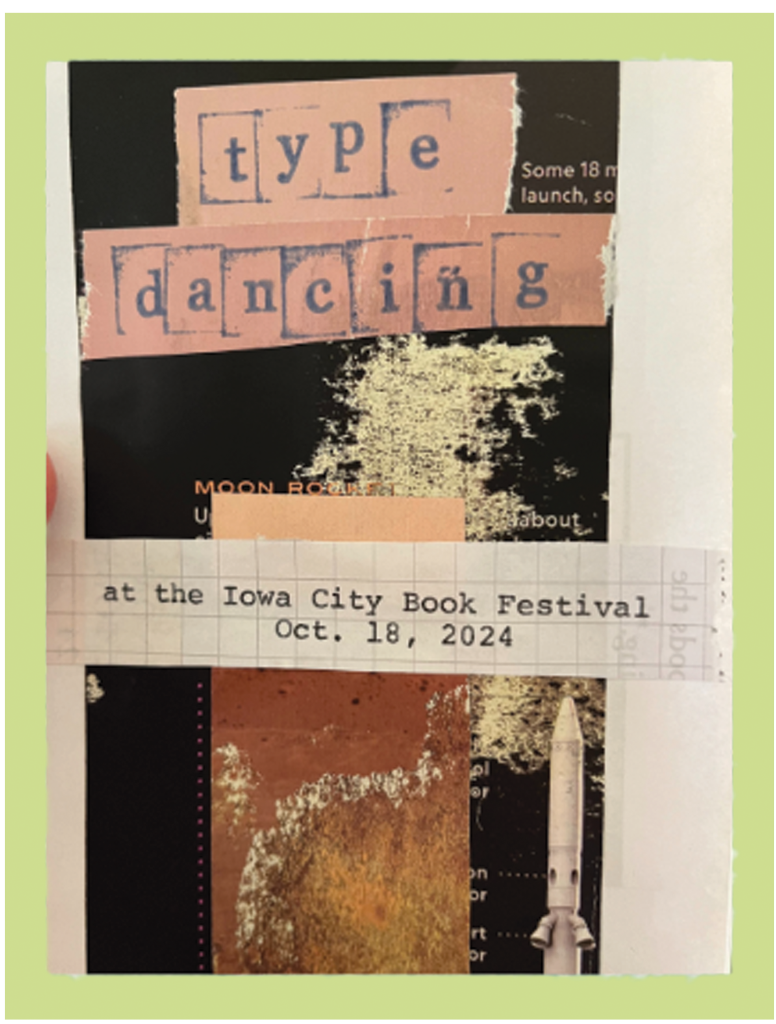
Photo: Mackie Garrett
Garrett started his press after taking a bookbinding class at Public Space One, a community-driven art center in Iowa City.
Iowa City, specifically, exhibits an ecosystem of rich literature. In 2008, Iowa City was designated a United Nations Educational, Scientific, and Cultural Organization (UNESCO). City of Literature. It’s home to the Writers’ Workshop, the University of Iowa is known for its writing programs, and was the first university in the nation to award a graduate degree in creative writing. On top of all that, it’s home to a plethora of small publishers and presses.
Rachel Carlson, Iowa City UNESCO City of Literature director of operations, says the UNESCO designation is a regional distinction, and not just for Iowa City, but for the entire upper Midwest. Carlson sees this literary region as vibrant and expansive.
“People think there’s nothing in the Midwest except farming. … I think [there are] potentially fewer distractions for writers who come here to practice their craft,” Carlson says. “It’s really easy to go to the grocery store and run into a well-known writer; that’s what Iowa City is, everyone’s a writer here. It’s a good place to feel like you belong if that’s the craft you practice.”
Anywhere is interesting if you care to search for it. Carlson says a bookseller in Iowa City once said that any city could be a City of Literature if the people there pay attention to its writers.
“There have always been a lot of small presses and indie artists who are producing great work,” Carlson says. “Maybe you just weren’t paying attention.”
Taking the time to look out for indie publishing will quickly reveal communities of zines and zine makers — on the counter of a record shop, in a stack at the public library, or passed between friends.
Pressed for What
508 Press is a physical press workspace where Garrett creates letterpress prints, zines, and collaborations. The press isn’t for profit, but rather serves as a physical space for creatives to make art they care about.
“[508 Press] is a means of seizing the means of production,” Garrett says. “I’m able to collaborate with other people to realize a vision that’s bigger than what I want to do personally.”
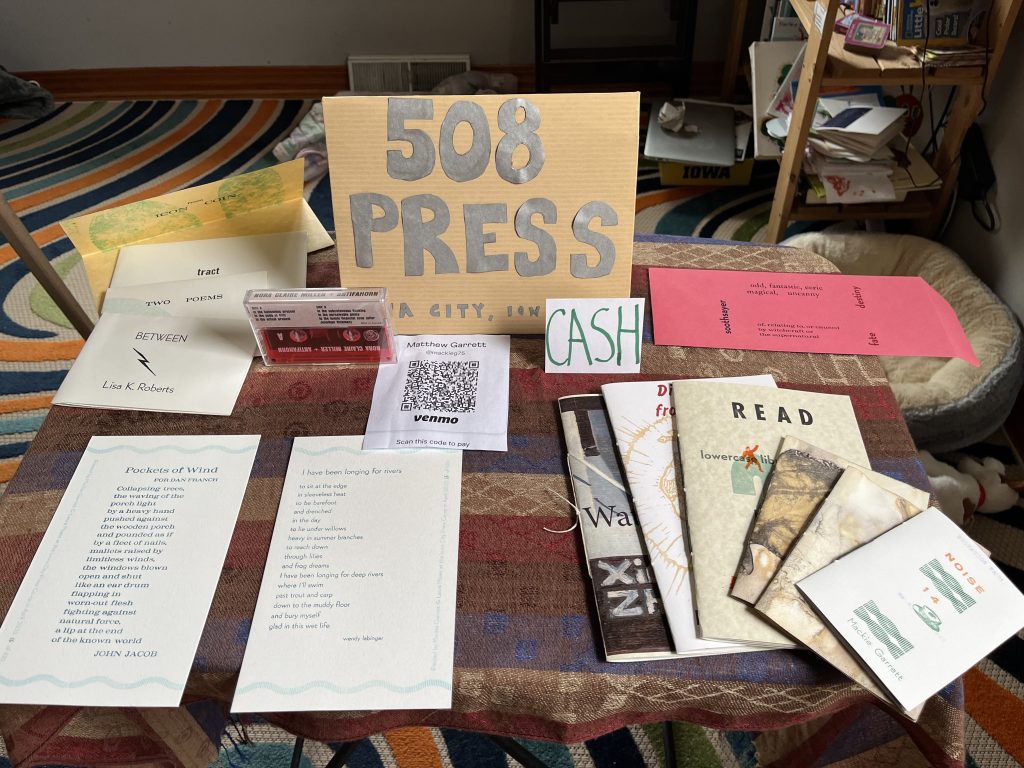
Photo: Mackie Garrett
That hands-on approach echoes the ethos of Morgan Webb, founder of Rat Trap Magazine in Moline, Illinois.
Webb says Rat Trap Magazine was started as an excuse for community building. With everything going on in the world, they wanted to confront hot topics and express support for the people around them. The theme of the first issue was “to consume, to restrict, and to overindulge.” The second issue is liberation.
“Writing and art are acts of revolution,” Webb says. “I wanted to create a space where people are free to express themselves in whatever way is necessary.”
The zine invites anyone to enter submissions through a link on its Instagram. Other than social media self-promo, Rat Trap Magazine is collaged and assembled in real life.
Webb builds every issue from discarded materials, cardboard covers, scraps found on walks, and handmade paper made from collected waste. They create a publication that’s as physical and grounded as the communities it represents.
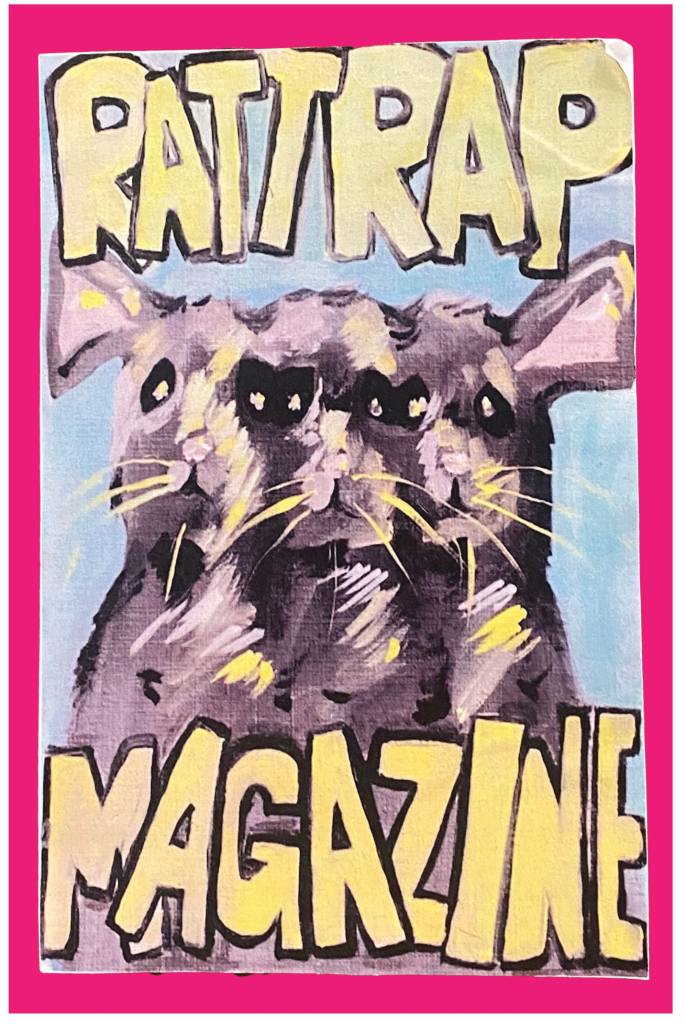
Photo: Morgan Webb
“There’s a DIY feel to it that I don’t see from other magazines in the area,” Webb says.
Indie Publishers’ Revolution
Publishing is an act of care and intentionality, especially for small, independent presses.
“My mission is [to use] the literary arts to better understand how we can best live in the Midwest,” says Steve Semken, the founder of Ice Cube Press in North Liberty, Iowa.
Ice Cube Press doesn’t publish or produce zines; it’s an older, more sophisticated cousin, but they share the same independent spirit. When it’s just you or a close cohort of creatives, you get to do exactly what you want without the worry of profitability and audience approval. Semken says that he has learned to trust his curiosity and prioritize the things that interest him.
There’s success in doing what you’re passionate about. Semken has been running his one-man press since 1991, publishing about seven books a year.
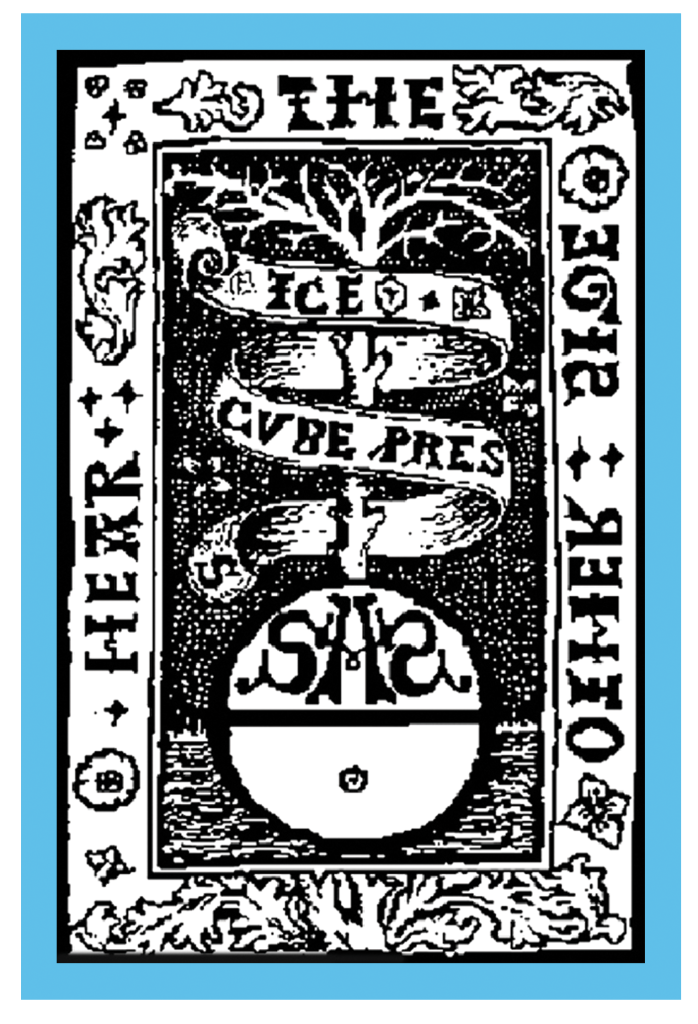
Photo: Steven Semken
“I wrote this [piece on Substack], I am revolution, but I do feel that [way] sometimes. I can pick and choose and publish the things I want,” Semken says. “I published ‘The Swine Republic’ by Chris Jones — no one would touch that book… Big publishers usually don’t touch that kind of stuff anymore.”
“The Swine Republic” argues that Iowa’s political and agricultural establishment refuses to be transparent about environmental problems caused by agriculture, especially the degradation of water quality. “It’s not necessarily a red-and-blue political issue, I just think people are [fed up with] the injustice and the lack of compassion,” Semken says. “Stories are the heart and soul of how [things] can change.”
Whenever Semken is confronted by someone about the future of publishing, he says stories are the saving grace.
“There’s no stronger skill in the universe; if you’re in sales, you need stories, if you’re a writer, you need stories, if you’re a teacher, you need stories,” Semken says. “It may not be in paper form, but there’s always going to [be stories].”
That independence — the ability to say “this matters,” — is what unites zine-makers and indie publishers across the Midwest. Whether it’s a hand-stapled manifesto or a locally printed book, these works are personal, with no apologies.
The Future is Handmade
In the Midwest, you can drive for hours between towns, unaware of the creativity among its inhabitants.
“There are small zine fests popping up every other month,” Fox says. “I’ve never seen it as popular as right now.”
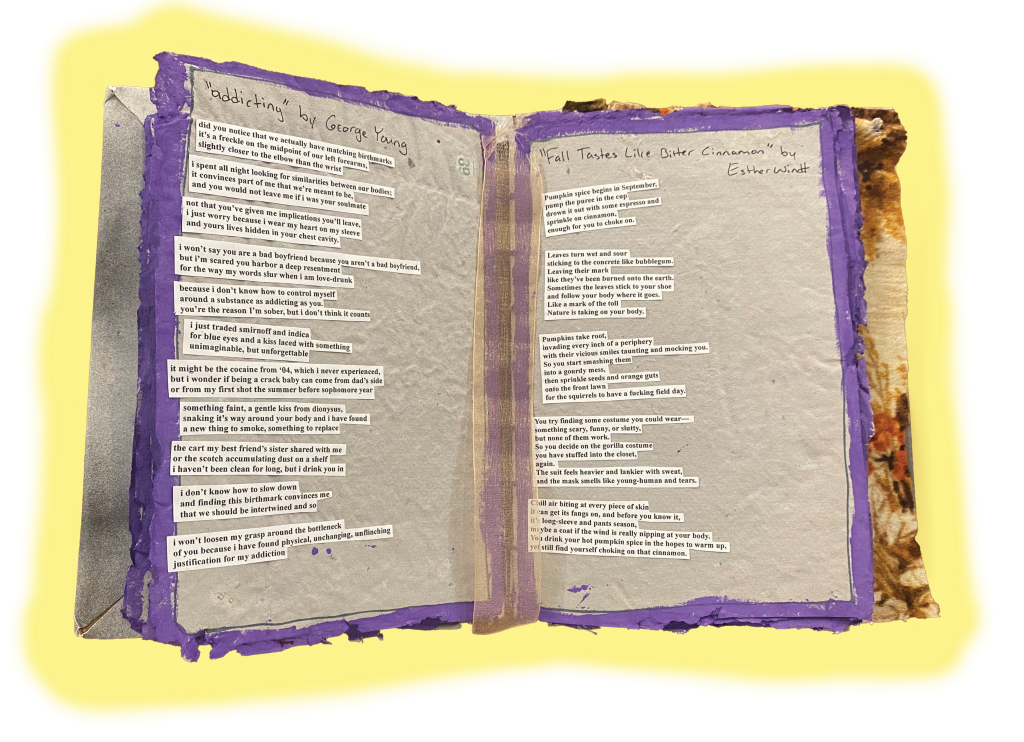
Photo: Morgan Webb
The growth and production of zines and independent presses aren’t flashy or viral. When people offer their unsolicited advice about the death of print, they’re often talking about profitability, not vitality — or they’re part of the establishment themselves. You can’t be controlled if you own your own press and choose what you want to publish. Zines don’t die because they rely on sales. All they need is for someone to care enough to make and read them.
Fox, Webb, Garrett, Carlson, and Semken are all, in their own ways, part of a lineage — one that stretches from the Harlem Renaissance’s independent presses to fanzine, sci-fi nerds, and riot grrrl, fem punks to the uncertain present.
“Don’t wait for somebody else to let you, just make a zine,” Fox says. “All you need is a piece of paper, something to write with, and a copier.”
Audio Read-Aloud Editor: Melodie Yang