
The modern sports economy is threatening the community that defines Midwest sports fandom.
Companion Podcast Episode:
This article includes an optional audio read-aloud for easier accessibility.
I fell in love with sports in 2011, when a mediocre third baseman named David Freese hit a walk-off home run for the St. Louis Cardinals in the World Series. I watched in awe at the stadium. My stepfather raised 7-year-old me in the air like Simba from “The Lion King,” and we ecstatically awoke my mom and sister to tell them the news when we got home. We celebrated together, as many people do when watching their favorite team.
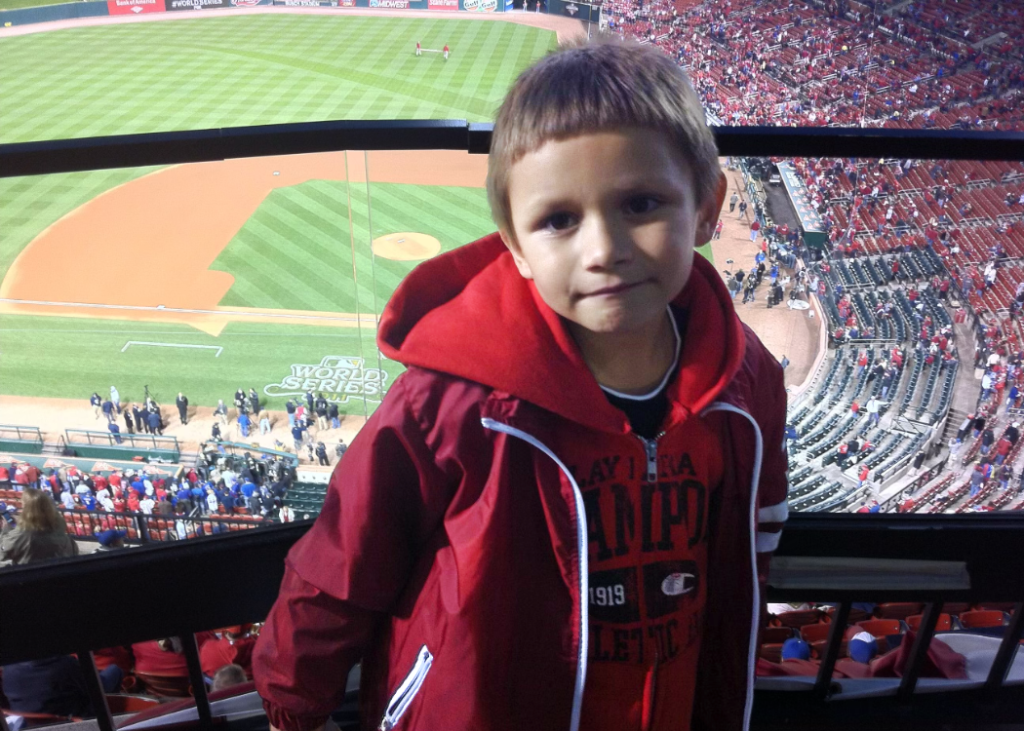
Photo: Patrick Bousquet
In a digital and disconnected world, people can connect over sports. A home run, touchdown, goal, or 3-point shot unites people in simple and wholesome moments.
“High-fiving strangers is the greatest part of sports,” says Jane Burns, a sports writer in Iowa. “That moment when you’re just celebrating together with people you don’t even know. That’s so sweet. I almost get chills saying it, because I love it so much.”
These joys are becoming increasingly inaccessible. Sports tickets and streaming services continue to rise in price — young people have enough bills already. It’s hard to gather around games when people can’t watch them. The Midwest stands to lose a lot if fans are priced out.
Sports for the People
When newly born Dave Shindelar and his twin brother arrived home for the first time, they were dressed in Minnesota Twins and Vikings onesies. That onesie set the path for the rest of Shindelar’s life. He played basketball through college and eventually became the sports information director at Drake University in Des Moines, Iowa.
“Sports itself was the hub of my little community growing up,” Shindelar says in his office, decorated with Twins, Vikings, and Drake memorabilia. “It was the hub of my personality. I would say it still is.”
Countless rituals have formed around sports in American culture, from the Super Bowl to summer baseball. In the Midwest, this culture is on full display.
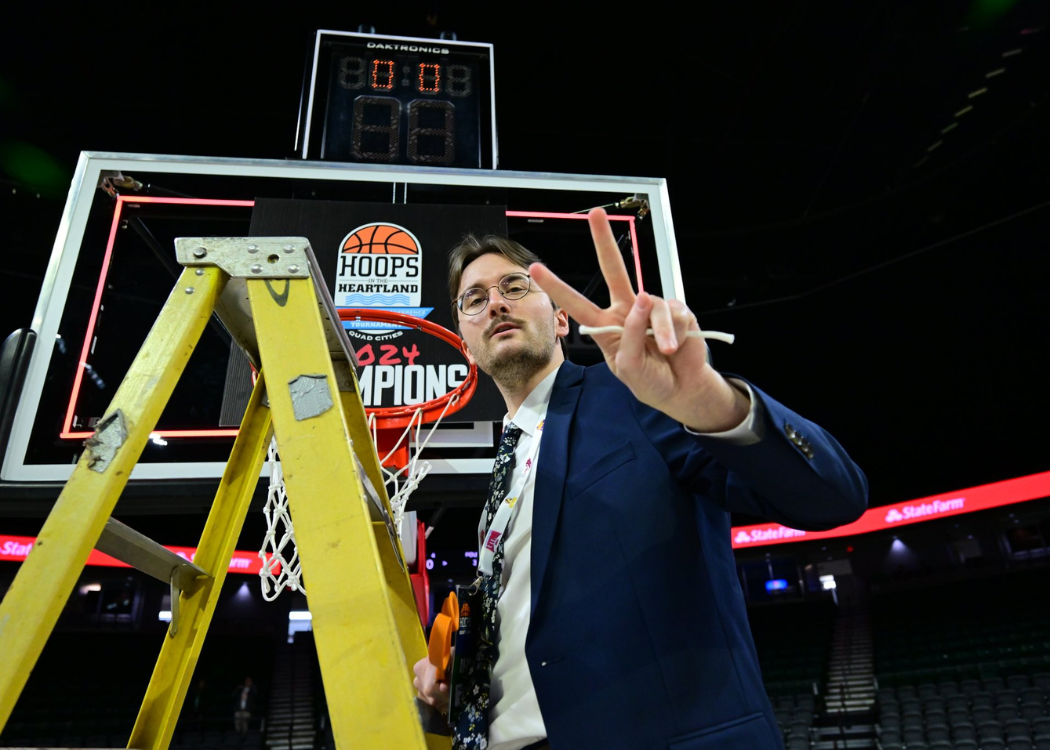
Photo: Sam Lozada
Shindelar calls the Midwest a haven for sports. Alex Cohen, a broadcaster for the Chicago Cubs, has experienced the dedication, passion, and loyalty of Midwest fans that create this haven in the heartland. He says that Cubs fans show unwavering support for their favorite team by always traveling to away games. It’s in this support for a team that a community comes together.
“Friendships are built [through sports],” Cohen says. “I know people who have met their significant others at tailgates or basketball games.”
This connection formed by sports is backed by psychology. Daniel Wann, a professor in psychology at Murray State University, said on an American Psychological Association podcast that sharing fandom helps people meet basic mental needs.
“The more the fan is identified with a local team, the greater that individual is likely to have a well-rounded sense of psychological health, lower levels of loneliness, lower levels of alienation, a higher sense of self-esteem, [and] less social isolation,” Wann says.
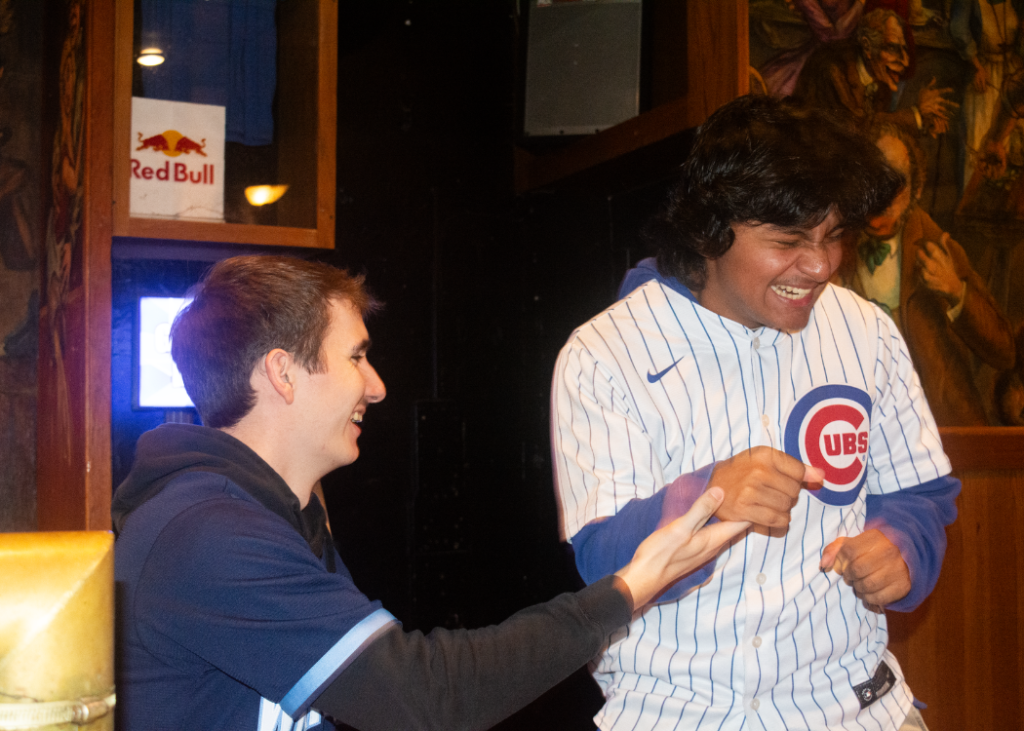
Photo: Emmett McMenamy
That may be why sports fans support their team through thick and thin. Shindelar says some Sundays, watching football is like getting slapped around. Yet, he watches the Vikings every week. Fans love their local team.
“So many people in the Midwest relate their teams [to] family figures,” says Tommy Birch, a sports reporter for the Des Moines Register. “You want to be there and support them through the tough times, and you want to relish them in the good times as well.”
But the Midwest fans’ loyalty is tested when access becomes an issue.
Alienating the Average Fan
When I was in middle school, I used SeatGeek to buy second-hand tickets for $3 a pop all summer long. I cultivated close bonds by going to these games with friends. In 2025, it’s not possible anymore.
Ticket prices were rising when I was in middle school — and had been long before that. Since 1999, prices have more than doubled, and second-hand reselling platforms like SeatGeek have also become more expensive with additional fees.
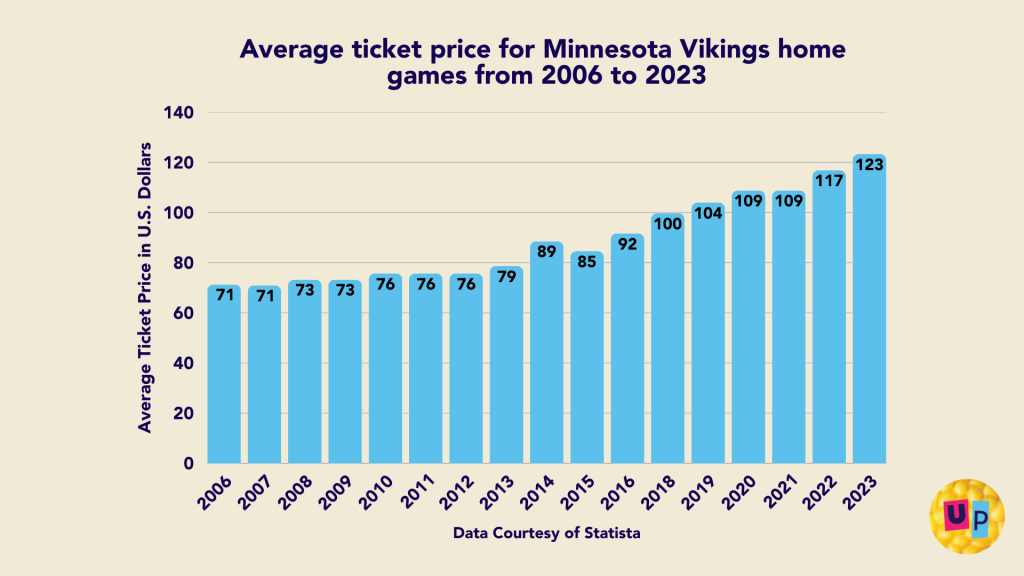
Graph courtesy of Statista.
For the NFL, the average cost for a family of four to attend a game is $631.63, including tickets, food, and parking. That family would also pay $266.58 for a Major League Baseball game. Specifically for Central Midwest baseball teams, the median single ticket price is $84. Prices are soaring higher than inflation.
“It’s hard to build a new fan base if you can’t go to these things, even at a minor league level [or] college level,” Burns says.
Teams have found that they make more money selling fewer tickets at a higher price than selling more tickets at a lower price. They utilize dynamic pricing, adjusting cost based on demand, which nets them more money per ticket. Stadiums also generate the most revenue from luxury seating. Danny Henderson, a Minneapolis native and a former revenue strategy intern for an NBA team, says that 80% of in-game revenue actually comes from the suites in a stadium. When a team can sell out its suites to rich people or businesses and network with them the whole game, there’s no reason to care about the people in the nosebleeds, who are the heart and soul of a fanbase.
“I don’t feel like, when I’m going to a Twins game or a Timberwolves game, that I’m a market for anything,” Henderson says. “It doesn’t make me feel super valued as a fan.”
Even if you can’t go in person, it’s hard to watch on television. If a fan were to buy an MLB.TV package, blackout restrictions would apply to games in their local market. In Iowa, someone with MLB.TV would be blacked out from watching the teams in St. Louis, Chicago, Milwaukee, Minnesota, and Kansas City. Good luck becoming a fan in a state without an MLB team or easy access to streaming.
Even if someone has MLB.TV, they would still have to own other subscriptions to watch nationally televised games. This isn’t just a baseball issue; subscription services just aren’t working in fans’ favor.
“The cost of being a fan is outrageous,” Shindelar says. “I love college football, so I appreciate being able to watch a ton of games, but you have to have six different subscriptions to various streaming services just to watch your team throughout the year.”
This is a nightmare for sports bars — a place where friendships are made over shared fandom and high fives are exchanged with strangers. TJ Rushing, the owner and founder of The Station On Ingersoll, a sports bar in Des Moines, Iowa, says it’s a pain and a financial strain to keep up with the streaming services. He’s considering implementing a cover at the door or dropping streaming services. Either outcome would limit fans’ access.
“It was a lot easier back in 2019 to follow through with that promise of: ‘Yeah, we got it,’” Rushing says.
Sports are about fans chatting over a Budweiser in the bleachers or a family watching their alma mater’s football team on a Saturday. But many of them don’t bring in as much money as the affluent people, who account for 60% of the money spent on game tickets, so they’re overlooked.
“I hope that the joy of being a sports fan doesn’t get destroyed,” Burns says. “At its essence, it’s a good and fun thing for everybody. You don’t have to be a sports fan, but if you love it, it shouldn’t have to be so hard.”
Our Hope
Earlier this year, I watched my 6-year-old brother play a soccer game on a Saturday morning. There was a little dew on the grass, parents were set up in their lawn chairs, and kids smiled as they aimlessly kicked a ball around the field.
Watching this brought me more joy than any game I’ve watched recently — and not just because my brother scored the game-winner, but because it was all about the game and its simple joys.
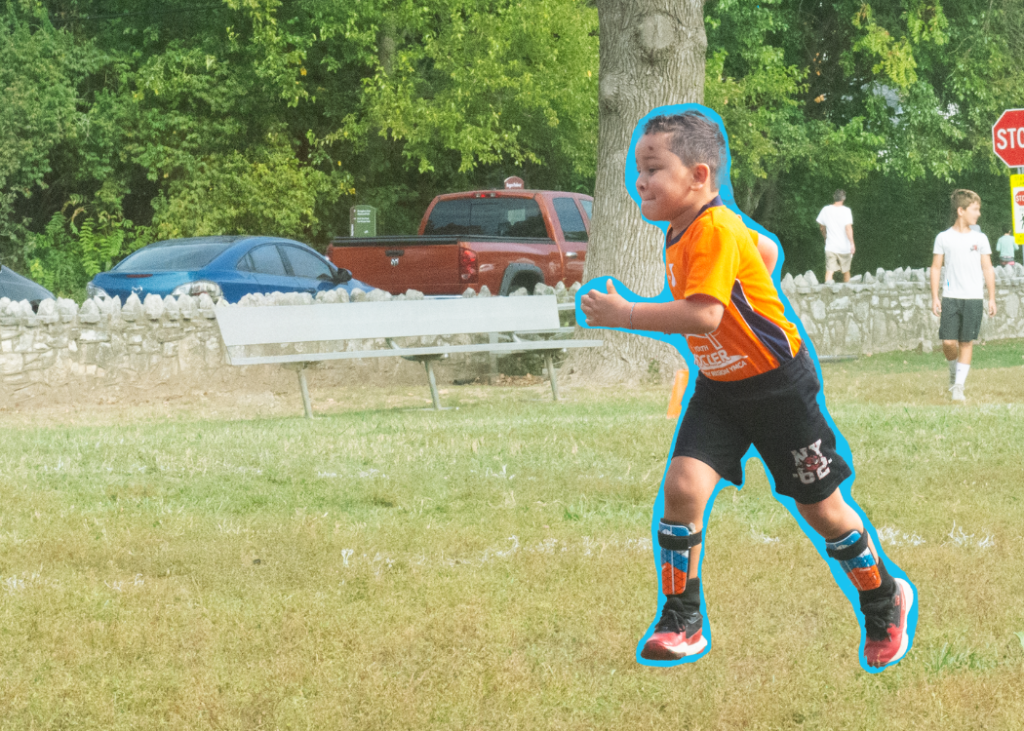
Photo: Emmett McMenamy
What fans really want from professional leagues is what I found on that Saturday morning: a beloved game and people to watch with. Two years ago, I watched almost every Drake University women’s soccer game, and it was thrilling. I saw them win, lose, cry, scream, and smile. By the end of the season, I was nearly doing the same things.
I’d never considered watching any sport besides the popular leagues, but that women’s soccer season changed my perspective. Maybe time just ruins good things like sports and turns them into something else entirely — or I just need to get over my issues with professional leagues. Greed complicates a lot of things, and maybe it’s coming for the majors, but I realized at those soccer games that I could get over it. I’m chasing a feeling, not a specific sport. Maybe we all are. I’m still a fan. And I always will be.
Burns has covered sports for almost 40 years, and she’s recently seen a massive uptick in people interested in historically overlooked sports. Men’s and women’s wrestling, track and field, and swimming have become popular among smaller communities. Burns says that she wouldn’t be surprised if the Iowa High School State Wrestling Tournament sold out months in advance. And maybe these sports won’t get national attention, but that doesn’t suppress their pride.
“These little micro communities are really passionate ones,” Burns says.
These niche sports communities show us that the feelings of fandom can also be found outside of the main sports leagues. Our sports communities can exist elsewhere, for a price we can afford. As long as my brother’s little league soccer doesn’t charge a cover fee, I’ll keep watching sports.