
Inside a family-run Mexican restaurant, where immigration, labor, and loss are reshaping what shows up on the plate.
It used to be a Pizza Hut on the south side of Des Moines, Iowa – parts of which still remain. The low-slung roofline and faded architecture still give it away if you know what to look for.
The old red trim still lingers beneath layers of repainting. Now, it’s a deep brown with teal accents, an intentional shift that signals something new without fully erasing what came before.
Inside, the sharp, clean scent of Fabuloso cuts through the air of the vibrant yellow and red interior. You step into a small entryway where a side room opens immediately—flowers, framed photos, and family mementos arranged beside a bubble gum machine that feels both out of place and exactly right.
The hostess counter is lined with Mexican snacks and candies—tamarind sweets, brightly wrapped lollipops, and stacks of Duvalín. As I turn to the left, I am met with a smiling face, “sit anywhere you’d like,” as if she’d been expecting me all day.
The sound fills the entire room—conversations spilling over from tables, bursts of laughter carrying from one end of the restaurant to the other. Bright yellow tables and red-and-yellow booths anchor the space, bold and unapologetic. It’s the room where sadness feels out of place, where the energy won’t let you sit in it for long.
The chips and salsa arrive before I’ve even had the chance to unfold my napkin. Then comes the menu—huge, sprawling across the table like an atlas. It moves from traditional Mexican dishes to burgers and chicken wings, each one there for a reason, each one having earned its spot.
Their dishes range from choripollo to traditional soups and chilaquiles, alongside unexpected additions like burgers and wings, holding tight to the home-style Mexican cooking that feels like it came straight out of someone’s kitchen, uncomplicated, familiar, and made to be shared.
While chicken wings aren’t what most people come looking for at a Mexican restaurant, these are something else entirely. They arrive fried and dusted in seasoning, circling a small bowl of sauce like it’s the center of the table. You decide how much to add. The sauce itself sits somewhere between a salsa and a buffalo—bright, tangy, with just enough heat to keep you going back for another bite.
Here, the people who cook your food are the same ones seating you, checking in on you, and most of all, remembering what you ordered the last time. It feels like a family dinner that you did not know you were invited to but somehow always were. And maybe that’s what keeps people coming back. Not just the food, but the feeling.
But that feeling—and the menu that carries it—is shaped by something much larger than what lands on the table. Immigration. Family. Uncertainty. Without it, many of the foods we love would never have made their way here. But the reality is that everything built here can be taken away without warning.
On the menu, that feeling is literal. Many dishes are named after someone in the family, making the act of ordering feel more personal than most people realize.
In a place built on routine—showing up day after day, repeating the same motions until they become instinct—nothing about how this came together is accidental.
Before It Was Theirs
La Cabaña didn’t begin here. It started in another restaurant across town, where the work was already being done, just not recognized for what it was. This is where the owners of La Cabaña first met. Juan was running the kitchen. Alondra started as the front cashier and quickly became the person who filled any gaps – orders, translation, and customers. This was a situation where someone becomes essential without ever being treated that way. Where doing more doesn’t lead to more—just expectation.
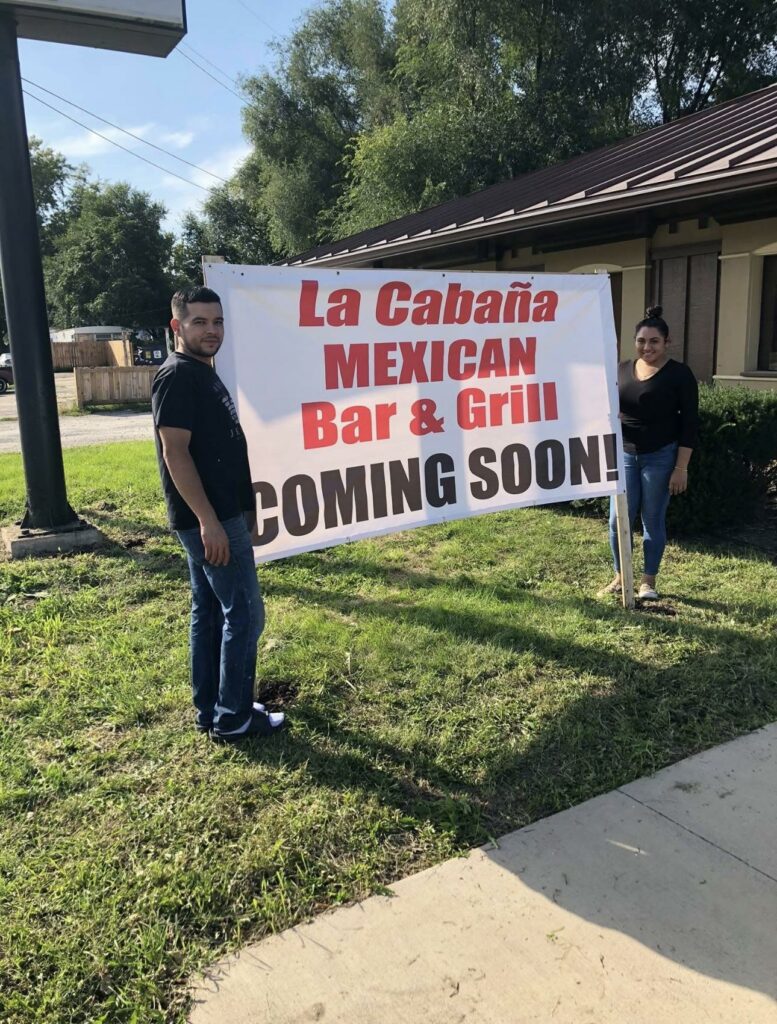
And then, as it has for so many restaurant workers, immigration entered the story.
At the restaurant where they started, Juan was detained—one of many workers caught in a sweep, suddenly facing deportation to Honduras. The restaurant didn’t pause. They replaced him. Promises of help were made and never followed through on. In that moment, everything became clear between Alondra and Juan—for the first time, the possibility of building something of their own felt real.
“They were taking advantage of him. He didn’t even realize it at the time,” Alondra says. She was the one who pushed him to think bigger, to open something of his own. When no one else followed through, she helped him find an attorney so he could stay and actually do it. If he had already been running a restaurant, the only thing left was to do it on his own terms. The idea truly came to fruition when he was driving down Army Post Road in Des Moines in 2010. For the first time, the possibility of building something even bigger felt within reach.
Starting From Scratch
It was a place most people drive by without giving a second look, but it was for sale. Immediately, Juan called Alondra to share this as a potential restaurant. At this moment began the ideation of different menu items. This is when the idea shifted—from working within someone else’s system to building their own. From there, the conversations changed—no longer about surviving someone else’s kitchen, but about building their own.
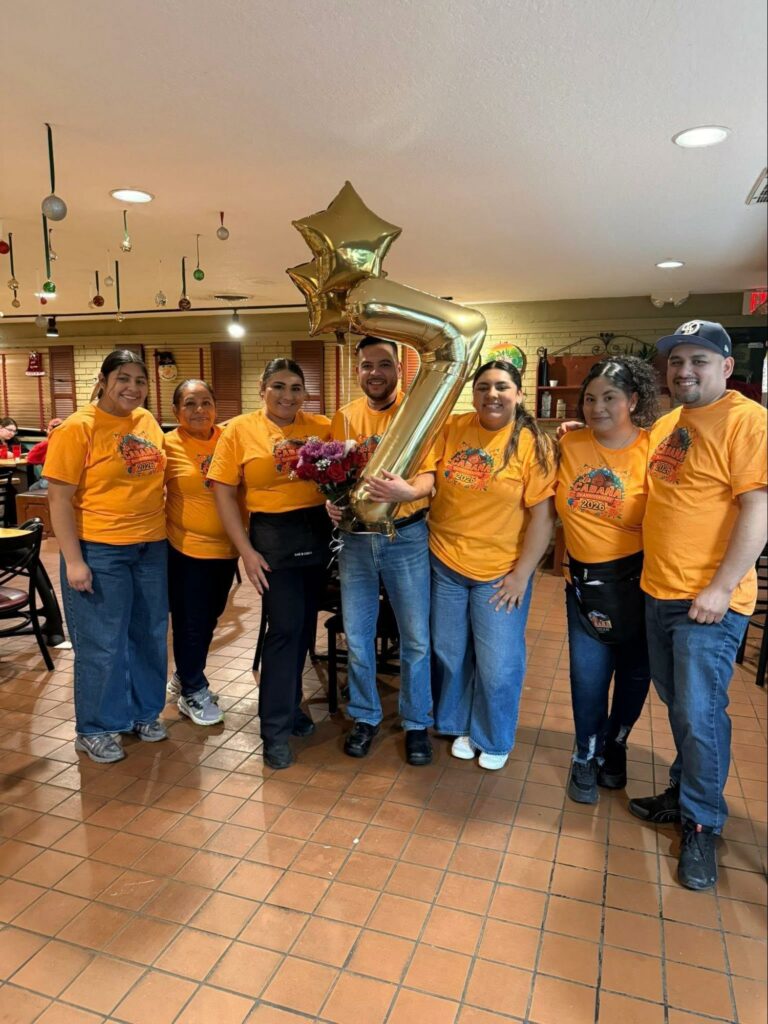
Photo provided courtesy of Alondra Duran.
The first years were the hardest. Not because they doubted the idea but because survival in this industry was more than they could have anticipated. It was the two of them, long shifts, and the pressure of making it work. Quitting was never an idea.
Instead, they adjusted, learned, and continued to push through.
What It Takes to Keep the Doors Open
Sometimes the pressure shows up in the supply chain—ingredients becoming more expensive and harder to source. A box of limes used to be around twenty dollars now costs around eighty. Other times, it surfaces in the kitchen.
Over time, the restaurant became what it is now—not through a single shift, but through constant adjustment. More family members joined. Roles began to overlap. Everyone learned a bit of everything, stepping in wherever they were needed, so nothing slowed down for long. Juan moves between burners in the kitchen, while Alondra answers phones, serves tables, and mixes drinks without pause.
From the dining room, it looks seamless. What customers don’t see is the constant recalibration behind it—the small shifts, the quick decisions, the quiet coordination that keeps everything moving.
A Menu Written in Names
Even then, before the doors opened, they weren’t just thinking about what to serve—they were thinking about who it would represent. The menu would become an extension of the people behind it.
At La Cabaña, the food doesn’t stand alone—it’s tied to the people who built it. Juan has his own dish: grilled chicken and shrimp, smothered in melted cheese. Alondra does too, her burrito filled with ground beef or chicken and covered in cheese sauce. Even Eloy’s 20-year-old daughter is on the menu—the Alexa burrito, packed with steak and bacon and finished under a thick blanket of cheese. The menu reads less like a list of options and more like a map of the family itself.
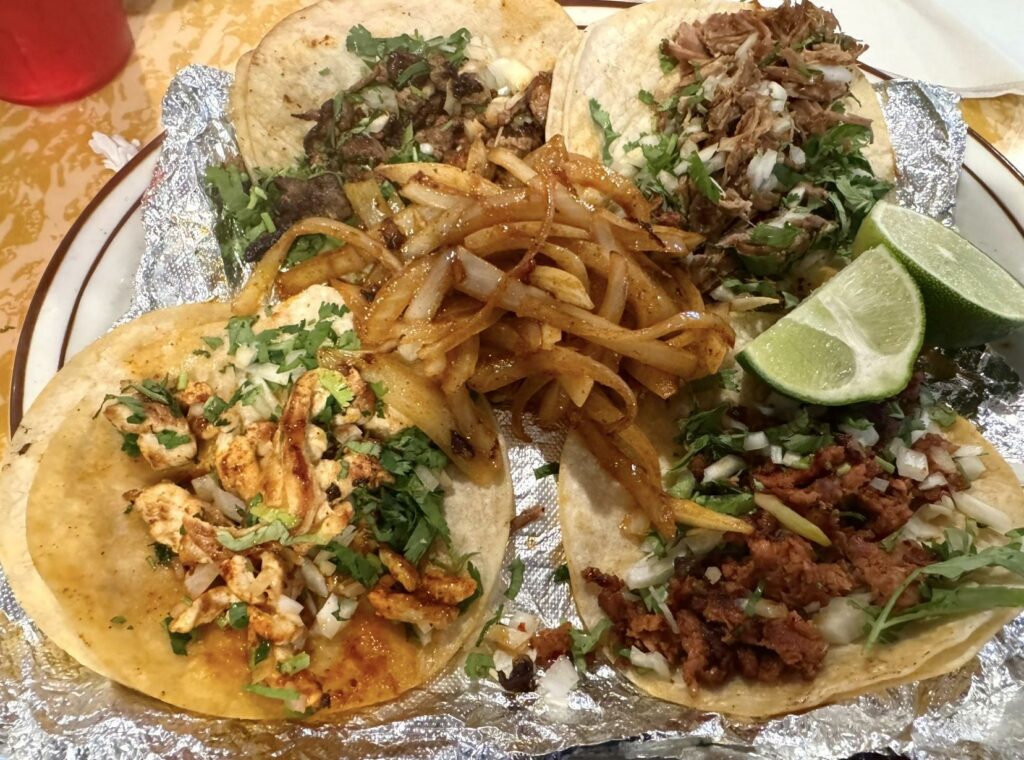
There’s an unofficial layer to it, too. My favorite isn’t listed outright—the Eloy tacos. One of each: chorizo, barbacoa, chicken, and steak, served street-style. It’s the kind of order you only know to ask for once you’ve been here long enough, or once someone lets you in on it. Like everything else here, it’s tied to a person, not just a plate.
They serve caldo de pollo, the kind of soup that doesn’t come from restaurants so much as it comes from home. The kind you make when someone’s sick, or when everyone’s gathered in the same room that’s meant to be shared, not perfectly plated.
There are days when what’s happening beyond the restaurant follows the family into work. When showing up isn’t just about a shift, but a decision weighed against everything else going on around them. And still, the doors open. The chips hit the table. The routine continues.
To customers, it’s just a burrito or a plate of enchiladas. What they don’t see is that each dish carries a name, a person, a place within the system that keeps everything running.
A cook who had been there for years, someone who knew the pace, the menu, the unspoken system that kept everything running – left. He went back to Mexico amid current immigration challenges in the United States. They’re still trying to replace him. Alondra says, “You can’t train that kind of experience overnight.” You can’t replicate years of instinct, of knowing when something is done without checking, of understanding how this specific kitchen moves.
Because when someone leaves, it’s not just a position that disappears—it’s their imprint on the food. The way a dish is made, finished, and plated. The small details that don’t exist on the menu but define it.
They are forced to adjust once again—longer hours, more overlap, and other workers stepping in to fill the gap. From the outside, you would never know. It still works. The chips hit the table, and the food still comes out.
The Work Behind the Table
Other than placing our order, we suddenly see our server, Eloy, also working in the kitchen to get our dinner going. He disappears into the kitchen and reappears minutes later with plates balanced along his forearm, setting them down one by one before slipping back behind the counter. He doesn’t stop moving—just shifts roles, like it’s all part of the same job.
He is one of the people who moves between roles without needing to be asked. He does it with a smile on his face, with his wife and children working by his side.
One day, his immigration status changed due to changes in paperwork, without warning. There was no clear timeline, no real answers—just the quiet understanding that everything could change, even if no one knew when. It introduced a kind of fear that lingered in the background, the possibility that stepping outside his home could mean not making it back to the life he had built.
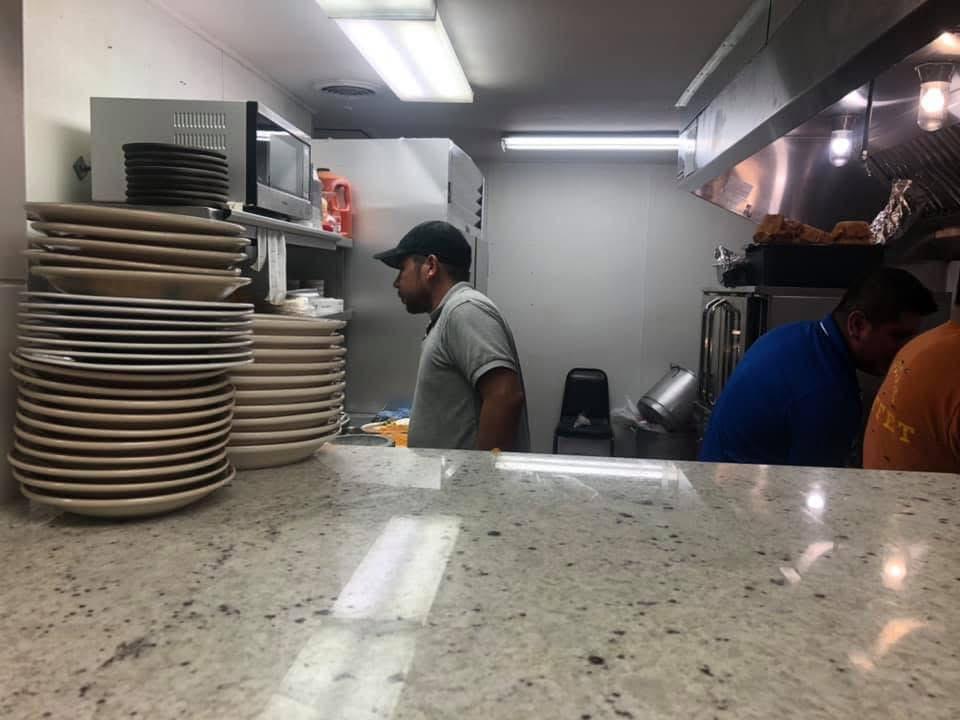
He kept showing up anyway. Clocking in, working tables, cooking food, and moving through orders like nothing had shifted, as everything had. It stretched on like that for a few months before things were resolved.
At the time, though, it didn’t feel temporary. Eloy had built a life here. Graduated from high school here. Had never been in trouble. Raised his daughters here and built his family here. It’s the reality most customers don’t see when they sit down. Across the country, more than one in five restaurant workers are immigrants, many of whom are in the kitchens, and even more behind the scenes, part of the system that brings the food there in the first place.
A life that, on paper, looks permanent—until it isn’t.
There’s no indication that the person serving your drinks and cooking your dinner might be worrying about something much bigger than the next table. As the immigration questions were resolved – their calls were being returned from their attorney, and the paperwork came through – Eloy and Karina decided to have one more child. The only time I had seen him prouder was when he got his driver’s license, making it so that he could finally drive himself to work.
At a gender reveal on the south side of Des Moines, Eloy stands surrounded by family. His wife, Karina, is there, pregnant. Their daughters move in and out of the crowd, greeting everyone in attendance. There’s food, music, and the energy that comes from people gathering for something hopeful.

This is what’s at stake for the family. It is not just a job. It is not just a kitchen. This is a family. They have built their life rooted here. Everyone is tied together in ways that can be understood by just sitting and watching. But not everyone here is family in the traditional sense.
Many of the people filling the room at the gender reveal are regulars from the restaurant. Customers who have formed bonds outside of the walls. The family even brought trays of food from La Cabaña with them to serve.
For some customers, the story reveals itself over time. They ask questions. They learn names. They start to understand that what looks like a small, familiar spot is built on something much larger. For others, it stays simple. Just a restaurant. A place to eat, to sit, to leave. What gets missed is everything holding it together, the systems, the risks, the realities that exist alongside the experience being sold.
Back at La Cabaña, the routine continues. The same low roof. The same chips and salsa arrive before you’ve unfolded your napkin.
A plate lands at the table, still hot. Cheese sauce spreads slowly across the surface, slipping into the rice and settling into everything it touches. A dish that feels indulgent, comforting, and familiar all at once. As the fork scrapes against the plate, pulling up every last drop. From somewhere behind you, laughter rises, then fades back into the hum of the room, blending with the music.
Nothing pauses. The food keeps coming. The tables turn over. Another basket of chips is set down before the last one is gone.
Trip Notes:
- Where: La Cabaña, South Side of Des Moines: 1435 Army Post Rd, Des Moines, IA 50315
- Order: The off-menu Eloy tacos, Juan’s grilled chicken and shrimp, or the Alexa burrito
- Vibe: Bright, personal, and fast-paced—but don’t expect to be rushed out.
- Price: Budget-friendly, with most meals $10–$20 per person; cash and card accepted.
- Pro tip: Arrive with time to spare—the parking lot fills up fast, especially around the dinner rush. If you’re unsure what to order, tell the staff what you like and ask for their recommendation—the best dishes aren’t always on the menu.