
Salad shouldn’t poison your gut. At least, this is what you tell yourself while trapped in the bathroom, losing crucial hydration with every wave of sickness.
The lettuce wasn’t rotten — or even wilted — but like thousands of other Midwesterners, you fell victim to the worst outbreak of parasitic foodborne illness ever recorded by the CDC. Seemingly overnight, diversifying your food sources became a matter of survival.
From May to September 2026, the CDC documented that Midwesterners comprised approximately 68% of cyclosporiasis cases nationwide. During federal investigation, the issue’s origin became clear: contaminated lettuce distributed by Taylor Farms.
By supplying many of the nation’s largest grocery and restaurant chains, Taylor Farms became hard to escape. Public familiarity morphed into fear, and Midwesterners scrambled to break the chain of big-brand dependence.
Thanks to smaller supply networks, locally sourced produce became a clear chain-breaker. Media outlets across the region reported a surge in farmers market foot traffic, with sales increasing just as quickly.
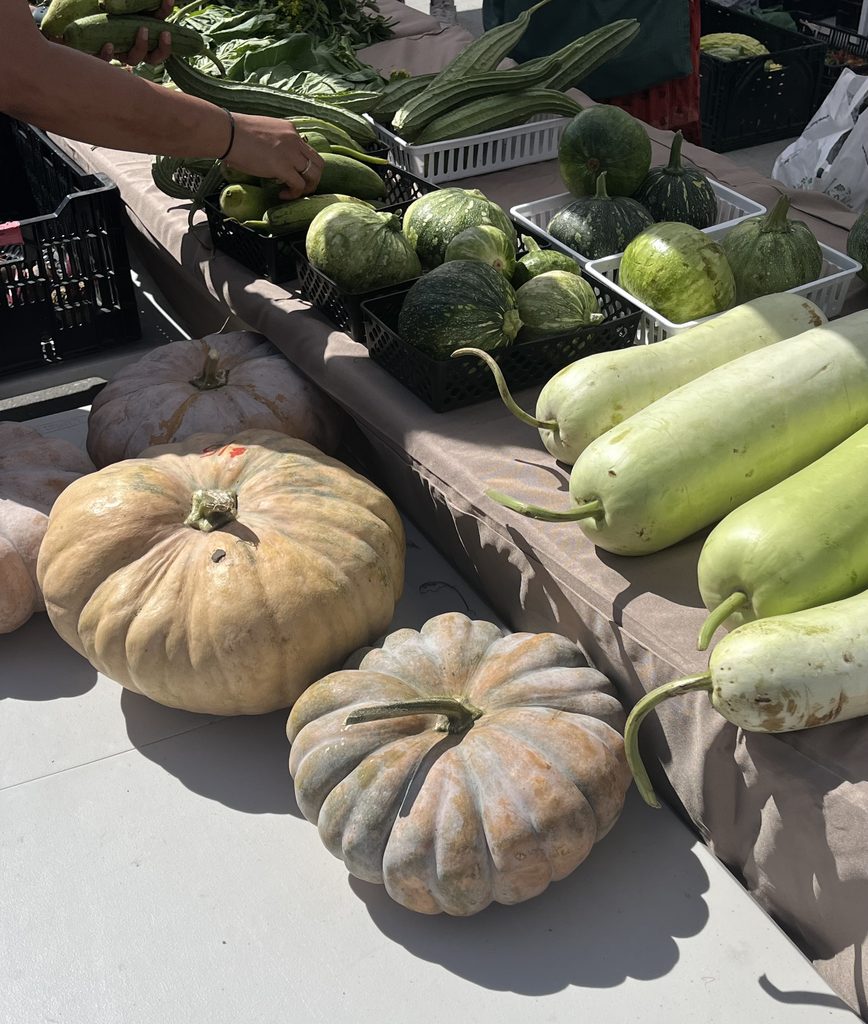
Despite these indicators of change, showing up at your local market is just one link. Upon arrival, many fearful shoppers encounter a new obstacle: learning to overcome unfamiliarity.
Elizabeth Weyers knows how shopping locally can intimidate newcomers. For three years, she has served as the market manager for the Downtown Farmers Market in Des Moines, one of the largest and most popular in the Midwest. Her advice is succinct. First and foremost, Weyers said farmers markets are “where you can connect with a farmer.”
“If you’re not sure what you’re looking at, if you’re not sure where their beef comes from, what type of beef they have, or what that weird vegetable you’ve never seen is, this is their livelihood. They are so passionate about sharing what they’re doing,” Weyers said.
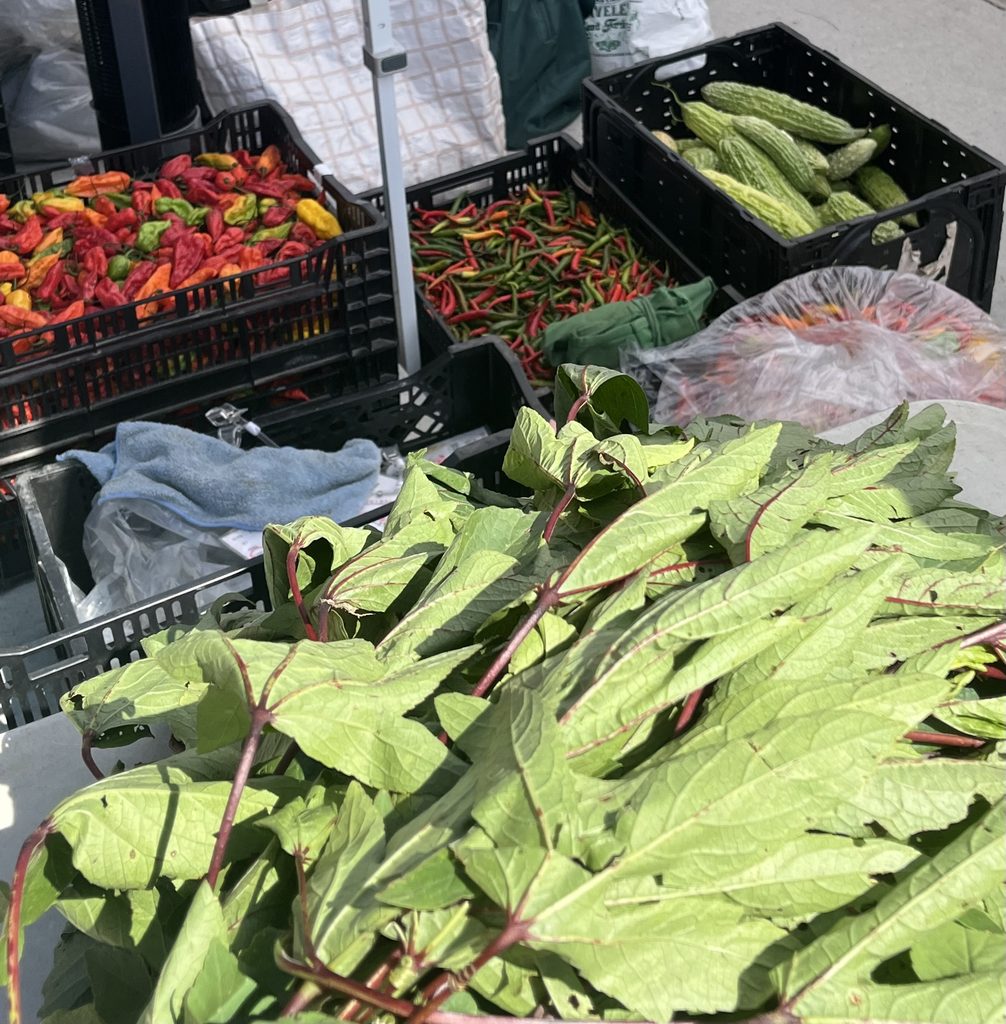
As you approach booths, browse products and point out what’s unfamiliar, don’t forget to ask the practical questions. With a reusable bag in hand, ask your growers how to prepare an ingredient unfamiliar to you. Consider writing down the answer. You may find your new favorite way to prepare roselle leaves, pictured below.
Beyond practicing a willingness to turn your curiosity into questions, Weyers provided the reminder that partaking in a farmer’s passion isn’t merely food access. It is participating in a connection essential for communities everywhere.
“They don’t only want you to buy their product. They also want you to learn about it, to come back and to share the knowledge that you’ve gained at a farmers market,” Weyers said.
Though essential, questions are just a first step to learning how to source local food for your kitchen. At Vang Family Farms, a family-run booth at the Downtown Farmers Market selling bountiful Laotian produce, bravery is encouraged and rewarded with generosity.
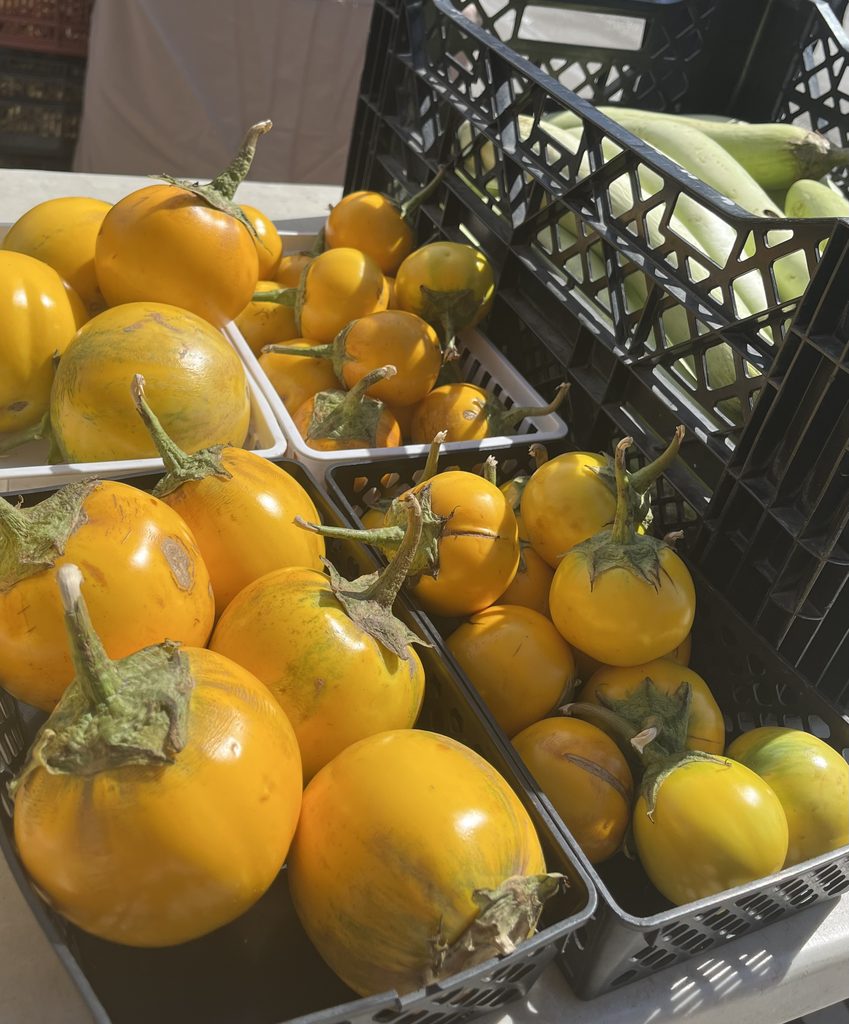
“Find a vendor that’s willing to let you taste something,” said Kou Vang, a constant booth attendant and daughter of the Vang family. “We have Thai long beans, and we always just take one out — just try it. And if you don’t like it, that’s OK. Everything is different, and our thing is to educate.”
Once you’ve discovered a new ingredient and some ways to prepare it, don’t be afraid to ask what you should be looking for. Firm vegetable skin, pleasant smell, no browned edges? These attributes may seem like common sense, but the answer varies with every item. You will want that knowledge on your side upon your return.
Through the practice of asking questions, forming connections and pursuing exploration, breaking the chain and escaping big-brand dependence becomes achievable in the face of fear.