
The Loss
In February 2025, Drake alum Joseph McNamara, 25, sat next to his best friends in the Knapp Center in Des Moines, Iowa, watching the Drake Bulldogs win their 27th game of the season.
Months later, as the 2025-26 season began, McNamara and friends returned to the same seats. This time, something was different. The team was different. Only two players from last year’s team were on the roster. College sports were different.
“It felt like it all happened so quickly,” McNamara says. “You went from watching the team for 30-plus games to them all being gone a week after the season ended.”
Across the Midwest, game nights are about more than wins and losses, they’re full of gatherings and traditions. Friends reunite in the bleachers, families return to the same seats every year, and a team’s logo can spark a conversation, no matter where you are.
For McNamara, Drake basketball meant spending game nights with his best friends, following a team they had grown to know over the course of a season. These experiences together made the team feel like something more than just players on the court.
After back-to-back NCAA tournament appearances in 2023 and 2024, coach Darian DeVries left for West Virginia University, causing Drake’s roster to reset.
A year later, after another tournament appearance, new head coach Ben McCollum and several players left for Iowa.
Less than a month after the best season in program history, the team that McNamara and many other fans had grown so connected to was gone. Again.
The Cause
Familiar rosters and coaches once provided a sense of continuity that kept fans invested year in and year out. With recent legislation, that sense of community seems to now be fading.
Introduced in 2021, NIL allowed for student-athletes to profit off of their name, image and likeness.
The use of the Transfer Portal and NIL has rapidly increased roster turnover across collegiate sports, making it harder than ever for fans to build connections with their schools.
“I think that the transfer portal has changed the way I follow the team in the sense that I have to learn a completely new group of guys every year,” McNamara says. “Starting from scratch every year is just never how college sports were intended to be.”
Today, student-athletes have the opportunity to transfer schools each offseason. Instead of committing to a school for their academics or campus, decisions are often driven by NIL and playing time, making the transfer portal act similarly to the free agency process seen in the big leagues.
“It’s professional sports now. With the exception that you don’t really have the rules that you have at the pro level,” says Jeff Linder, a sportswriter for The Gazette in Cedar Rapids for more than 30 years. “The rosters are changing and that connection just isn’t really the same anymore.”
Many schools, especially those outside of the main power four conferences like Northern Iowa and Creighton, are faced with an exodus of departures each year, leading to high roster turnover.
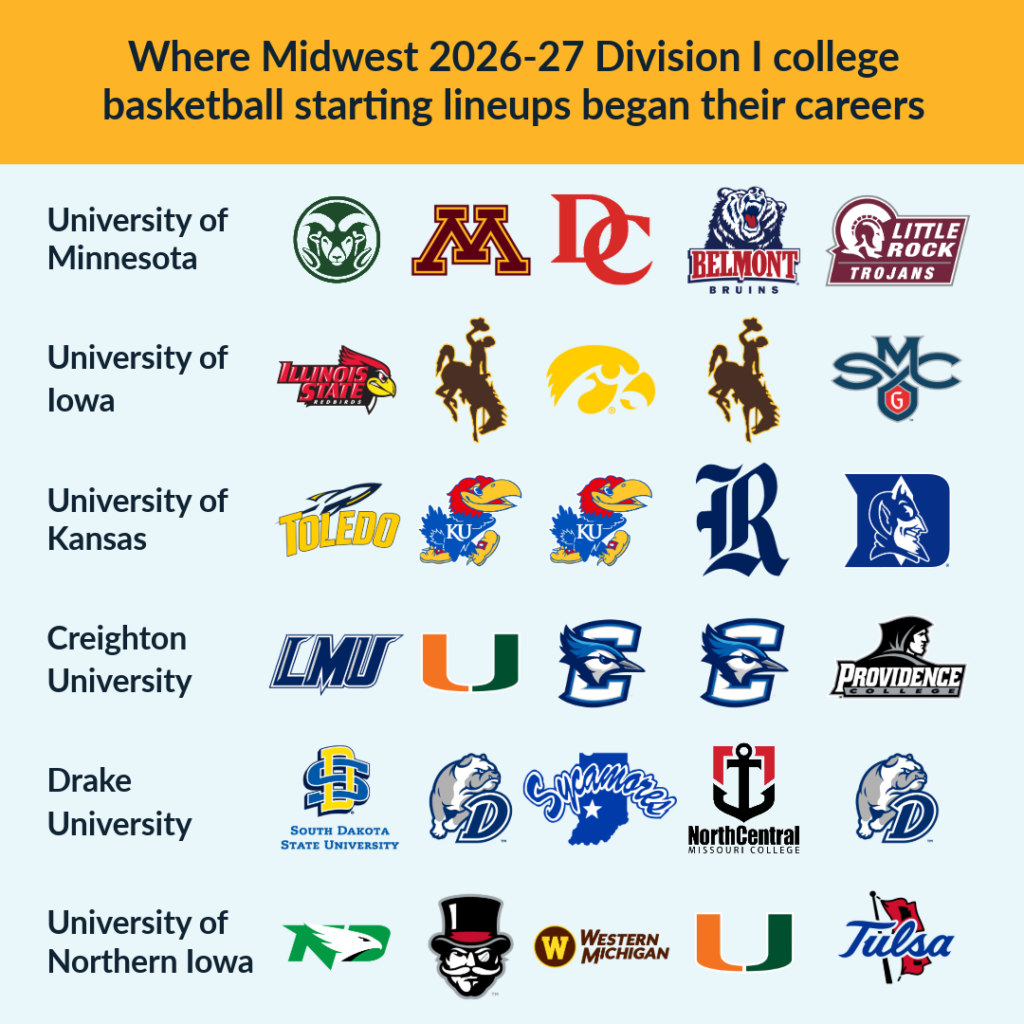
All of this change and instability is also changing the way fans follow their teams. In the past, fans followed student-athletes throughout their four-year careers at their school. From commitment day to their school to their senior night, the fans were along for the ride the whole time.
“As a fan of a mid-major school, my team is often the one being picked over by bigger programs with more money,” McNamara says. “It’s a lot harder to get excited about a team that doesn’t perform as well, and when [Drake’s] best players are leaving every year, it’s hard to maintain that high level of performance and to keep your fans invested.”
Linder, another Drake graduate, has seen firsthand how the Transfer Portal impacts smaller programs.
“Drake had that great basketball season two years ago, and then Ben McCollum and the team comes over to Iowa City,” Linder says. “As a Drake fan, as a Drake alum, I hate it.”
At the same time, the addition of NIL to college sports has altered fan expectations. As student-athlete compensation continues to increase and become more public, fans are treating them like professionals while holding them to higher standards.
“Things are getting more and more jaded,” Linder says. “Fans are going to start asking, ‘we’re paying you, why can’t you make that free throw?’”
What’s left
In Midwest states without professional sports teams, such as Iowa and Nebraska, collegiate teams have generally been a major aspect of community in those states.
While that sense of community may be changing in college sports, it still remains untouched for the most part in high school sports. With NIL and other financials not being factors, players will usually play their sport in their hometowns for all four years of high school, creating a lasting connection with their communities.
“I don’t think you can get more community than covering high school sports,” Linder says. “You come together every week to watch kids from your town, people that you know.”
For four years, fans follow the same players, the same rosters, the same coaches. As fans grow up and go through changes in their lives, so do their favorite players. That consistency is what many believe college sports are now losing.
For fans like McNamara, the wins still matter, and that iconic college sports atmosphere is still there. But there is no doubt that something still feels off.
“I still love college sports and I’m still cheering for my school,” McNamara says. “But that thought of what things will look like next year is always in the back of my head.”
For fans, the changes are already clear. But through all of the constant movement are student-athletes navigating a new kind of college experience. One that continues to reshape the teams fans follow.
“We haven’t bottomed out yet,” Linder says. “But at some point, things have to turn around.”
For the time being, the games will continue and fans will keep showing up. But with more and more players changing schools each year, the connection that once defined college sports is fading and no longer guaranteed.