
What do you do when something breaks? Maybe you dropped your laptop and shattered the screen right before a big deadline, or your car’s air conditioning stopped working during the dead heat of summer right before a big road trip. Whatever the fiasco that comes to mind is and no matter how you solve it, be that going to a repair shop or acquiring the parts and fixing it yourself – you’ve unknowingly engaged with the exact thing right to repair advocates are fighting for.
When it comes down to consumer electronics and even most vehicles, there’s likely a guide somewhere on the internet, but this fight runs much deeper than the swapping of a screen. companies make proprietary tools that are required to diagnose and complete a repair – and without their diagnostic black box, you have to go to the manufacturer for repair and the farmers who produce the food on your table are at the forefront of this fight.
Right to repair is an umbrella term for legislation that states, if the consumer buys something, they can break, fix, and modify it to their hearts content. While it may seem like a standard consumer protection, Minnesota is the only state in the Midwest that has signed this into law, and even that omits a farmer’s right to repair their own equipment.
A Deere in the headlights
On July 8, 2026, the Federal Trade Commission (the national organization that is in charge of consumer protection), alongside Illinois, Arizona, Michigan, Minnesota, and Wisconsin, settled with Deere & Company, which requires Deere to make manuals and diagnostic equipment available to independent repair shops and farmers for the next 10 years, alongside a hefty settlement of $99 million. Still, the independents don’t seem to be purchasing the equipment just yet.
“We would have to work on a lot of John Deere and a lot of modern stuff for us to purchase something like that,” says Amy Assmann from A&A Equipment Repair in Adell, WI.
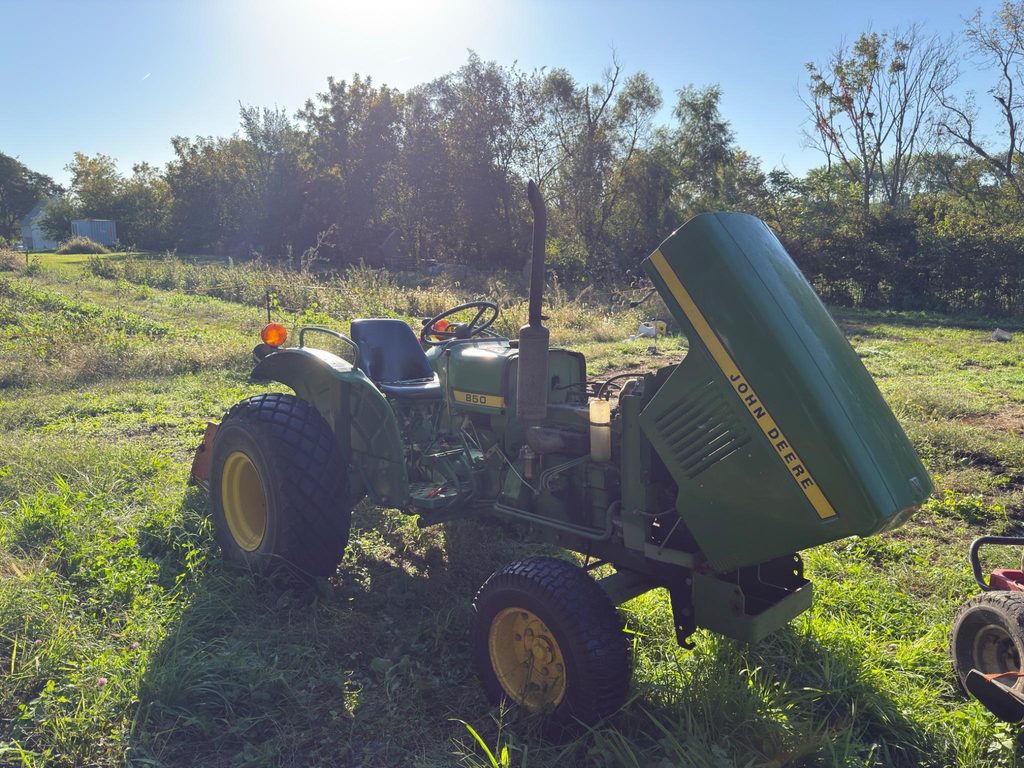
While the settlement is a good first step, it did nothing to mitigate the cost of acquiring the diagnostic equipment required to work on Deere’s modern equipment (around $6 thousand per year to license only 10 pieces of software – this doesn’t include the hardware needed either). This has put a choice in front of the rural repair shops that these communities rely on. Either purchase the diagnostic equipment or continue to only work on pre-2015 Deere equipment.
“There’s not a lot of independent shops that are going to fork that out because they aren’t working on that much of the newer stuff,” says Mike Marcum, a former Deere technician and current owner-operator of Marcum Tractor Repair Services in Clarks Hill, IN. “That’s particularly why I haven’t got any.”
The independents choice
Most independent shops like Marcum’s are started by technicians who previously worked for manufacturers of equipment before they decide to go out on their own. They remember a time when these pieces of machinery didn’t require this diagnostic equipment; you could simply pull a fuse out and put it in the tractor’s diagnostic slot to pull up anything you would ever want to do with that tractor.
“Up to the 20 series of John Deere’s, it was all onboard diagnostics,” Marcum says. “That made it nice.”
As the computer systems within these high-end pieces of farm equipment have become more complex, so has the process for repairing them. As independent mechanics age, they aren’t picking up the new tricks.
“Deere even said that… the older guys know how to work on them, but they don’t know how to do the computer, and the computer guys are great at computers, but they don’t know how to work on the tractors,” Marcum says.
The impact of a not so free market.
For some rural communities, this inability for their independent repairmen to operate on all equipment can mean sometimes weeks of having a piece of equipment down as they wait for a Deere dealer to make their way out to their farm, or worse, for the farmers to haul the equipment to their dealer. That time is crucial during a harvest season and, in some cases, has resulted in Deere handing out loaner machines.
“The cows are not going to wait two weeks to be fed,” says Kat Birtell, a repair mechanic with A&A Equipment Repair and Assmann’s daughter. “Those are some of the smaller pictures that I don’t think a lot of people realize unless you’re in a farming community and you know how precious that equipment is, especially with animals.”
When it comes to saving independent repair shops, there’s no clear-cut answer: these communities need younger technicians, and they aren’t coming. Right-to-repair legislation keeps stalling, and mechanics’ faith in the system is dwindling.
“With Congress and all that stuff that goes on there, I don’t see anything getting passed that’s going to help the independent,” Marcum said. “It’s all going to be aimed toward the big company.”
While Marcum’s claim is valid and we haven’t seen anything of true substance come from the legislative side, since February of 2025, every state in the United States has had some semblance of a right-to-repair law proposed – they just keep getting stalled.
Next time your car breaks down or your phone needs to get fixed – remember that the manufacturer isn’t your only option and that an industry that touches every facet of modern life is under attack by the same companies that have facilitated it.