
With a tote bag over my shoulder, I attend local farmers markets with wide eyes, awed by Midwestern bounty. Gleefully, I dream of picture-perfect bags of produce.
Despite this, my visits are often fruitless. Rather than engaging with the knowledge and passion market vendors offer, I browse timidly — and leave without dinner plans.
In my bashfulness, I neglect a rare opportunity: consumption of food grown in the Midwest by Midwesterners.
The United States Department of Agriculture credits Midwestern states with just under half of our nation’s agricultural value. This is America’s Breadbasket, after all — yet, the USDA attributes only 0.33% of that value to direct-to-consumer sales.
In other words, a miniscule amount of Midwestern agricultural value lies between farmers and their own communities.
For Midwesterners invested in supporting their region, this is a harrowing statistic — the fruits of America’s Breadbasket are rarely handed directly to its residents.
To combat my neglect, I gave myself a mission: first, turn my awe into questions. Then, connect with farmers by asking those questions. Finally, use my new knowledge to add a repeatable dish to my recipe box.
My mission lasted five weeks and consisted of four different markets. In the end, I had four new recipes and lessons learned from mistakes along the way.
The path began with peppers.
Valley Junction Farmers Market
Des Moines, Iowa
Sept. 24
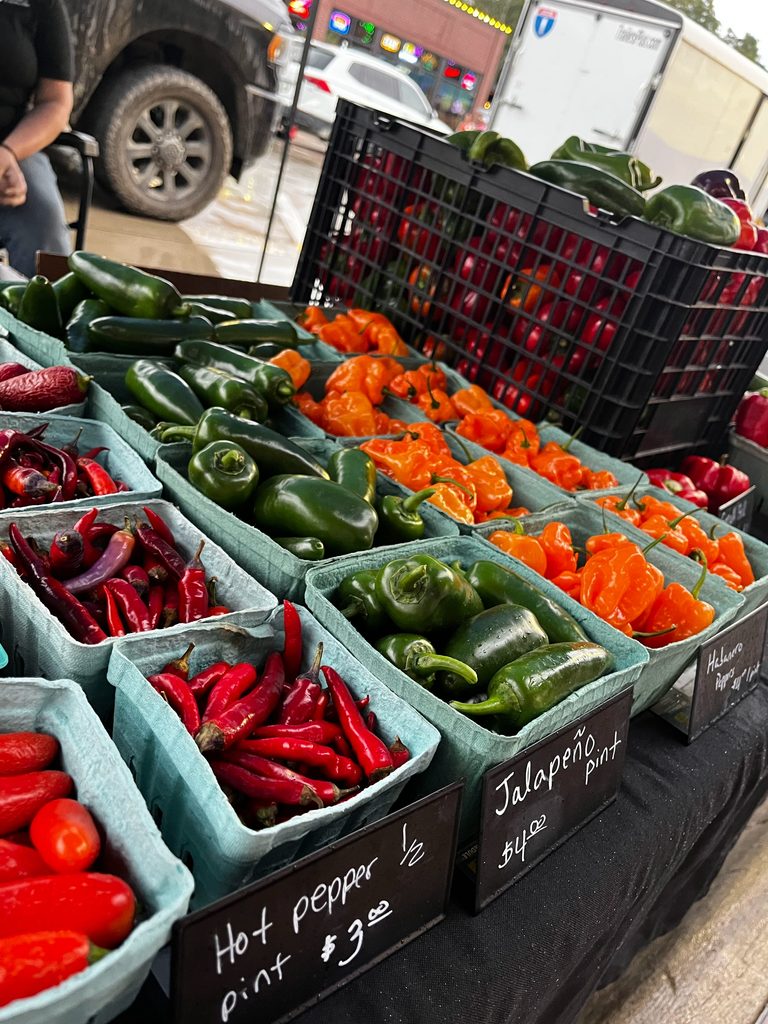
Grey rain sprinkled the day, but market-goers still milled around booths and gathered near sheltered live music. In search of my first recipe, I found Rancho Pacheco, a small farm based in Osceola, Iowa, run by Darcy and Ulises Pacheco. Their rainbow of peppers caught my attention.
Pushing past initial shyness, I asked where to begin. Gladly, the Pachecos directed my uneducated eye to jalapeños — crowd-pleasing, not too spicy.
Darcy recommended poppers as a personal jalapeño favorite without hesitation. I walked away with a pint of them and a clear plan.
Jalapeño poppers
Yield: 22 poppers
Prep: 30 mins
Cook: 20 to 25 mins
Ingredients
- 8 oz. Philadelphia Cream Cheese, softened ($5 at grocer)
- 1 cup Tillamook shredded cheddar ($3.99 at grocer)
- ½ tsp. salt
- ½ tsp. black pepper
- ½ tsp. onion granules
- 1 pt. jalapeños ($4 at market)
- 1 (14 oz.) pkg. Farmland Classic Cut Bacon ($4.99 at grocer)
- Cooking spray to grease sheet pan
Directions
- Preheat your oven to 400°F. Coat a sheet pan with cooking spray.
- Mix softened cream cheese, shredded cheddar, salt, pepper, and onion granules in a bowl.
- Cut jalapeños in half lengthwise. Carefully remove all seeds from cut pepper halves. Wear gloves and avoid contact with face.
- Fill each pepper half with the cream cheese mixture.
- Wrap each pepper half with one piece of bacon.
- Bake for 20 to 25 minutes.
Forcing past my reserve to ask questions worked. The poppers were flavorful, but not overwhelmingly spicy — nor were they something I had made previously.
My triumph did not come without flaws. While I had asked questions, I failed to ask the Pachecos for pepper preparation tips. As a result, I dismissed the necessity of gloves and cleared seeds with burning hands. The very pores of my hands had fire in them.
My next market solidified a lesson invaluable to my mission: improvisation cannot replace the value of a farmer’s advice.
Downtown Farmers Market
Des Moines, Iowa
Sept. 26
Rain continued. I wandered market booths in search of anything at all, having entered with confidence but no plan to speak of.
Eventually, this wandering led me to Vang Family Farms — a Des Moines-based vendor present at the market year-round.
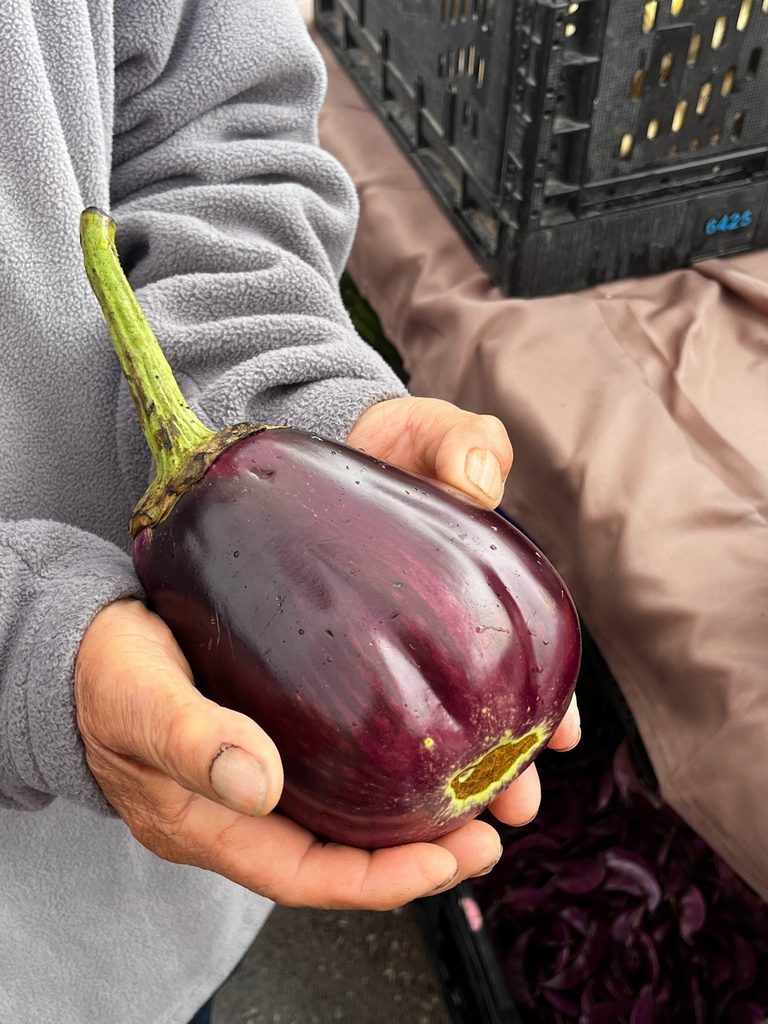
Typically stocked high with Laotian produce, the family-owned booth was in its final stretch of the day. Busy clearing her booth of inventory, vendor Kou Vang waved me away holding eggplant without payment.
I thanked her profusely and fled the scene, no questions asked — an egregious error. I was too excited to concoct the dish I’d had in mind upon seeing eggplant available: crispy eggplant parmesan.
Crispy eggplant parmesan
Yield: 13×18 sheet pan, 12 slices
Prep: 1 hr 30 mins
Cook: 30 mins
Ingredients
- 1 eggplant, medium ($2 at market)
- 2 Tbsp. salt
- 2 eggs, beaten ($1.77 at grocer)
- ½ cup Aleia’s Gluten Free Italian Bread Crumbs ($6.48 at grocer)
- ½ cup Aleia’s Gluten Free Panko ($6.48 at grocer)
- ½ tsp. McCormick Gourmet Organic Dried Oregano ($5.99 at grocer)
- ¼ tsp. black pepper
- 1 (24 oz.) jar Rao’s Homemade Marinara ($7.99 at grocer)
- BelGioioso Parmesan Freshly Shredded Cheese, to taste ($5.49 at grocer)
- 2 Tbsp. olive oil
Directions
- Preheat your oven to 350°F.
- Slice eggplant in ½-inch slices.
- Coat lightly in salt. Let sit for 30 minutes to remove excess moisture.
- Meanwhile, mix bread crumbs, panko, salt, and pepper in a shallow bowl.
- Wipe the moisture off the eggplant slices.
- Coat eggplant in egg, then cover in bread crumb mix.
- Sauté breaded eggplant slices in oiled pan until browned.
- Spread light layer of marinara sauce on sheet pan. Layer eggplant slices onto pan with minimal overlap.
- Cover slices with a layer of parmesan.
- Bake for 30 minutes.
My excitement did not prove to fulfill my goal. Had I taken time to press Vang for what sort of eggplant her family grows — what to make, and how to prepare it — I may have walked away with the know-how I needed.
Instead, I prepared crispy eggplant parmesan for the first time with no guidance, quickly wishing I had snatched ripe advice while it was available to me. My eggplant was not crispy.
In fact, I had managed to make soggy, grainy eggplant parmesan.
I was determined to enter my next market with renewed focus on my mission: forming connections and asking questions.
LSI Global Greens International Market
Des Moines, Iowa
Oct. 3
With clear skies at last, spices floated on a chilly breeze. Colorful fabrics fluttered in the wind while market food simmered. Rather than looking at tables of unfamiliar ingredients, I searched the faces of vendors for somebody who could help me with my next dish.
After some browsing I approached the market’s information tent, which housed market manager Natalie Estrem. I learned a wildly popular ingredient was amaranth greens, or lenga lenga — a staple in East and Central African cuisine.
Estrem explained that this very market was among the only places lenga lenga could be acquired in the region, lending to its popularity. The greens were cultivated by refugees working to establish Iowan farms, and fed countless immigrant families searching for familiar favorites.
Fittingly, the market had just sold out. A $3000 purchase had been made just an hour before my arrival — by customers who had driven all the way from Missouri.
I left the market without improvising another dish. It had taken me three weeks to learn this lesson — I wouldn’t abandon my mission. I thanked Estrem and promised to return.
Before I could continue my pursuit of local lenga lenga, I had a fourth market to complete with six people to cook for.
Broad Ripple Farmers Market
Indianapolis, Ind.
Oct. 10
I found trepidation rising in me as I approached my next market. Though smaller than other markets I’d visited so far, each booth showcased carefully curated displays of fall produce — bushy lettuce, baskets of root vegetables, types of squash I’d never seen. I needed advice, fast.
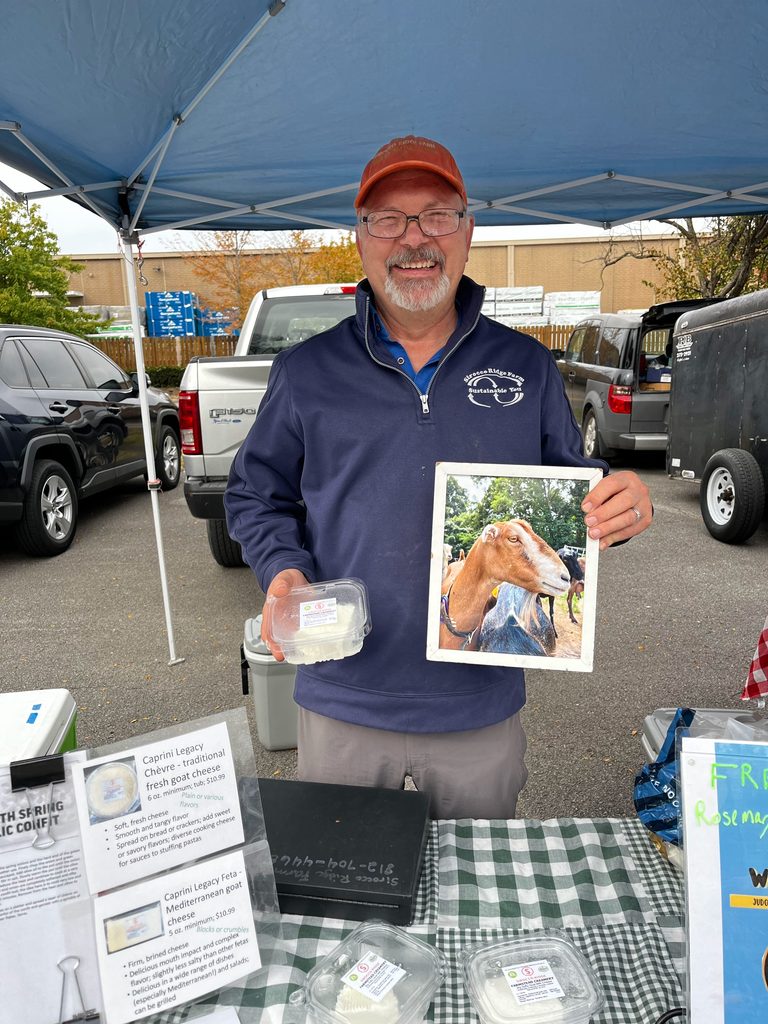
While asking questions about unfamiliar roots and poking through baskets, I encountered goat cheese at the booth of Sirocco Ridge Farm, a small dairy operation based in Henryville, Indiana.
Thinking of bushy lettuce — and my table of six — I asked David Taylor, the farm owner, if goat cheese would do well in a salad. Taylor affirmed my hunch, and suggested crumbling Sirocco Ridge’s creamy ‘Big Softy’ into a salad. Taylor sent me on my way, wishing me luck.
Thinking of fall flavors, I handed cash to an Amish booth in exchange for a hefty sweet potato. From another grower based in Indy suburbia, I added two freshly stuffed bags of lettuce mix to my armful of cheese. With a balsamic glaze, I hoped tossing these elements in a large bowl would suit my occasion.
Autumn salad
Yield: 6 servings
Prep: 10 mins
Cook: 30 mins
Ingredients
- ½ sweet potato, large ($10.19 at market)
- 1 Tbsp. olive oil
- Salt, to taste
- Black pepper, to taste
- 1 (16 oz.) pkg. Sirocco Ridge Big Softy Goat Cheese ($21.98 at market)
- 1 (5 oz.) pkg. spring lettuce mix($6 at market)
- Balsamic glaze, to taste
- Cherry tomatoes, to taste
Directions
- Preheat your oven to 400°F. Grease a 9×13 baking sheet with olive oil.
- Peel sweet potato. Dice into one-inch cubes.
- Add the diced potatoes to the sheet pan and toss until the potatoes are evenly covered in oil. Season with salt and pepper to taste. Toss again.
- Bake for 30 minutes. Flip the potatoes every ten minutes to achieve an even roast.
- Chop goat cheese into pieces of your preferred size.
- Toss cheese, potatoes, and cherry tomatoes together with lettuce mix. Drizzle with balsamic glaze to taste.
When dinner was complete, the table’s enjoyment of my simple market salad told me I had finally achieved my month-long mission.
I had turned my overwhelmed curiosity into specific questions — a goat farmer knows what his cheese does best. Those questions led me to a personal connection — the goat who produced my cheese was named Jett, Taylor had told me with a smile. Finally, that connection led me to know-how — 16 ounces of goat cheese fills salad for a table of six.
This path led me at last to an easily repeatable dish.
Before my month of markets was complete, I had one missing link left to fulfill.
LSI Global Greens International Market
Des Moines, Iowa
Oct. 17
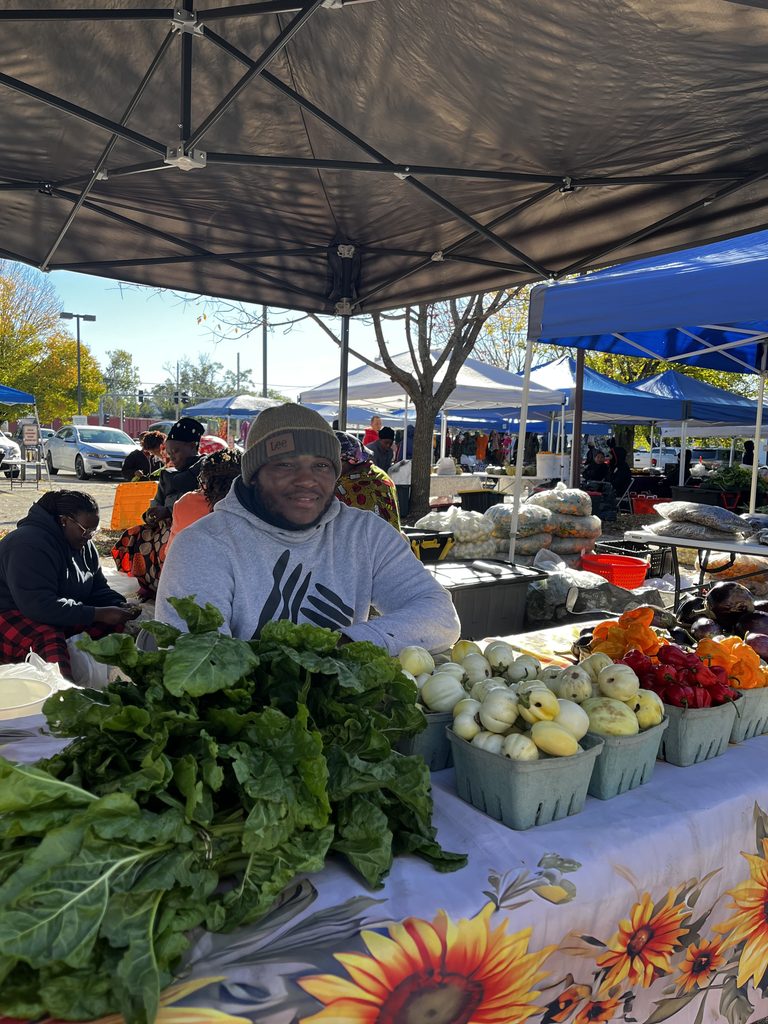
Upon my return to the LSI Global Greens International Market, I was met with morning chill and warm smiles. Natalie Estrem recognized my face with glad welcome — I asked if I had made it in time for lenga lenga.
She hopped up immediately, leading me down a row of booths while calling out for any remaining lenga lenga. The chatter of multiple languages layered over her voice, but she soon found a booth with just five bunches remaining in stock.
The booth belonged to JosiGrow Farm, a refugee-owned agricultural operation based in Earlham, Iowa. Like many vendors at the market, payments were cash only. I quickly scanned my debit card at Estrem’s information tent, returning to JosiGrow with tokens equating $3.
Charles Msimu, booth attendant, refused my tokens but handed over my requested lenga lenga bunch.
I pushed my tokens out further, hoping he would take them. Again, he refused — their remaining lenga lenga was frostbitten, he explained. I looked into my bagful of greens, and saw tiny holes where morning frost had chewed up each leaf. Msimu refused to take money for frostbitten leaves.
I shook his hand, and returned my tokens to the information tent before leaving. I waved to Estrem, knowing I’d be back soon.
To cook my lenga lenga, I turned to the website of LSI Global Greens, where recipes for popular market ingredients were posted for public use.
Burundi-style greens
Yield: 2 servings
Prep: 10 mins
Cook: 40 mins
Ingredients:
- 1 bunch amaranth greens ($3 at market)
- 1 cup Campari tomatoes, chopped ($3.79 at grocer)
- 3 Tbsp. olive oil or red palm oil, 3 Tbsp.
- 1 cup yellow onion, diced
- Salt, to taste
- Black pepper, to taste
Cook:
- Remove amaranth leaves from stalks; coarsely chop leaves.
- Boil amaranth leaves in water for 20 to 25 minutes.
- Chop tomatoes and onion into medium pieces.
- Saute onion for 15 minutes.
- Add gently drained amaranth leaves to onions; stir thoroughly.
- Add tomatoes; simmer for 5-7 minutes.
- Season with salt and pepper to taste.
My month of markets was complete. My simmered greens were incredibly simple to prepare, but rich in flavor and full of moisture that was almost broth-like. With satisfaction, I reviewed my small collection of recipes. Finally, I succeeded. Not in cooking something enjoyable — pleasing as that may be — but rather, I had succeeded in following a path rarely taken: consuming food grown in the region I call home, taken from the hands who grew it.
I knew every market would bring new questions. Now, I know how to make the most of them.