
With events and programming stretched throughout the year, these midwestern bookstores are offering a home away from home to every community member.
This article includes an optional audio read-aloud for easier accessibility.
Beaverdale Books sponsored this article.
From St. Louis to Minneapolis, the Midwest is home to more than 370 independent bookstores — places where readers gather, argue, discover, and occasionally disappear for hours. With so many options, choosing where to start can feel impossible. Urban Plains focused on four standouts from the list that offer something unique: activist programming, deep local roots, a large, browsable selection, and spots where visitors can linger. These shops don’t just sell books; they offer spaces where readers can explore and engage in events.
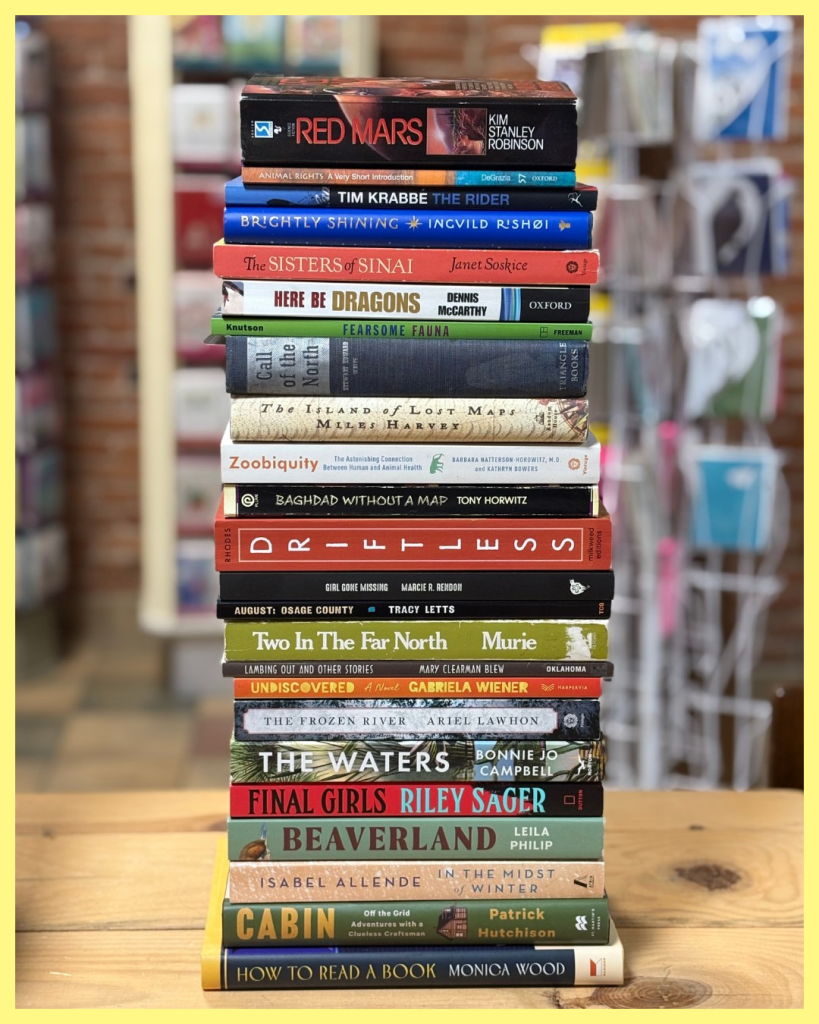
Photo by Jordan Leon.
Every year, the Midwest Independent Booksellers Association publishes the Midwest Indie Bookstore Roadmap to highlight many of these stores, but visiting each one would take more than a year, and by then, a new roadmap might already be out.
Bookstores are for discovering literature but can also serve as a third space. While many see bookstores primarily as places to buy books, these Midwestern shops provide corners to host events and settle in.
The Third Space
The “third space” is an ongoing buzzword for Gen Z, in a world that revolves around the 9 a.m. to 5 p.m. mindset. There are two spaces: work and home — with usual pit stops in between, like the grocery store, gym, and gas station.
Sociologist Ray Oldenburg, in his book “The Great Good Place,” describes the third space as “a generic designation for a great variety of public places that host the regular, voluntary, informal, and happily anticipated gatherings of individuals beyond the realms of home and work.” This was Oldenburg’s simplest explanation of the term, and then he continues for 296 pages, delving into what that third space really encapsulates. For our purposes, the third space is focused heavily on having no direct ties to home or work or people you would interact with on a daily basis, keeping it a uniquely separate space.
“The joys of association in third places may initially be marked by smiles and twinkling eyes, by hand-shaking and backslapping, but they proceed and are maintained in pleasurable and entertaining conversation,” Oldenburg writes.
For those who frequent bookstores, “smiles and twinkling eyes” might not always capture what appears on the faces of browsers. It might be determination, pondering, or even confusion. At bookstore events, visitors might raise their hands to ask questions or discuss ideas. The stores provide the space and resources to explore these topics further.
A third space isn’t a one-size-fits-all experience, but bookstores come close. They create places that cover some of the essentials people may lack in their day-to-day lives. Similar to Midwestern communities, each bookstore has its own character and charm. Some focus on niche genres like romance or sci-fi, while others offer a wide variety of topics — all invite readers to lose themselves in new worlds.
These central Midwestern bookstores are just a few from an endless list that can get the pages turning on a new adventure.
Hosting Groups for All – Left Bank Books, St.Louis, Missouri
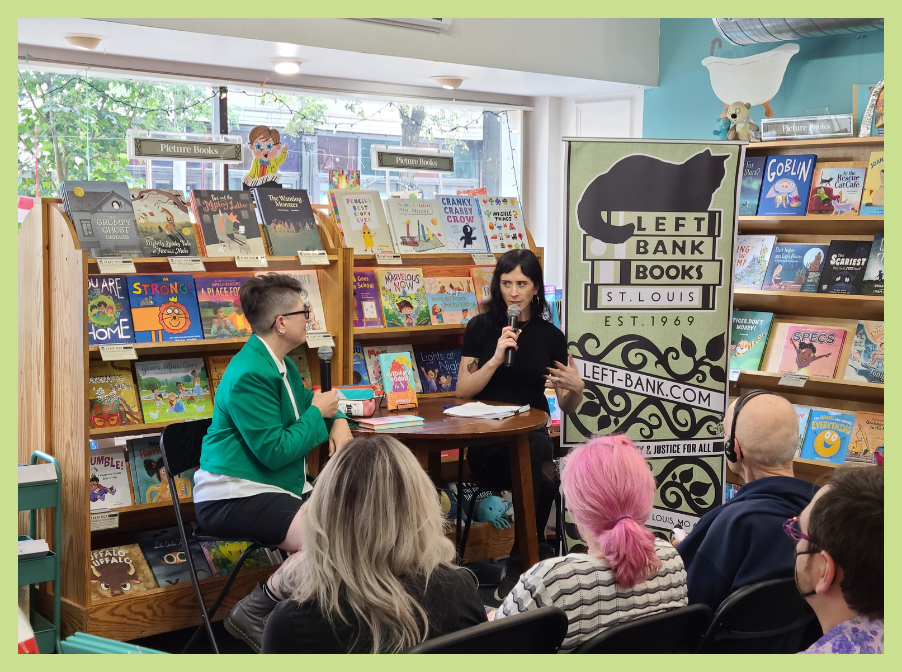
Photo by Evan Fornicola
About 219 miles south of the Iowa-Missouri border on North Euclid Avenue, in St. Louis, lies Left Bank Books, a well-established bookstore that has been around since 1969. Opened by a group of graduate students, the store has been operated for more than 50 years with a mission to “spark public conversation by curating an intelligent, relevant, culturally diverse selection of books.” If you’re lucky, you might meet Orleans, the bookstore’s feline employee.
Left Bank Books hosts more than 300 events a year, covering genres and topics for all ages — from poetry readings such as “Poems from Dog Shows” to storytime readings of “If You Lived in the Sea, Who Would You Be?” The programming includes author visits, book launches, and book clubs.
Community engagement is central to the bookstore. Left Bank Books gives back through the Left Bank Books Foundation, which increases access to books and holds discussions on underrepresented groups and topics.
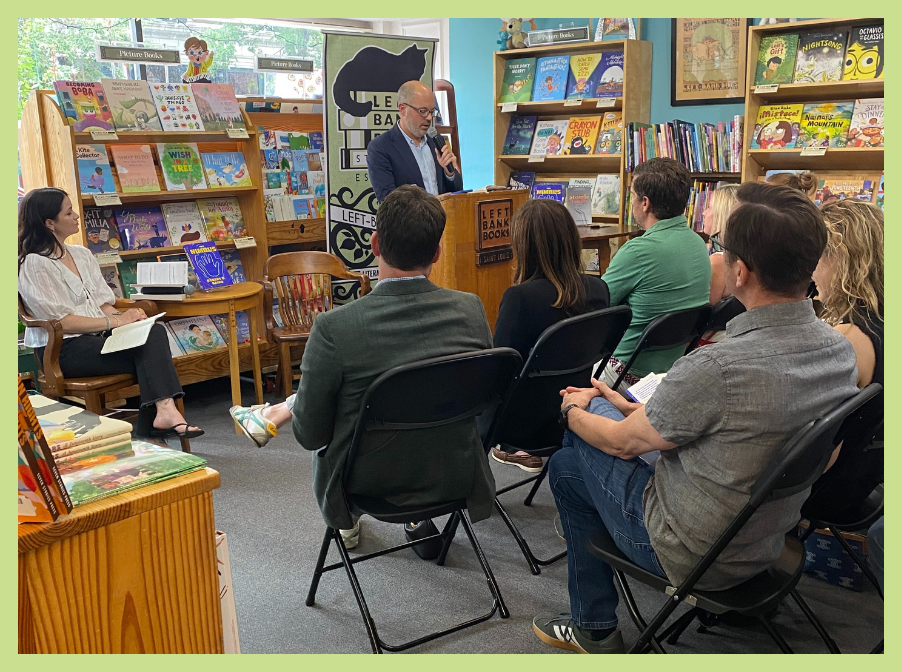
Photo by Ro Kelly.
“The way that we are able to be a part of the community and have the community be a part of us is what allows that to be a unique experience,” says Shane Mullen, event coordinator at Left Bank Books.
The bookstore also has book clubs for these specific communities, providing a space where members can feel welcome and share their thoughts. Groups include the Gay Men’s Reading Group, Lesbian Reading Group, Well-Read Black Girl Book Club, and Read the Rainbow. According to customer reviews on Google, many visitors express appreciation for queer representation in materials and how inclusive the store feels.
Showcasing Local Authors – Beaverdale Books, Des Moines, Iowa
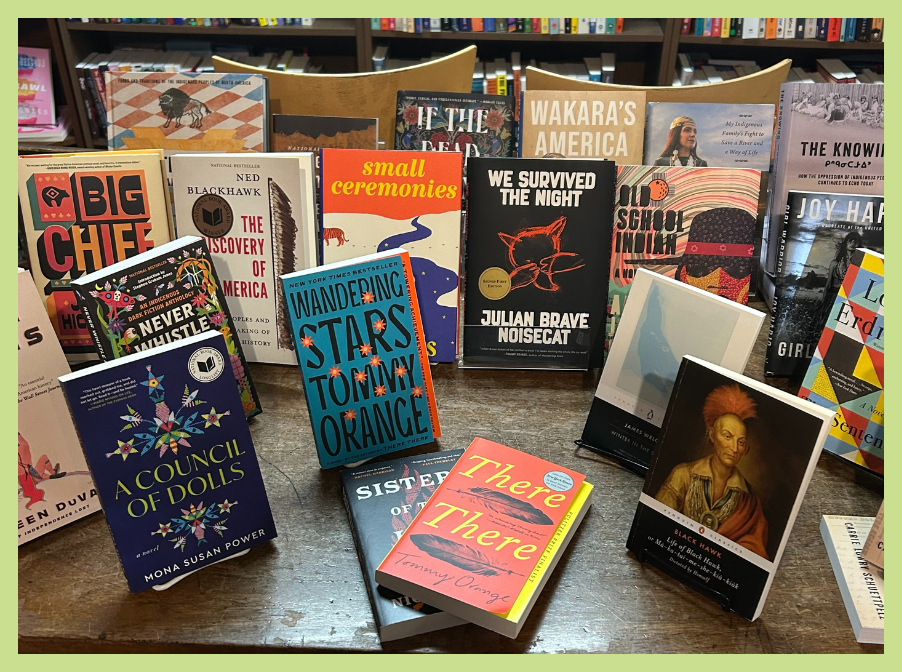
Photo: Melanie Kure-O’Reilly.
Beaverdale Books, the oldest independent bookstore in Des Moines, Iowa, features the usual sections like young adult, nonfiction, and new releases, alongside displays of Iowa-authored books and locally sourced honey, highlighting over 500 local authors, according to the store’s website.
“When the owner first started the store, she tells the story [of] how the day she opened, she was inundated with Iowa authors who came in and said, ‘Will you carry my book?’ And so quickly, she figured out a way to take them on consignment,” says Jan Kaiser of Beaverdale Books.
The store regularly hosts Iowa authors at events, including professors at Drake University and longtime Des Moines residents. To support the growing number of Iowa authors and children’s book collection, the store is expanding to meet community needs.
Guiding Readers Through the Shelves – Magers & Quin Booksellers, Minneapolis, Minnesota
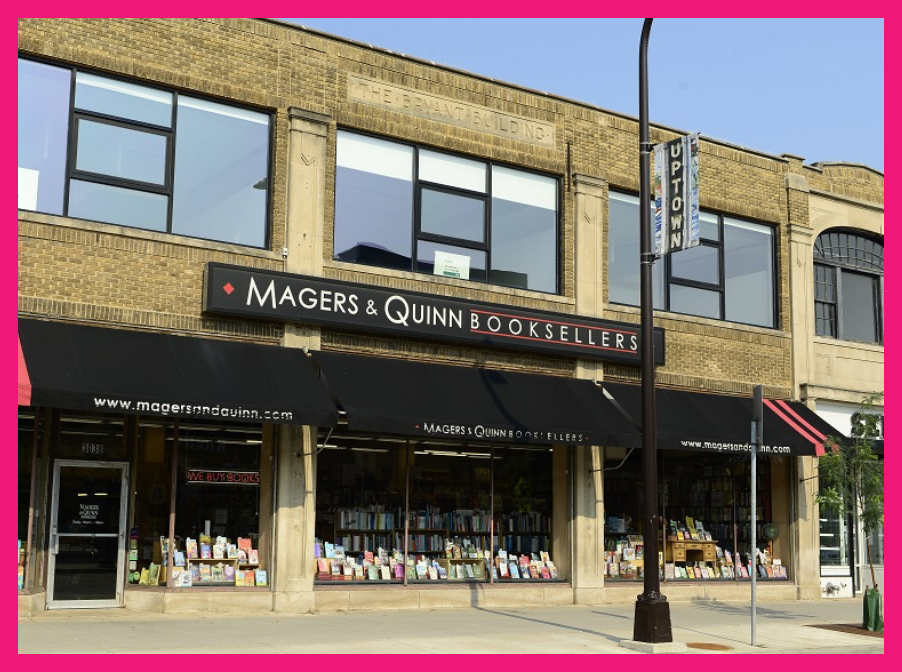
Photo courtesy of Magers & Quinn Booksellers.
Heading north, the temperature may be at least 10 degrees colder than in other central Midwest states, but this bookstore is warm, and the staff are even warmer. Known as one of the largest bookstores in the Midwest, it provides an escape from the cold, whether you are browsing a Franklin D. Roosevelt biography or planning your summer trip with a used copy of “French for Dummies.”
In a store this large, it can be easy to get lost among the shelves. If you find yourself wandering between Food & Cooking and Poetry, staff members can guide you to the book you are actually looking for.
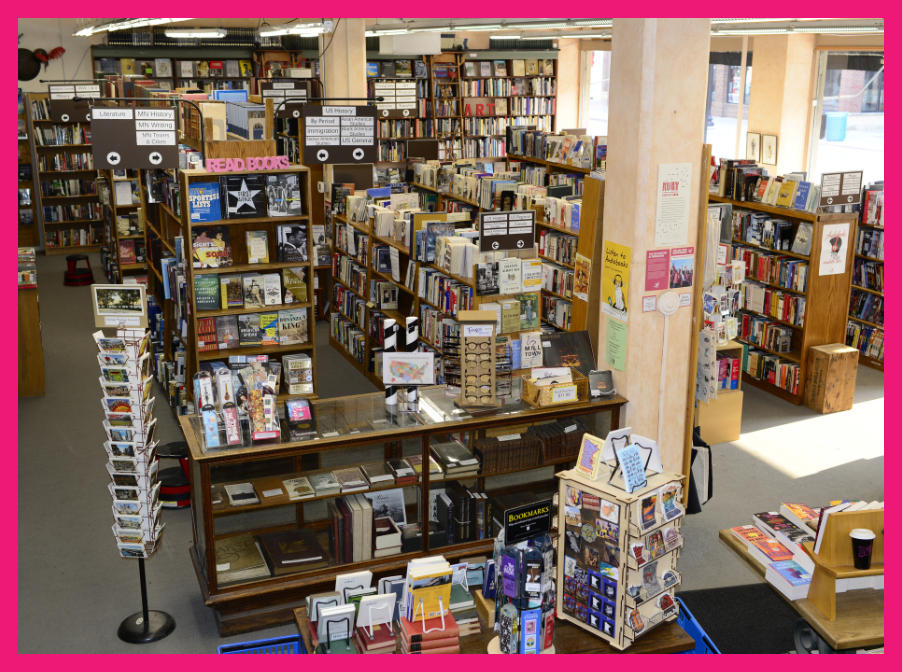
Photo courtesy of Magers & Quinn Booksellers.
Annie Metcalf of Magers & Quinn says, “Like, the booksellers are doing that, of course. Partly because it’s our job, but also this is our job, because we ended up here because we love to talk about books… And I think that that does spill over into the customers relating to one another sometimes.”
Offering Corners to Linger – Lion’s Mouth Bookstore, Green Bay, Wisconsin
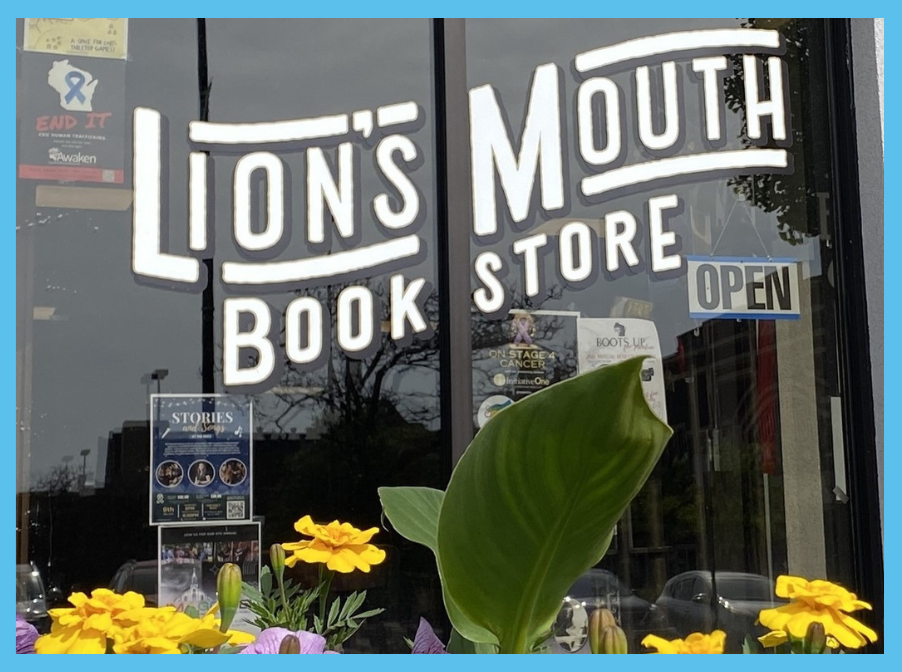
Photo by CJ Johnson.
When the constant buzz of home and work becomes inescapable, Lion’s Mouth Bookstore in Green Bay, Wisconsin, recognizes the need for quiet, inviting visitors to turn down the volume and settle into a restful third space. With couches and chairs of velvet in green, burgundy, and beige, there’s a wide variety of spots to take a seat, sip on a matcha, and get in a few pages before continuing your day.
“People feel safe in an independent bookstore. They feel like when they walk through the doors, they can just breathe and relax and just browse, and kind of shut the outside world out,” says owner Amy Mazzariello.
The store features rugs, couches, and varied seating throughout, and the historic brick interior gives the space a homey feeling.
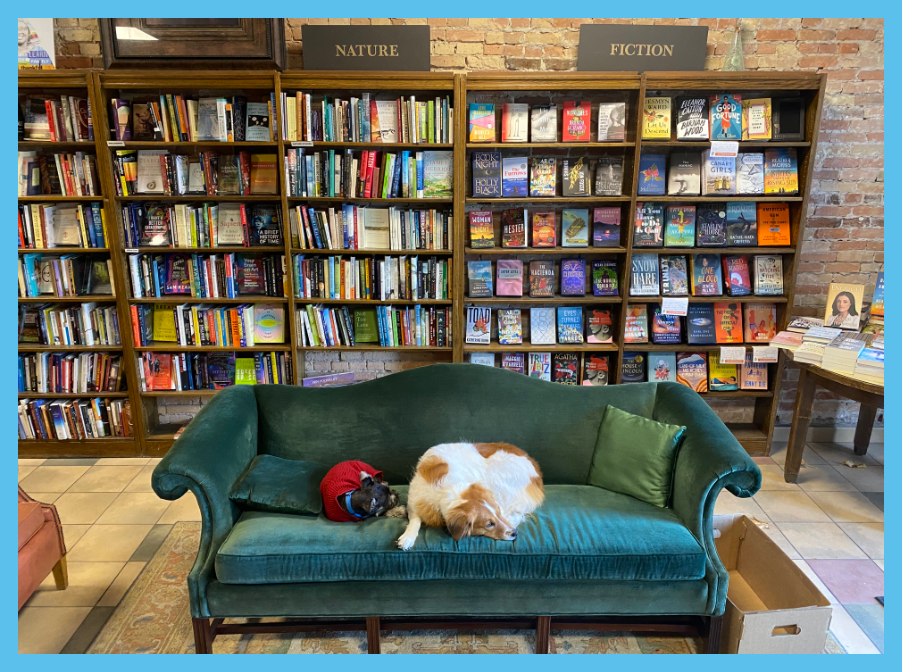
Photo by CJ Johnson.
The Final Chapter
There is no handbook you can buy at these bookstores that includes a magical lamp to fulfill your heart’s desire. Fairy tales may promise genies, but they are not guaranteed. What these stores do offer is a place to go — a space for reading, exploring, and connecting with others. While it’s impossible to cover all 370 stores, these four provide distinct experiences that make them worth visiting.