
How Iowa cities and governments tackle blight and nuisance properties.
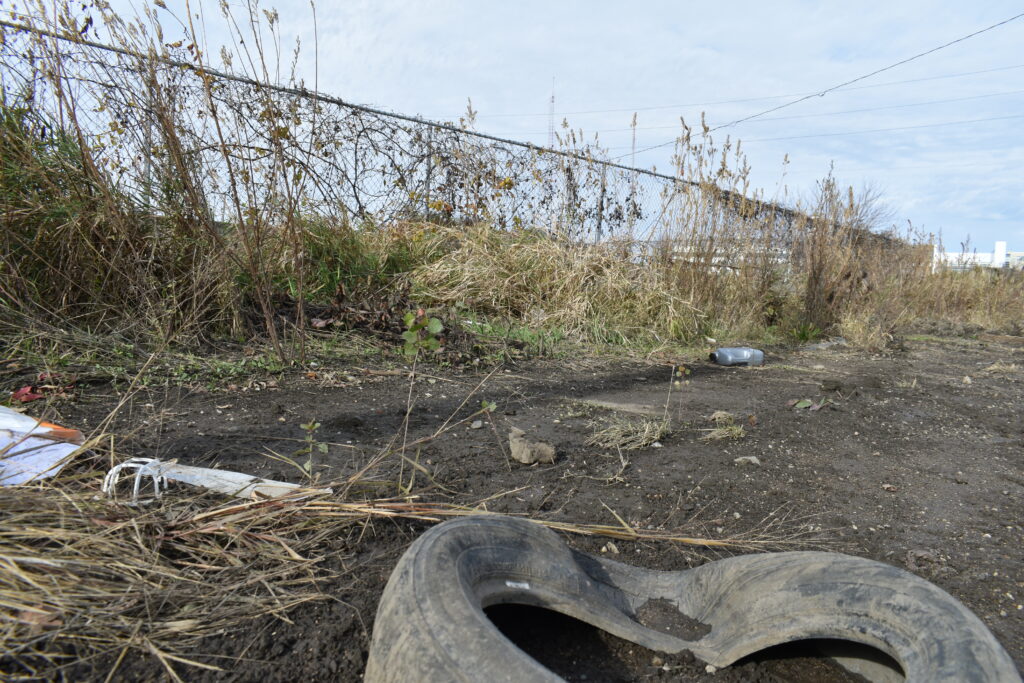
Unlike people, buildings don’t get better with age. As cities grow and change, so do their properties, which sometimes become neglected or abandoned.
Urban decay is not a new problem. Every city has to deal with aging infrastructure and determining the fate of decaying properties. When those properties become too much to handle, they sit untouched and unused, contributing to lower property values and less economic output. Even worse, they can be hazardous to human health. Many abandoned buildings contain asbestos or other environmental hazards that can harm nearby residents if they come into contact with them.
According to Reid Bermel, Iowa Department of Natural Resources Derelict Buildings program manager, cities are responsible for enforcing nuisance building laws and tearing down derelict buildings. The Iowa Legislature labels nuisance buildings as any buildings that are “a menace to public health, welfare or safety.” However, due to the costs of safely removing old buildings, this is often an impossible task for smaller communities.
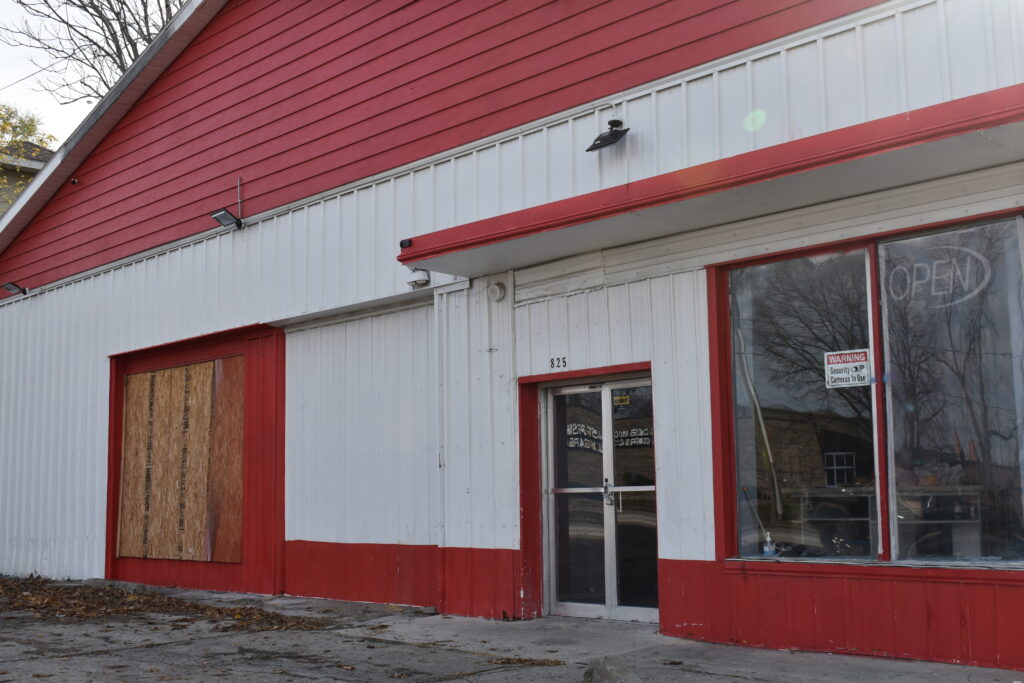
In Iowa, the Derelict Building Program helps cover some of the costs of removing dilapidated commercial buildings for smaller towns. This old storefront, for example, would most likely qualify if it weren’t located in Des Moines. The program offers funding in seven categories, with some grant awards covering as much as $50,000 in teardown costs.
“It has to be a city of 5,000 [people] or less, and it has to be a city-owned building that’s been vacant for at least six months,” Bermel said. 2023 Data from the U.S. Census Bureau shows that of the 940 towns and cities in Iowa, 854 have a population of less than 5,000. That is over 90% of Iowa’s towns and cities.
In addition to being a city with less than 5,000 people, the city has to show that the building is run down to a certain extent to qualify for funding, Bermel said. The program often provides funding for specific stages of demolition, like asbestos inspection and removal.
“Some of the smaller towns get creative. What they do is they phase out the project,” Bermel said. “For example, they may come for asbestos inspection and then abatement. That might be year one, and they ask for funding. Then, in year two, they do their renovation or deconstruction, depending on their goal with the building. It’s not just one-time funding, necessarily, for some of those really small communities. There’s a lot of flexibility, I feel, with the program to help those smaller communities out.”
Since the program’s founding in 2011, it has helped 123 towns with 169 projects. If a town applies and is rejected for funding, the DNR makes every effort to provide feedback on how it can secure funding the next time it applies.
“We are very open, I feel, and have gotten a lot of positive feedback, even from applicants that don’t receive funding that first year, because we really make them aware of where their application came up short and what they had to do,” Bermel said. “I think it’s almost a 100% success rate the second time they apply because then they really have a good understanding and grasp of the program.”
However, the state doesn’t step in when it comes to abandoned properties in cities with more than 5,000 people. Instead, they incentivize through grants, loans, and city-funded options.
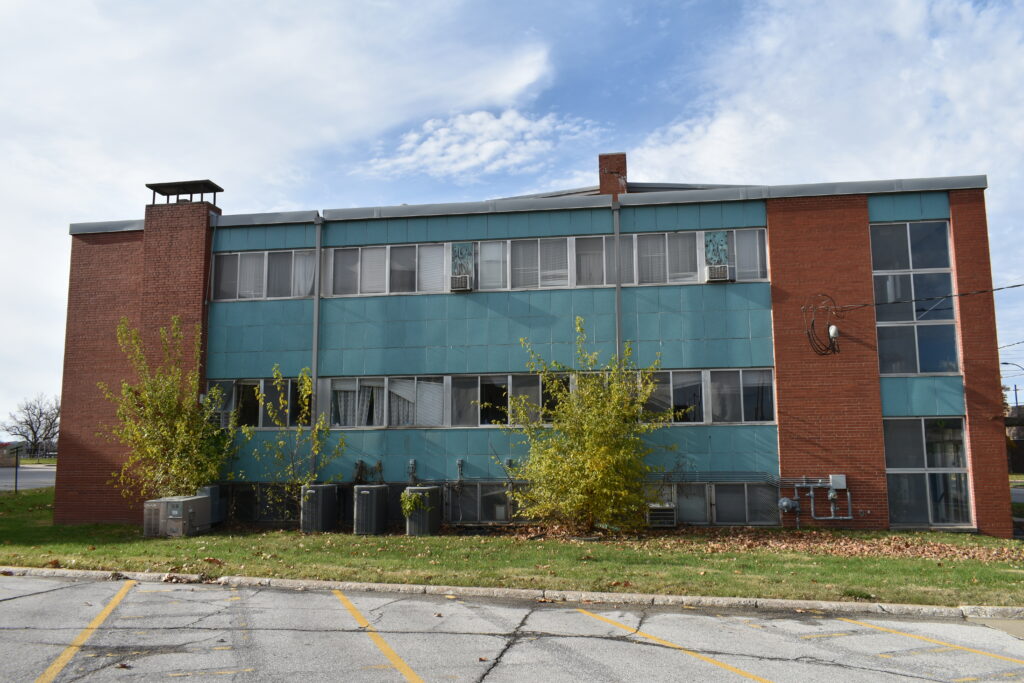
Elim Fellowship, an abandoned church built in 1956, sits just minutes from the Iowa State Capitol. Mel Pins, Iowa DNR Brownfields program coordinator, said that once COVID-19 hit, Elim Fellowship combined with Hope Lutheran Church, leaving the church to sit empty.
In Des Moines’ case, the city has been tackling nuisance properties with its Blitz on Blight Program, funded through the local option sales & service tax. Since its inception in 2019, the program has removed over 100 buildings for $2.5 million.
Pins said redeveloping nuisance and abandoned buildings is all in the eyes of the beholder.
“There are some developers that say, ‘Hey, we don’t mind,’” Pins said.
On the other hand, cities are not required to fix nuisance buildings, and some cities— like Detroit — have infamously gone bankrupt due to mismanagement of city funds, slow population growth, and a declining automotive industry. These factors caused Detroit to become one of the largest cities to file for bankruptcy in 2013. A 2015 Detroit News article estimated that 36% of all Detroit properties went through foreclosure from 2005 to 2014.
“Des Moines and other medium-sized cities understand that if one property is sitting vacant, it is going to spread — it’s like cancer,” Pins said.
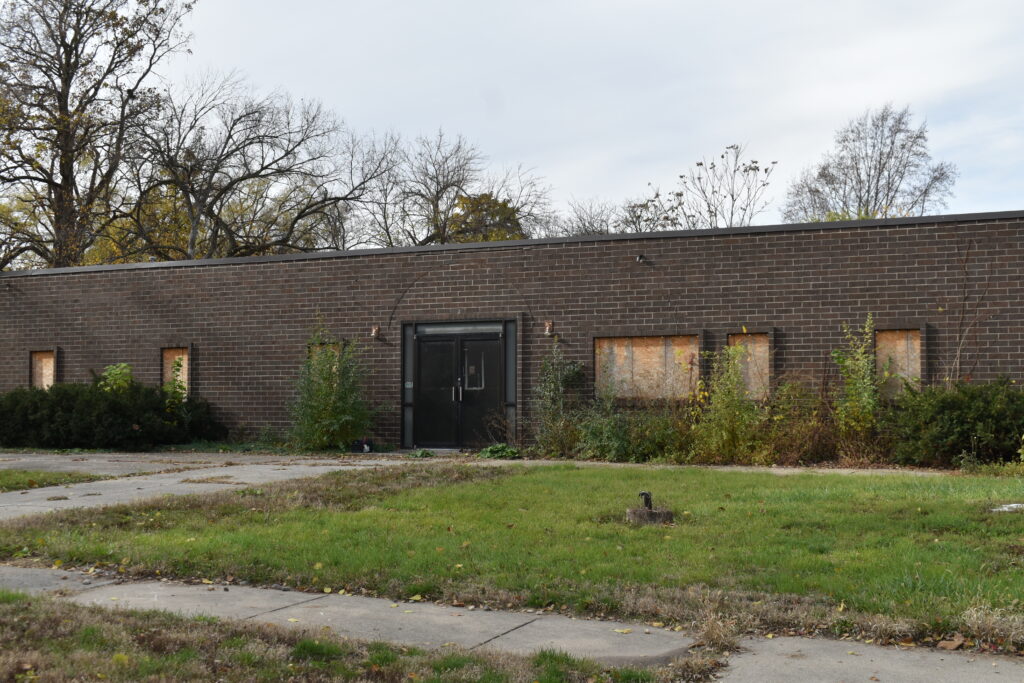
2679 Maury St. (Pictured) in the Chesterfield Neighborhood of Des Moines has been bought and sold approximately five times since 2014. It’s currently been on the market for 153 days. According to A Street Partners, a California-based property management and leasing company, it’s typical for commercial properties to stay on the market for six months to a year, depending on factors like the economy, time of year, etc.
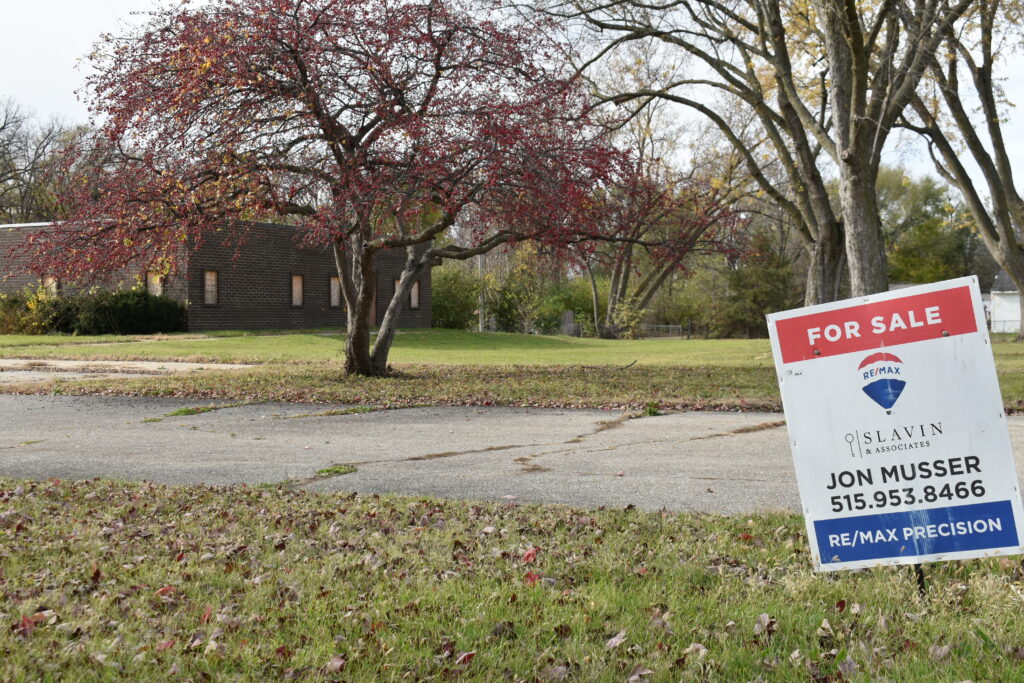
The 5,000-square-foot building could be converted into a grocery store, as the U.S. Department of Agriculture classifies the Chesterfield neighborhood as a food desert, an area lacking affordable and nutritious food.
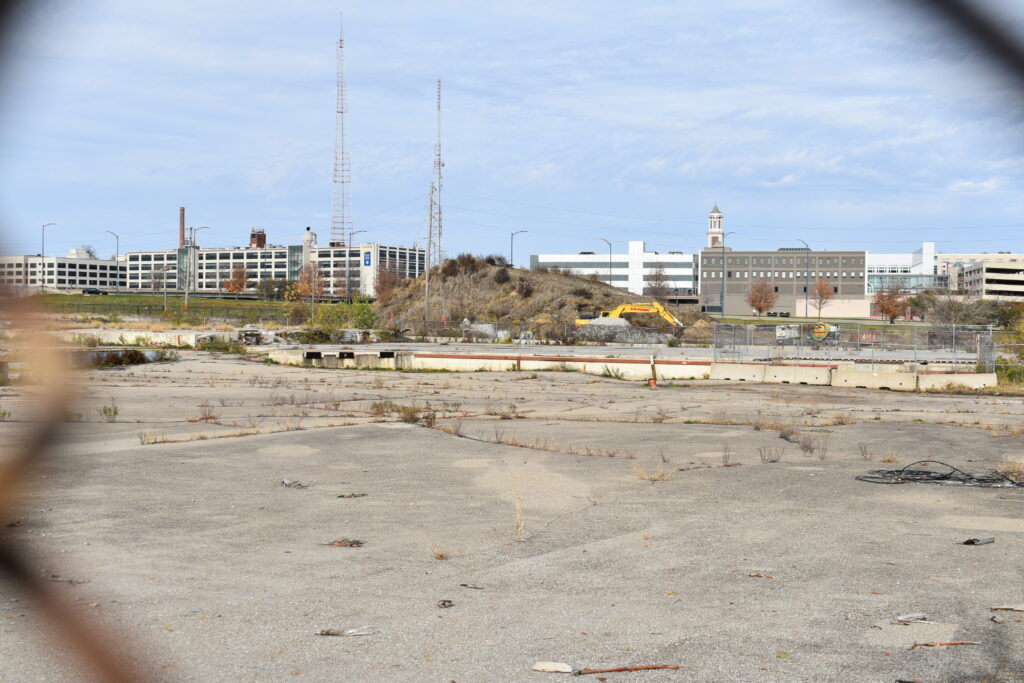
Even when the EPA steps in, redevelopment can take decades and often happens in small steps. Des Moines’ own EPA Superfund site has sat empty for 40 years.
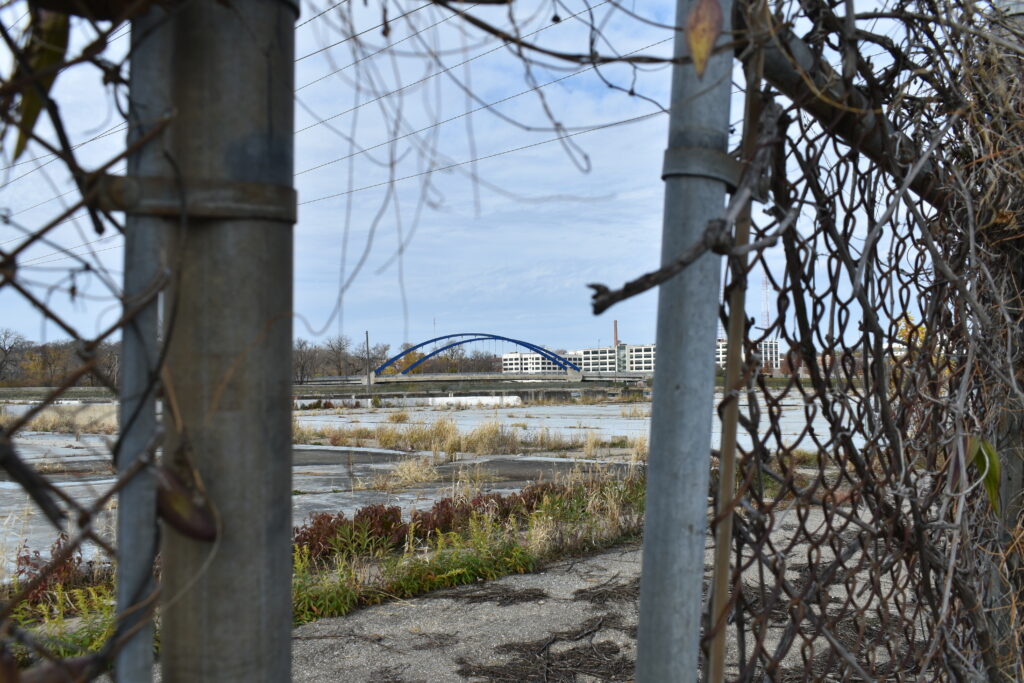
Cement is all that remains at the TCE Superfund site. The remaining buildings were torn down in 2021 after the city took control of the site. The original site was a Dairy Industries Co. (DICO) manufacturing plant. The EPA classified it as a Superfund site in 1983 due to heavy metals leaching into the groundwater.
“Who wants to take on a contaminated site? Probably nobody, especially a Superfund one,” Pins said. “Iowa DNR, The city of Des Moines, the EPA, everybody negotiated, and the city took title to the site.”
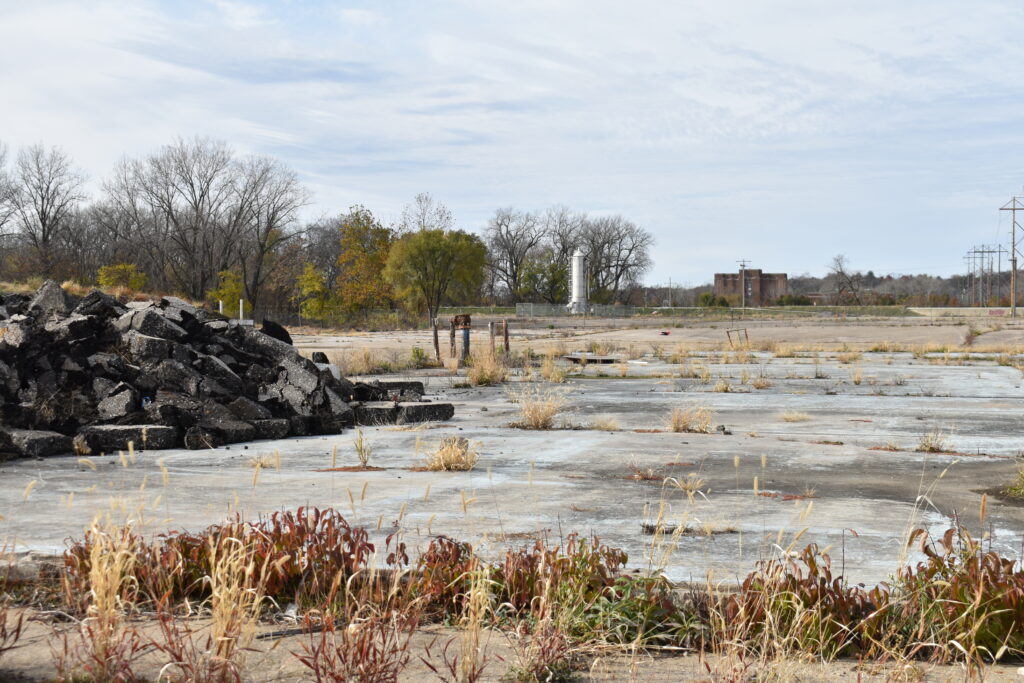
In Pin’s words, the site doesn’t “glow at night,” as almost all of the contamination has been resolved. Even though the site has seen a huge transformation it still has a long way to go.
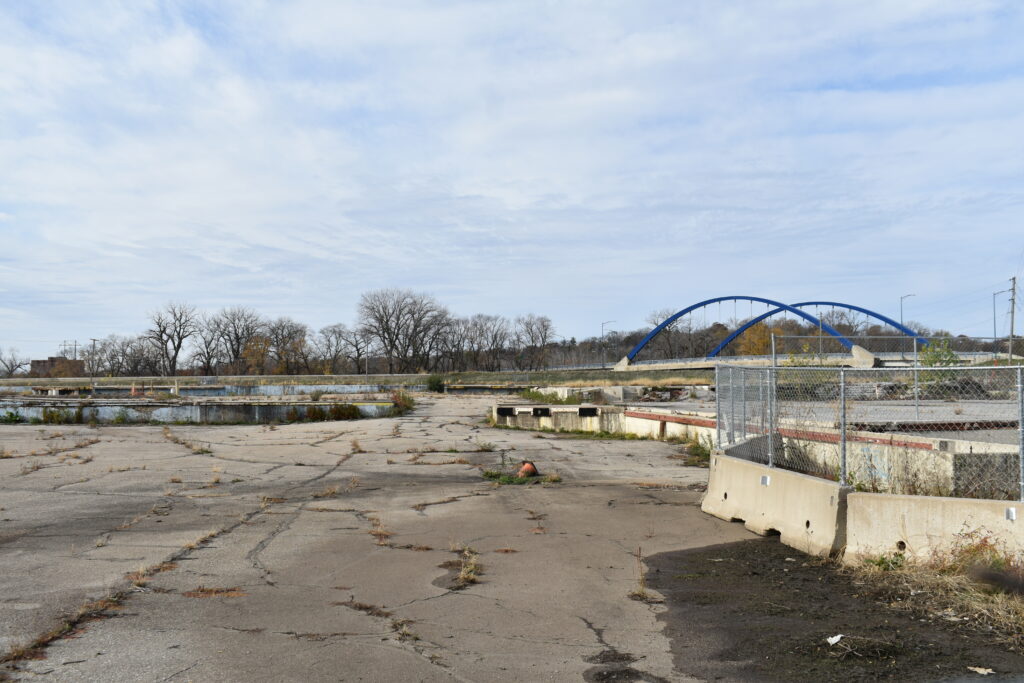
“When you look out there today, if nobody knew what was there before, you’re like, ‘Well, this is a bunch of crappy old pavement,’” said Pins. “It doesn’t look the best, but it looked a lot worse. And when the buildings were there, it was a big mole on someone’s face. That’s all you focus on.”
Since the city of Des Moines purchased it, there have been talks of the site becoming a soccer stadium — partially funded and built through the Krause Group, former owner of Kum & Go — but that plan has yet to see the light of day.
“Kyle Krause had been the president of Kum and Go. He is also a major soccer fan. He owns a soccer team in Italy,” Pins said. “His goal was to bring a professional soccer stadium to Des Moines. His proposal with the city of Des Moines was, ‘Hey, I’ll build a soccer stadium there. We’ll take title to it,’ but this is going to be, like, a $100 million project; he was going to be the minor investor, not the major.”
As the end of the year approaches, the only progress has been the Iowa Economic Development Board awarding $23.5 million in funding for the project. According to the Des Moines Business Record, after the IEDA grant, funding from Kyle Krause, Polk County, and other investors, a funding gap of roughly $19 million still remains.
Ella Field, a Des Moines resident who drives by the Superfund site every day on her way to work, thinks the possibility of a soccer stadium being built on the site would be good for the city and turn an unsightly eyesore into an economic driver for the city.
“If a soccer stadium went up, I think it would be a great way to turn an already established, ugly, rundown lot into something that would be a fun event space and destination to engage with the community,” Field said.