
From the farm to the classroom, Iowa faces a growing hunger crisis as critical USDA funding is slashed.
It’s mid-April on Tony Thompson’s Elkhart, Iowa, farm, where the land looks quiet now but is full of promise. Seeming empty fields stretch flat to the horizon. Nothing has sprouted quite yet, but rows and rows of produce are planted. Soon, everything will be green and alive.
Thompson walks the edge of his fourth-generation farm, boots pressing into the soft earth, pointing out where the sweet corn will come up, where the tomatoes will climb, and where the chickens will range.
“You’ve got to plan early,” Thompson said. “Even if you’re not sure what’s coming.”
This year, what’s coming is uncertainty.
Federal funding that once supported Thompson’s small food hub, which connects his local farm with schools and food banks in the area, was abruptly cut, a victim of the aggressive downsizing of national spending. For farmers like him, that doesn’t just mean fewer contracts. It means fewer people fed, fewer stories told, and a local food system hanging on by its roots.
“All I ever wanted was to make a living off the land like my grandparents did,” Thompson said. “Grants helped us grow, but I never wanted to rely on them because I know they can be taken away at any time.”
And a few weeks ago, that time finally came.
When Funding Disappears
In the agricultural heart of America, a new crisis is taking root: Iowa’s local food networks are scrambling to survive after devastating U.S. Department of Agriculture (USDA) funding cuts. Across the country, more than $1 billion dollars in federal funding was slashed. As federal dollars disappear, farmers, schools, and food pantries across the nation and close to home are grappling with a broken food chain and a growing hunger crisis.
It’s all part of the Trump Administration’s push to reduce the government’s footprint. In hopes of saving money, USDA terminated two contracts. The first was for $660 million tagged for the Local Food for Schools program, which helps connect school lunchrooms with area farmers in 40 US states. The other: a $420 million deal with the Local Food Purchase Assistance Cooperative Agreement, which filled the shelves of local food banks and plates at local food distribution sites.
Some of that money—roughly $11.3 million—trickled down to Iowa. It went to over 160 schools, which in turn bought meat, eggs, dairy and produce from 110 different farms in the state. It also helped stock 2,000 different food distribution sites, allowing Iowa food pantries and community organizations to purchase directly from another 194 farms. Without those funds, thousands could go hungry while food that would have fed them could go unsold.
LFS and LFPA were constructed to prevent such things. The programs were created in 2021 as a part of the American Rescue Plan Act, the Biden-area plan to help solve COVID-19 supply chain issues while also bolstering America’s agriculture economy. The programs focused on small farms that didn’t grow commodity crops like corn or soybeans, but instead produced healthy products—particularly fresh veggies—that are often too expensive for school districts and food pantries to buy on tight budgets. The cuts have left schools and farmers in shock.
Before the Trump Administration took office, Thompson’s food hub, known as Prudent Produce, had two objectives – deliver locally grown produce to consumers’ doorsteps and donate fresh food to 162 schools and over 900 food banks with the help of federally funded programs. Prudent Produce’s delivery service provides healthy food to over 600 Iowans per month, but their work with the federally funded programs has come to a halt.
“Some of the other food hubs are kind of struggling right now – they’re not sure what they’re going to do and they’re scrambling to create other markets,” Thompson said. “Luckily, we have a consistent, although kind of small, but consistent retail market. The negative side of it is for the last three years, we have been part of programs that do get federal funding and now those are gone.”
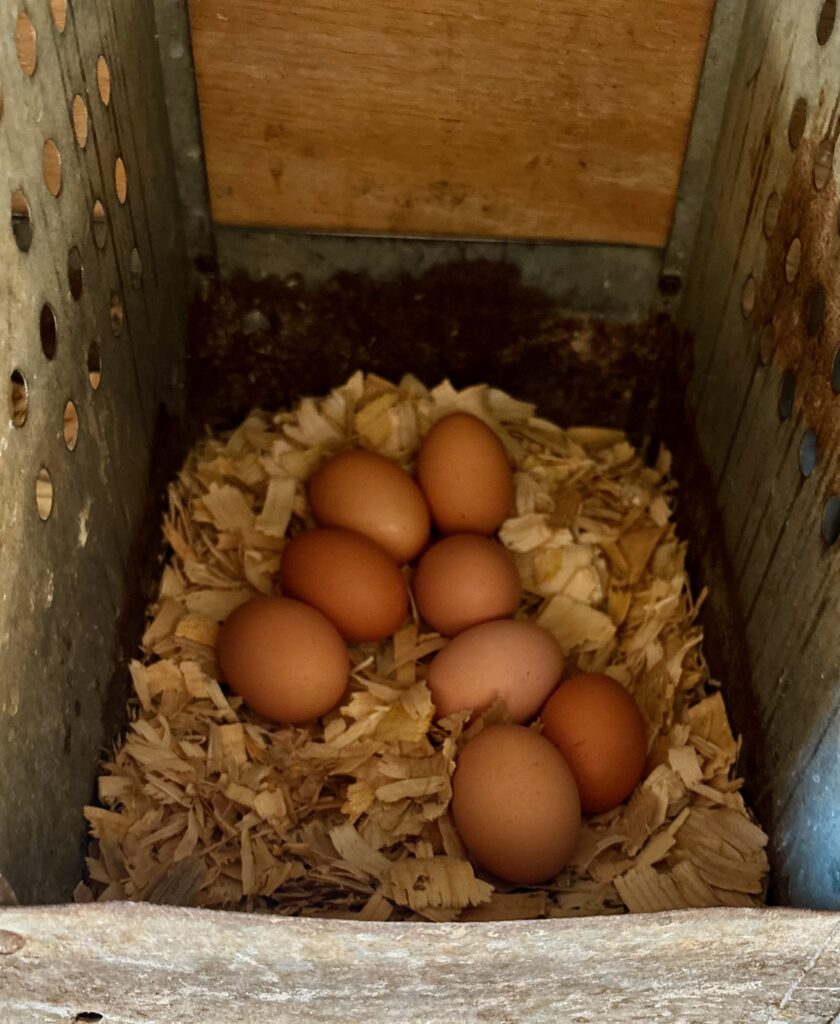
Thompson raises eggs and produces sweet corn, zucchini, and tomatoes on his 250-acre farm. As for the other products Prudent Produce offers, Thompson and a small team gather meat, eggs, dairy, baked goods, fruits, vegetables, and more from over 100 farms across the Midwest. The products are then housed in Elkhart and later delivered to central Iowa families weekly.
Since 2022, the leftover food that Prudent Produce purchased was being sent to local schools and food pantries through the Local Food for Schools and Local Food Purchase Assistance.
“The main issue is that the funding cuts are taking local food out of students’ hands,” Thompson said. “Schools get a certain amount of money for regular school meals, but these programs were a way to get fresher and local products directly to students and it helped to tell the story.”
Thompson explained that the impact of these programs was not just providing students with healthier options, but to also educate them about food.
“We have kids that don’t know where food comes from. They would say, ‘The eggs come from the grocery store and the chicken comes from the grocery store.’ We were able to go into schools and tell stories and do a lot of education about the food we are providing,” Thompson said.
According to Iowa’s Agriculture Department, $2 million in LFS funding was awarded to over 160 Iowa schools across the state. The last of that funding ended in December. The sudden loss of federal support isn’t just a financial loss, it’s a logistical crisis in the making, according to food security experts.
“LFPA and LFS together — that was $11.3 million (a year) over the next three years,” said Luke Elzinga, Policy and Advocacy Manager at DMARC, a central Iowa nonprofit that oversees a large network of food pantries. “Yes, we’re seeing some of that now, but we’ll really feel the impact this summer, and even more over time.”
Those programs were already preparing for growing season before the federal cutbacks were announced.
“Iowa farmers were scaling up,” Elzinga explained. “They were planting more in preparation for these programs. Now they’re stuck trying to find new markets.”
At the same time, pantries and food banks are losing access to the most affordable foods available to them. Canceled shipments from the USDA’s TEFAP (The Emergency Food Assistance Program) include high-demand items like meat and dairy products.
“Those TEFAP foods are the cheapest for food banks to acquire,” Elzinga said. “Anywhere from free to 19 cents a pound. Without them, food banks across the country are forced to buy more food at higher prices.”
A tough ask in a system already stretched thin.
“We have food banks and pantries breaking records. We’re already seeing a historic need and then to have USDA getting canceled – there’s a heightened level of need and a lower amount of resources,” Elzinga said. g ethnic communities, and more. From there, local agencies have 90 days to settle refugees into their new lives.
USDA Cuts Impact Local Food Pantries
As farmers like Thompson adjust to a new reality, the effects of the USDA cuts are rippling far beyond the fields and putting more pressure on local food pantries, like the newly expanded one in the Des Moines, Iowa, suburb Urbandale.
“In February of 2022, we served 847 families. Two years later, we’re serving over 2,200 every month,” Patty Sneddon-Kisting, Executive Director of the Urbandale Food Pantry said. “That 2,000 mark always felt like this far-off number we’d never reach and then we hit it and just kept growing.”
The Urbandale Food Pantry began serving the community in 2008, when the population was nearly half of what it is today. As the suburb grew, and the need for food continued to grow, pantry staff realized that they didn’t have the space to serve the expanding number of people that were walking through the door.
“We were constantly under this logistical nightmare of, we’re serving more families, we need more food. Then it was where do we put the food? Can we even get enough food?” Sneddon-Kisting said.
What was once seen as a future goal – an expanded building that could serve more people – became an urgent necessity.
“I thought a new facility was maybe five or ten years in the future, but it really became an imminent need because of the rising demand,” Sneddon-Kisting said.
The Urbandale Food Pantry opened its doors to the new, expanded building last month. They’re now located off Douglas Avenue, one of Urbandale’s main drags, and have the capacity to serve double the clients. They’ve also added a dedicated space for food recovery, more warehouse space, and over 2,000 square feet of cooler and freezer space.
Of course, what’s going into those coolers is now up for debate. The Urbandale Food Pantry itself does not receive direct federal funding, but before the cuts, they were a part of some federally funded programs, including the LFPA.
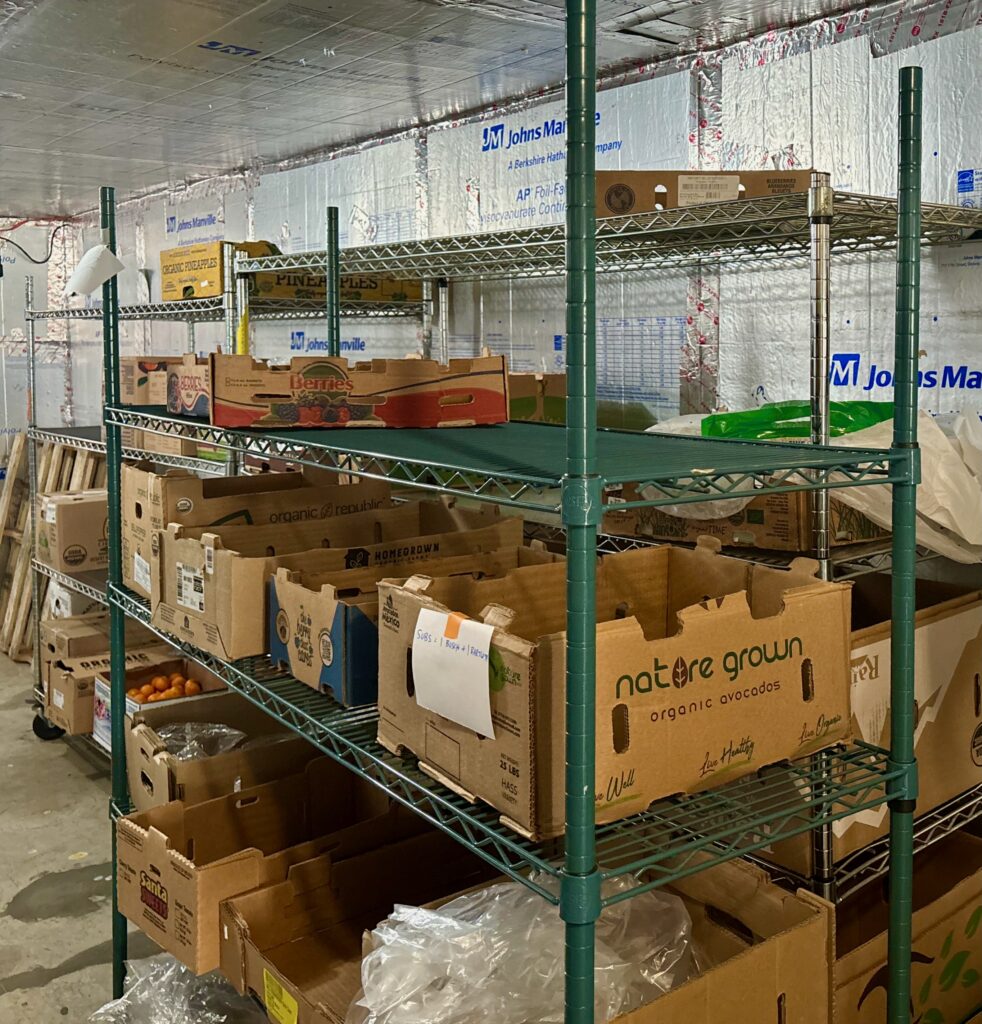
“We had the Local Food Purchase Assistance plan that got canceled, and so we were receiving weekly distributions of fresh produce that were no longer able to be delivered, ” Sneddon-Kisting said. “Now that programs are being rolled back, we have a lot of concerned families because they don’t know what’s going to happen to their benefits.”
That the uncertainty is troubling, especially being in the middle of an expansion, and seeing the need for food grow everyday she goes into work.
“We have no idea what the future holds, whether it’s federal funding or cuts to food stamps or Medicaid. And that’s scary. It means that we have to anticipate the increase to continue,” Sneddon-Kisting said.
Hunger Continues to Grow
What’s happening in Urbandale is part of a much larger trend. Across Iowa, food insecurity is rising and organizations are feeling the pressure first-hand. According to the Food Bank of Iowa, approximately 344,500 people in Iowa face food insecurity, which translates to about 1 in 9 people across the state. The organization provides food and grocery items to families in Iowa through a network of 700 partner agencies and programs. They also offer several direct programs, like the Mobile and School pantries, food rescue programs, and the Backpack program, which provides nutritious food to students on weekends.
“Last week, we learned that 16 truckloads of food we were expecting through USDA from April through July, we will now not get. That’s 400,000 pounds of dairy and protein that we will not see,” said Annette Hacker, Vice President of Strategy and Communications at the Food Bank of Iowa. “The value of that food from USDA is about $800,000, but for us to even try to make up the shortfall, it’s well over a million dollars (at unsubsidized prices) that we’ll have to go buy that food to make up the difference.”
Throughout this legislative session, two key bills related to food insecurity were moving through the Iowa House and Senate. House File 970 would have reauthorize Double Up Food Bucks, a program that allows SNAP recipients to double their purchasing power on fresh fruits and vegetables at participating stores. The bill also includes new restrictions on what SNAP recipients can buy, limiting eligible food on health standards. Senate File 232 would have also reauthorize Double Up Food Bucks, but without adding those restrictions on SNAP purchases. Hunger advocates like Hacker prefer the Senate version, as it continues to stretch limited grocery budgets without penalizing food choices.
“Any restrictions to SNAP put more pressure on food pantries and food banks at a time when our resources are already stretched thin,” Hacker said.
With the end of the legislative session quickly approaching, it’s likely both bills won’t pass. Even so, the need continuing to grow in Iowa. Hacker said the time for action is now.
“More people need help with food than ever before in this state,” Hacker said. “Food banks are doing more with less, and providing people the means to have enough nutritious food on their table allows us to build stronger, more resilient communities. Until those basic needs are met, it’s hard to do anything else.”
Legislative Decisions Trickle Back to the Farm
For farmers like Tony Thompson, the policy debates aren’t abstract, they’re personal. Every decision made at the statehouse or in Washington will have an impact on his fields in Elkhart. That’s why he recently flew out to Washington D.C. to talk to legislators about policy changes and advocate at a national level.
“It’s important to talk to Congressmen and women about the need for sustainable food and agriculture systems and being there to talk to them face-to-face really makes a difference,” Thompson said.
For now, Thompson said he will continue to advocate. He sees the good farm fresh food does for communities around Iowa. Although he is no longer able to participate in LFS or LFPA programs, Thompson said he hopes to continue expanding Prudent Produce and make it more accessible for families.
“It took us a long time to figure out the logistics of these programs,” Thompson said, “and now to pull the funding out from us that was going to help us solidify the process for years to come – it’s stupid and stressful and really hard to let go of something you spent so long building from the ground up.”