
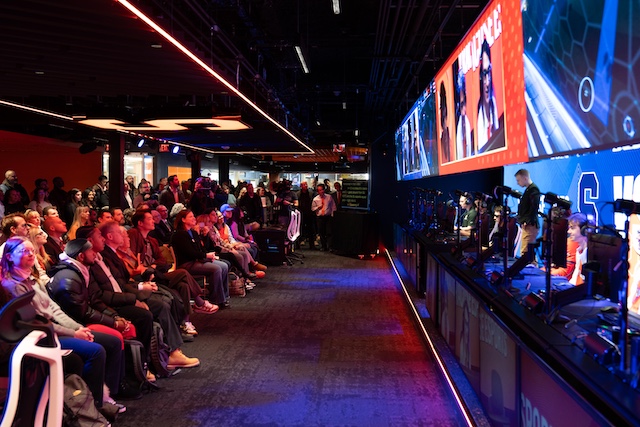
Team huddle before competition, reviewing strategy and strengthening communication at Let’s Make BIG Moves 2026. | Photo Courtesy of Syracuse Esports (@Cuse_Esports on Twitter)
More than 260 schools now run varsity esports programs. The question is no longer whether it belongs; it’s what comes next.
Video games have always been a communal activity. Long before stadiums and scholarship money entered the picture, students huddled together around dorm room monitors, trash-talking each other over Halo or StarCraft. Their competitive instinct was always there. What’s changed is that colleges are finally paying attention to it — and in a big way.
Esports has quietly evolved from a hobby into a full-blown campus institution. We’re talking about dedicated arenas, scholarship athletes, academic majors, and professional staff. The question no longer seems to be whether esports has a place in higher education. The real question is: what does it mean when it arrives?
So What is Esports, Exactly?
“Esports are simply ‘competitive video games,” said Travis Yang, director of esports competition at Syracuse University.
Just like basketball, there are levels, from playing for fun to competing professionally; video games exist on the same spectrum. You might casually play Valorant on a Tuesday night, or you could be grinding through ranked matches as a scholarship athlete, representing your university in a tournament that’s broadcast nationwide.
What’s made esports explode over the past two decades comes down to two factors: advances in network technology that enable real-time competition with players across the globe and strategic investment from gaming companies to expand their brands far beyond gameplay. Back in the day, competitive gaming meant being in the same room. The internet removed that barrier entirely. Gaming companies quickly followed their audience — pouring money into tournaments and broadcast deals that transform their business by opening the door to global competition from a bedroom, a dorm room, or a campus lab.
From Niche to Campus Infrastructure
Think about it: Riot Games, the studio behind League of Legends and Valorant, isn’t just interested in you playing their games. They want you to watch it, follow it, and care about it in the way sports fans care about the NBA. Esports is, at least in part, a marketing ecosystem, and universities are finding themselves right in the middle of it. In 2014, telling your parents you wanted to pursue a college education through an esports scholarship would have gotten a laugh.
By 2016, Robert Morris University Illinois (now merged with Roosevelt University) made history by offering the first collegiate esports scholarships, and then in 2018, dozens of esports programs were launched across the nation. Then came COVID-19, and instead of slowing things down, it acted as a rocket booster. With traditional sports events canceled and everyone stuck at home, gaming and streaming surged into mainstream popularity. Platforms like Twitch and YouTube became must-watch destinations. Collegiate esports, already on the rise, found itself riding a wave of cultural excitement.
Sean Kelly, director of production and outreach at Syracuse University’s esports program, watched it happen in real time. “COVID was just such a big catalyst for the gaming and stream area,” he said. “There was already the curiosity [about collegiate esports] — and then boom, COVID hits. Universities used it as a catalyst to turn their clubs into programs.”
According to the National Association of Collegiate Esports (NACE), more than 260 schools now operate varsity programs — up nearly 50 percent since 2022. And that number won’t stop growing anytime soon.
What Universities Are Actually Investing
Here’s the honest part: universities aren’t building esports arenas because they love the game. They’re businesses with enrollment goals, and they’re watching demographic trends with growing anxiety.
Matt Ely, a doctoral student in higher education at Indiana University who has written about esports in academia, sees why institutions are scrambling. Colleges, he said, are deeply “uncomfortable with the demographic future of the college students”— facing a shrinking pool of 18-year-olds known as the “enrollment cliff” — and schools need to get creative in their efforts to recruit students.
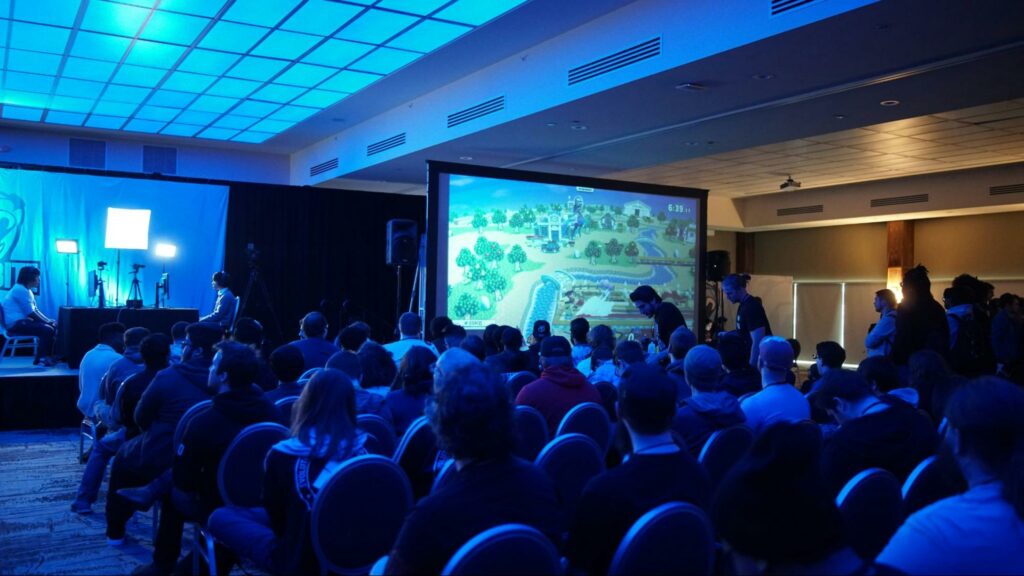
For many smaller institutions, esports is a competitive advantage. Caldwell University, for example, offers an esports management major built on top of its existing business program, requiring just four new courses. It’s a smart way to say “we offer esports” without completely revamping the curriculum. In contrast, a school like Syracuse — which has three separate esports facilities, seven full-time staff, scholarship athletes, and a joint degree between its communications and sports management colleges — is playing a whole different ballgame. Their goal isn’t just survival; it’s about prestige and creating a talent pipeline.
According to Yang, smaller, recruitment-driven schools are using esports as one answer to the enrollment cliff. Midsize schools are treating it like campus recreation. And institutions like Syracuse are trying to be genuine leaders in a space that’s still being defined.
Everyone’s Got A Seat
One of the thrilling aspects of collegiate esports, especially compared to traditional athletics, is the barrier to entry. Not everyone can play Division I football. But almost anyone can get involved in esports at almost any level.
Stacy Ploskonka, associate director at the University of Massachusetts Dartmouth and coordinator of the Corsairs Esports program, is leading a program that’s just three years old. There’s a lab that features 11 computers, six to eight competing teams each semester, and it’s open to all students. Ploskonka started this initiative because she saw a community on campus that needed support.
“These are students who aren’t involved in physical sports,” Ploskonka said. “They’re not basketball stars. But they are also not all computer science majors. You’ll find students from all sorts of majors getting into esports.”
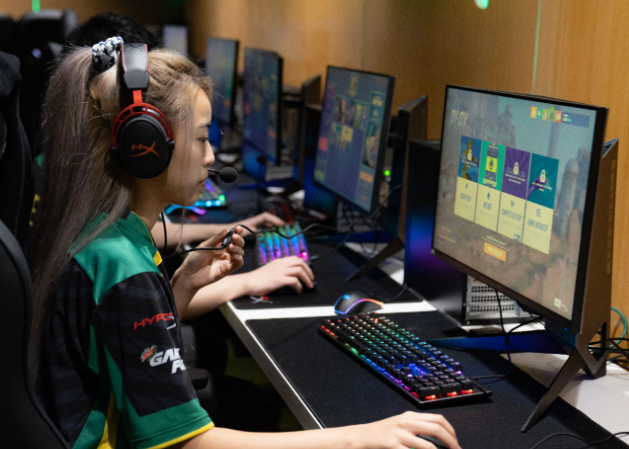
That’s the beauty of video games — they truly cater to everyone. Every type of personality, interest, and skill level can be represented in a game. At schools that have embraced this, esports spaces feel like a campus recreation center: places where students can hang out between classes, unwind, and connect with others.
“We opened our space in the student center about a year ago,” Kelly said. “Over the past year, we’ve noticed the same four girls coming in at the same time, sitting down at the same PCs, and playing Fortnite.”
The Pipeline Problem – And Why its Different from Other Sports
Esports breaks away from the college sports model most people are familiar with. In traditional sports like basketball or football, college serves as a stepping stone to the pros. Spend four years honing your skills, hoping to catch the eye of scouts, and maybe get the chance at a professional league. But esports? It doesn’t work that way.
Most professional esports players are near retirement by the time they enter college, said Maxwell Foxman, an associate professor of media and game studies at the University of Oregon. The average competitive gamer hits their peak by mid-teens, and the career ceiling in professional play is much lower than in traditional athletics. A 21-year-old in collegiate basketball is a prospect. A 21-year-old in professional League of Legends is a veteran.
It’s less about developing future pros and more about building transferable skills, community, and finding a space where students whose identity involves gaming can be celebrated rather than tolerated.
“Our goal on the academic side…is to get students ready to use their skills in an area of transferability,” Kelly said.
Students who learn live production, broadcast technology, event management, and marketing via esports are just as ready to take a job at Fox Sports, a minor league baseball team, or a regional startup.
Raymond Boosinger, a graduating senior and esports athlete at Briar Cliff University in Sioux City, Iowa, was one of the program’s first recruits and has seen it grow from the ground up.
“I saw it go from the Wild West with no rules to more organized and more opportunity to compete with each other at a higher level,” Boosinger said. “In the first year or two, that was more like a club than an organized sport.”
Boosinger juggles a double major in business administration and accounting, internships, and a practice schedule of scrimmages, conference games, and weekly workouts — a load that mirrors what any varsity athlete carries.
Where This Goes From Here
The consensus is cautious optimism. For years, the collegiate esports scene was so fragmented that a single game could have 10 different champions across 10 different leagues — diluting the experience for players, programs, and fans. That’s starting to change as the industry rallies around fewer, more robust leagues. The bigger shift, however, is cultural. Gaming is simply becoming a normal part of campus life, and universities are being pushed to keep up.
“It’s not even so much a question of ‘should they?’ — it’s just a matter of get in now, or you’re behind,” Yang said.
The Chuckle Test
Let’s end honestly. Ely coined a phrase worth keeping: the “chuckle test.” Tell someone you’re majoring in esports communications, and there’s a decent chance they hear “underwater basket weaving.” The legitimacy hasn’t fully arrived yet. Esports still wouldn’t pass the chuckle test for most people, Ely said.
But every field of study was a punchline before it wasn’t. Communications. Film Studies. Sports Management. Legitimacy comes with time, track record, and visible career outcomes — and those are just starting to accumulate. The programs are young. The graduating classes are small. But Boosinger is one of the first to cross the finish line.
“It takes time, effort, and dedication, much like every other sport,” Boosinger said. “Players put a lot of their lives into trying to be better and to win. Players are here on scholarships, and they are getting paid to be here.”
Edits Made: April 8th, 2026