
CJ Jennings went to a punk bar in Minneapolis with a friend, which they didn’t actually know was a date at the time. The date asked to kiss them while they were sitting at the bar. Jennings panicked because there were so many people around, so they braved the cold temperatures and went to the patio to kiss. Even within the punk culture of defying the establishment, Jennings still felt that they had to hide their identity.
That uncomfortable feeling of having to hide your identity, even in a space that should be accepting, is almost universal. I grew up hiding who I was, even from people I love most of all, out of fear. For a long time, I’ve let others’ reactions, even potential reactions, rule my life, and I’ve only just started to let go and let myself just be.
At a time when LGBTQ+ rights have been criticized by the federal government, some Midwestern states have followed suit. In Kansas, the state Legislature overrode the Kansas governor’s veto of Senate Bill 244, signing the bill into law on Feb. 26, 2026. The law prevents transgender people from changing the gender on their Kansas driver’s licenses or state IDs. It also invalidates existing Kansas IDs and birth certificates that list a gender different from the person’s sex assigned at birth.
In Missouri, the state Supreme Court ruled on Senate Bill 49, which upheld the state legislature’s ban on gender-affirming medical care for transgender adolescents and Medicaid coverage restrictions for transgender people of all ages.
In 2025, the governor of Iowa signed a bill into law that removed gender identity protections from the Iowa Civil Rights Act. The state was the first and only in the nation to do so.
It’s an interesting experience to live in a state that is moving backwards in terms of LGBTQ+ rights. Iowa was the third state to legalize same-sex marriage, but the rights of the community have been continuously threatened by the state legislature.
Other states have been moving to support LGBTQ+ midwesterners. In Michigan, Gov. Gretchen Whitmer signed Senate Bill 4 into law, which added both sexual orientation and gender expression as protected classes in the state’s civil rights act. In Illinois, Gov. JB Pritzker signed three bills into law protecting the community on June 28.
As the Midwest continues to divide on LGBTQ+ rights, affirming organizations and gathering spaces continue to provide places for people to connect with others who share these experiences. In this LGBTQ+ guide to the Midwest, I will share the stories of people who are getting by, in any way they can, no matter their location. These are the stories I wish I had read as that little gay kid who felt like there was no place where he could be his truest self. What is it that makes these gathering spaces and communities work? And how do they continue to function?
- Intentionality
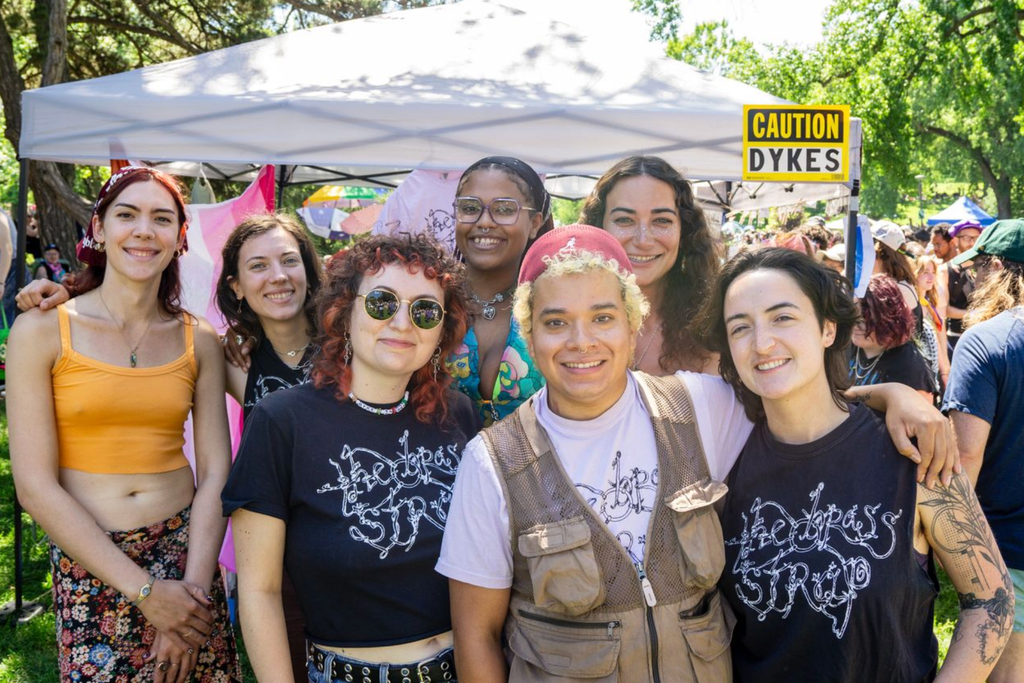
Jennings, with their date, helped found The Brass Strap Project in Minneapolis, an LGBTQ+ organization working toward opening a lesbian bar in 2026. The Brass Strap is Minneapolis’ first queer cooperative working model.
The group has an events committee made up of members who help create programming and build relationships within the community.
“The intentionality with how [LGBTQ+ gathering spaces] connecting with community is the biggest thing for me,” Jennings says.
For Jennings, that shows up in minor details, like keeping music at a volume where people can still talk, and creating opportunities for people to learn about local organizations and artists.
With wage theft in the service industry, they decided to go with a different approach to their model. The Brass Strap is a multi-stakeholder cooperative, which means that employees, investors, and customers will all own the bar once they find a space. “…So that’ll hopefully help us stay open for a long time,” Jennings says. “And now we raised $160,000 in June.”
Spaces where people feel comfortable being themselves are also important for Jennings. “As a practice, it’s going to really come down to events…” Jennings says. “And as a co-op, we have committees [where] members get to get involved with the committees, and one is the events committee, and they are pretty focused on that.”
Their first event was held after Dobbs v. Jackson Women’s Health Organization, which allowed states to restrict abortion rights. They raised “a few thousand dollars to support Our Justice and Spiral Collective”, two nonprofits that advocate for reproductive rights across the nation.
“We’ve been searching for about two years, but the money has always been a factor against us before we had this 160k…” Jennings says.
The Brass Strap cooperative are still working toward finding a physical location for their bar.
- Sense of community
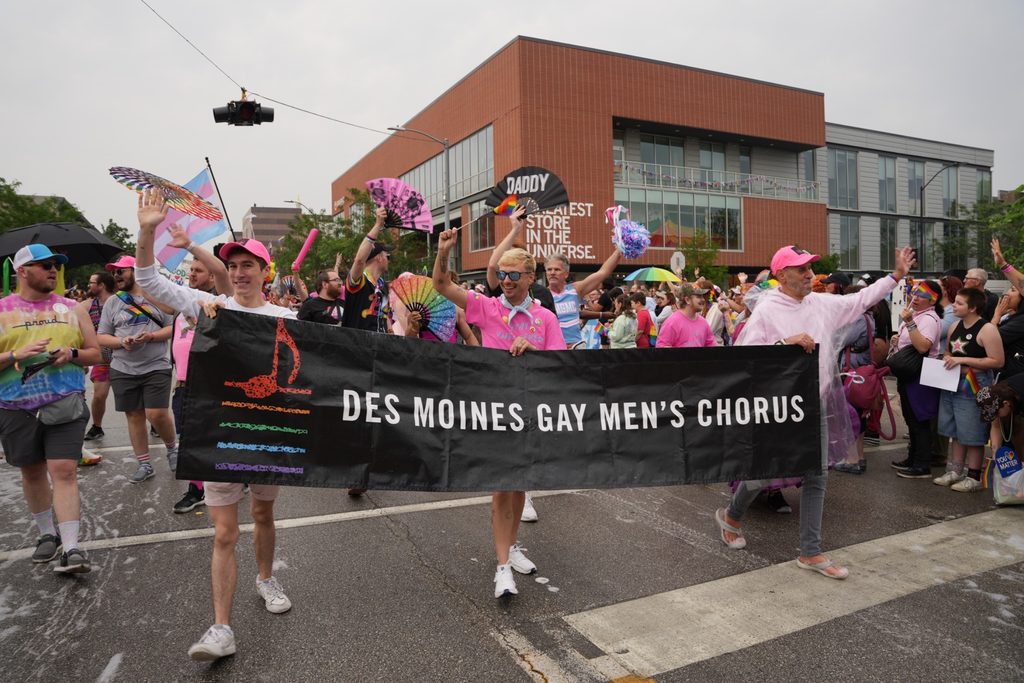
Chase Shoemaker is the artistic director of the Des Moines Gay Men’s Chorus. At the end of each voice lesson, he asks what drew people to DMGMC, and they almost always answer “the community.”
“…I dip my toes kind of in both of those areas [singing and community building] to make sure that the organization is successfully [running, and] cohesively working together,” Shoemaker says.
LGBTQ+ people being able to feel accepted is important to the survival of these groups. It gives space for folks to function exactly as they are in places where they feel loved and accepted.
- Inclusion
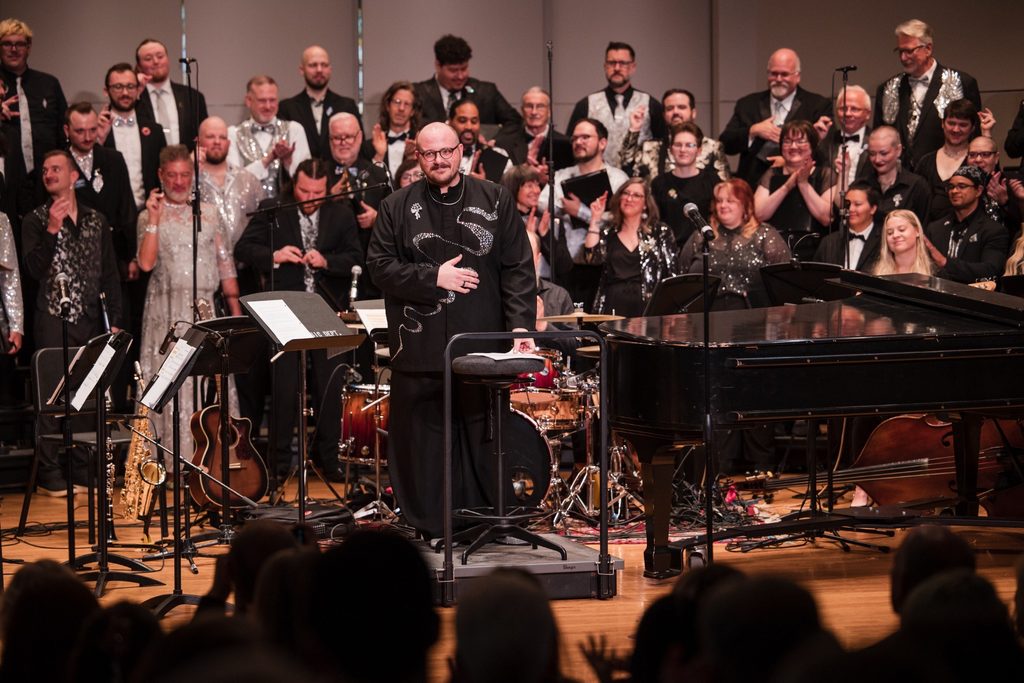
When you attend a DMGMC show, you’ll quickly notice that the group isn’t made solely with gay men in mind. At a concert, you’ll see that the group is a place where everyone is welcome. And they’ve built a community based on inclusivity.
Intentionally inclusive spaces really allow for freedom for people to be themselves.
Pastor Debbie Griffin wondered what a progressive Christian church would look like. In 2015, she, with the help of the Upper Midwest Region of the Disciples of Christ, founded Downtown Disciples in Des Moines.
“Well, one of the things that I like to say is that at Downtown Disciples, people are more than welcome,” Griffin says. “So a lot of churches say, you know, you’re welcome here. Everybody’s welcome here, but there’s a difference between welcoming language and affirming language. So when we say that we are affirming, and people are affirmed and welcome in our community, what we mean is in our faith tradition, which is progressive Christian people are affirmed as beloved people of God, created in the image of God, and that includes their sexuality, that includes their gender, their gender identity, it includes their citizenship or citizen status, you know, or non-citizenship. That includes their culture, their skin color, their you know, the whole nine yards.”
Building that space as a progressive church has helped build a strong community in Des Moines.
“The people at Downtown Disciples are very committed to living their faith and embodying their faith,” Griffin says. “So what we do, we’re more than happy to marry LGBTQ couples, so that’s one of the ways that we live into being affirming. We ordain LGBTQ people, of course. Why wouldn’t we?”
- Room for authenticity
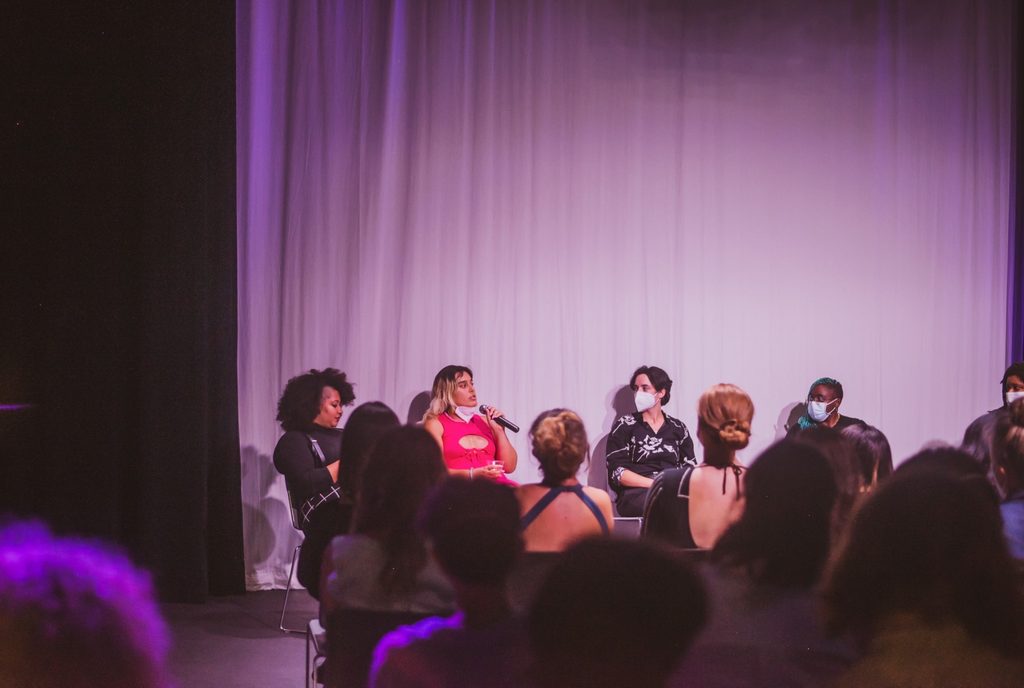
Cecelia Martinez is the program coordinator at One Iowa, an organization that works to promote policies that protect the rights, health, and safety of LGBTQ Iowans.
To Martinez, making room for people to be their true selves in an LGBTQ+ gathering space is extremely important.
“It’s wanting people to be able to show up exactly as who they are, not just how they dress, how they speak, and how they are,” Martinez says. “Making that space for them and ensuring that the space is safe for them, regardless of how they show up.”
To Jennings, allowing people to be their authentic selves, no matter their circumstances, can be healing. When Jennings goes to a gay bar, they tend to notice that there are many times when they are served last, which they attribute to the residual patriarchy that often lives on in traditional gay bars.
- Space for vulnerability and bravery
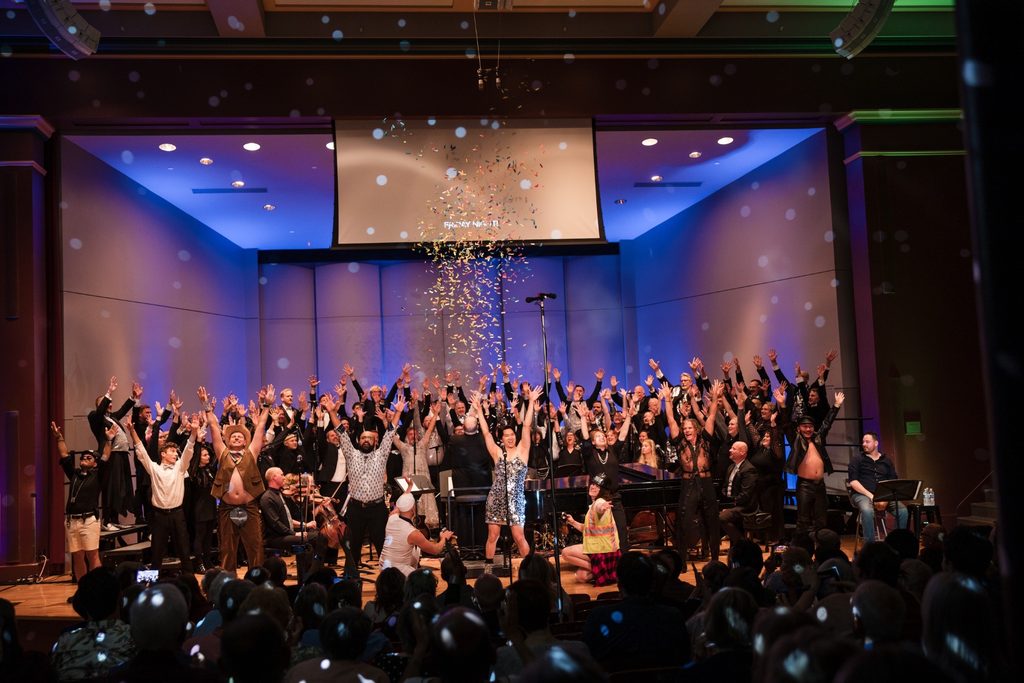
Shoemaker emphasizes the importance of allowing yourself to be vulnerable in LGBTQ+ gathering spaces.
“You have to be vulnerable in the process to create this music to bring about the meaning of the text in such a personal way, because everyone’s voice is a part of their identity,” Shoemaker says.
As someone who grew up constantly trying to hide myself from others, I have had to be brave in a place where I didn’t actually know if I would be accepted.
“We truly cannot guarantee safe spaces in the world, but what we can do is work toward brave spaces,” Shoemaker says. “When we look at any community, no matter where you go, you want to be able to find individuals that have similar passions, similar purpose, similar mission.”
Those shared values help guide these groups.
“We’ve had similar experiences; we’re able to say, in this space, we are brave because I can’t guarantee your safety, but I can guarantee that we are responsible to and for one another,” Shoemaker says.
Brave spaces, rather than safe spaces, allow people to stay strong, even in places where people may not feel comfortable already.