
Women in collegiate esports aren’t waiting for the industry to include them. They’re already building something better.
Being easily identifiable as a woman while playing competitive video games online tended to make things odd. So, Angelina Francois kept her microphone off.
“Some teammates act a little weird when they know you’re a woman, or if you have a voice that’s…not male enough, quote unquote,” said Francois, a sophomore at Florida International University (FIU) majoring in cybersecurity.
It started as a simple workaround: In a hobby she loved, the easiest way to be left alone was to be invisible. But Francois doesn’t want to be silent anymore. She’s a proud gamer, and she wants everyone to know it—especially other women. Francois runs the Instagram account for the FIU chapter of the*GameHERs, a national organization dedicated to fostering inclusive gaming communities for women and marginalized genders. Her posts cover everything from tournament highlights and announcements for community nights to cosplay cafes. The organization’s feed is less like a bulletin board and more a vibrant community that actually wants you there.
That shift, from silence to managing the megaphone, captures something real that’s happening on college campuses. Women are carving out their own place in collegiate esports—building clubs, running varsity teams, stepping into leadership roles as managers and event coordinators—in ways the professional esports industry is still trying to catch up with. The clubs may be small and their budgets tight, but something genuine is being created here, and the women building it know it.
The History of Women in Gaming (and Why it Matters)
The stereotype of a gamer is a teenage boy in a dark bedroom, which has always been more a myth than reality. According to the Entertainment Software Association’s (ESA) 2025 Essential Facts report, the average American player is 36 years old and has been playing for 18 years. There’s also a good chance that the player is a woman. Back in 2006, women accounted for 38% of gamers in the U.S., according to the ESA. By 2014, it was 48%. Today, women make up nearly half of all U.S. gamers — and in some studies, the majority.
And yet, something strange happens when you ask women to call themselves gamers. While almost half of American women say they’ve played a video game, at least according to a 2015 Pew Research Center survey, only 6% actually identify as “gamers,” compared to 15% of men. Sure, that was a decade ago, and attitudes have changed. But the issue is the same. It’s not about the number of players. It’s about who feels comfortable enough to embrace that title.
“People forget that it’s actually split 50-50, and it’s actually extremely common for women to play video games,” said Ariana Rodriguez, the president of FIU’s The*GameHERs chapter. “There’s this notion of, like, ‘Oh, Animal Crossing or Stardew Valley, that’s not a real video game.’ But it’s just as much a video game as Call of Duty. It’s just as valid.”
Yet, despite the continually growing number of women grabbing a controller, the competitive world of esports — where players compete in organized, often professional leagues for prizes, sponsorships, and audiences of millions — has been a bit slow to evolve. Men still dominate. Yes, women have been competing at high levels for decades across StarCraft circuits in South Korea, Counter-Strike leagues, and fighting game tournaments like the Evolution Championship Series (EVO), held annually in Las Vegas — but rarely on the biggest stages.
However, the numbers tell a different story about how much space women actually hold. Of the over 6,700 esports tournaments held in 2025, only a few hundred were exclusively for women, according to Esports Charts, an analytics platform that tracks viewership and tournament data across the gaming industry. To put that in perspective, across all competitively played games, only 15 featured any women-only events. In Valorant, one of the most developed ecosystems for women in esports, women’s events made up just over 5% of the game’s total watch time that year.
Dedicated initiatives have been working to bridge this gap. Among the earliest were the Cyberathlete Professional League’s Female Frag Fest in New York City in 1999 and, more recently, ESL Impact, an all-women Counter-Strike circuit launched in 2022. Over two decades pushing for a seat at the table, but for many collegiate players, it hasn’t come fast enough.
Game Changers and the Push for Structured Access
Riot Games, the company behind League of Legends and Valorant, launched Valorant Game Changers in 2021, a professional competitive circuit aimed specifically at women and other marginalized groups.
Before diving into exactly what that entails, though, let’s take a moment to understand how esports is organized — because it matters and can get a bit tricky. Think of it like traditional sports: there’s the professional tier, where organizations pay players salaries and compete for prize money on global stages. Then there’s the collegiate level, where students represent their universities, focusing on skill development, career readiness, and building community.
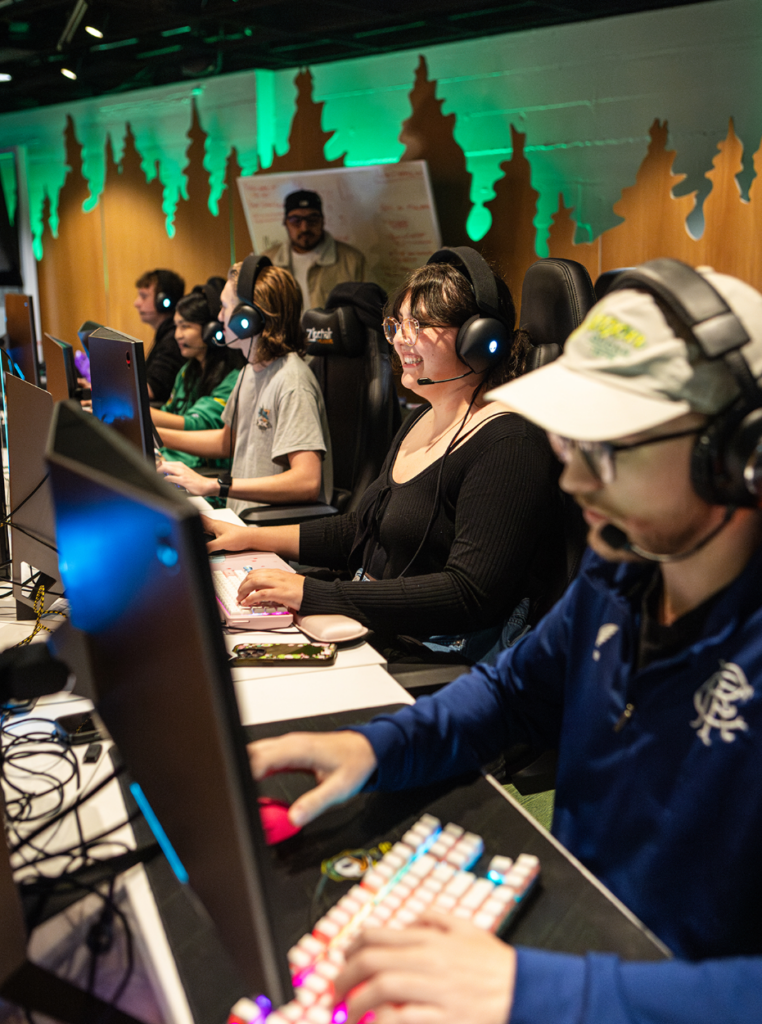
The Game Changers model only taps into the pro level, but its influence has rippled through collegiate programs such as those at FIU and the University of Oregon. At both the pro and collegiate levels, it’s opened doors for players, particularly female players, who might otherwise struggle to break in on their own — no team backing, no sponsorships, just raw talent in hopes someone noticed.
“The Game Changers team at FIU gets jerseys, funding — they get everything the other varsity teams get,” Rodriguez said. “As they should.”
But the program does have its limitations. There are persistent problems with bad-faith actors who attempt to misrepresent their gender to compete in protected spaces. And at the professional level, financial commitment from organizations has been unreliable.
Nora Thimmesch, a third-year public relations student at the University of Oregon, plays on her school’s varsity Valorant team and serves as the community event coordinator for the esports program. She watches the professional circuit closely because, in an ideal world, she’d be competing in it. Thought, lately, that’s starting to look less and less likely.
“100 Thieves just dropped their Game Changers roster after less than a year,” Thimmesch said, referencing the Los-Angeles-based esports organization and apparel brand. “There just aren’t enough invested organizations where you can make enough money to actually just play.”
That decision to cut the roster is part of a broader pattern: organizations jumping into women’s competitive play to make a splash but leaving after the hype dies down.
The Collegiate Scene: Community over Competition
If professional esports is still figuring out what sustained investment in the women’s gaming sphere looks like, collegiate programs are doing more tangible work, even if the goals are different. Take Thimmesch. Her path to varsity wasn’t clean. Freshman year, she walked into her first in-person tryout and the room, in her words, was “extremely cis man-filled.” She showed up anyway. At one point, a JV spot opened up, and managers passed her over entirely in favor of someone from outside the program—a man.
“It really kind of hurt a little not to be looked at,” Thimmesch said. “I don’t know if it’s because I’m a woman, but also because I was just kind of there.”
Over the next two years, she climbed from third-string player to the varsity team through relationship-building and a willingness to prove herself in ways a male player with similar abilities might not have faced — and people are still surprised when they find out.
“The shock factor comes from me having a pink, literally girly setup and telling them I’m an immortal rank,” she said. “Like, really?”
Donnie Chell, who goes by “Elevated” in the esports world and serves as the University of Oregon’s interim director of esports, came to the role after years of professional Valorant coaching, including a stint with a pro team in Seoul, South Korea. He sees the college environment as offering something the open internet fundamentally cannot.
“Not that many people are probably going to become pro players, so they need to learn to produce media, do broadcast work, and whatever other skills are more marketable in general society,” Chell said. “ I do think that for marginalized genders, the collegiate route is a safer way because universities tend to be a little bit more focused on inclusivity than the wild west of the internet.”
In the collegiate league, Thimmesch never had someone outwardly express sexism toward her. That subconscious skepticism, though: that’s still is there. It’s just manageable now rather than defining.
“My gender shouldn’t play into my playing skills,” she said. “But I also love being a woman in esports. It feels so cool.”
Building Something and Defending It
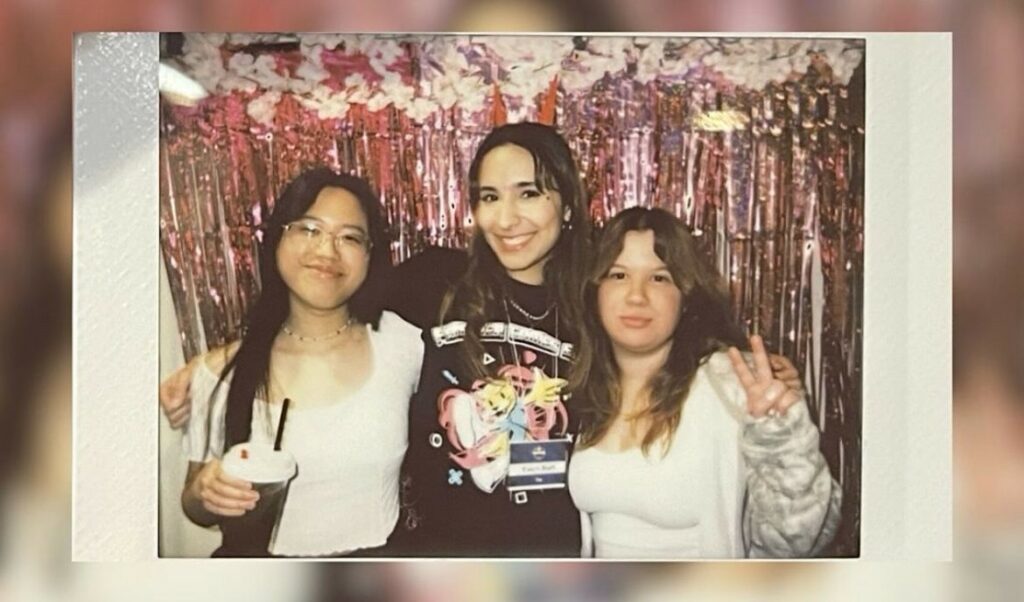
The FIU chapter of the*GameHERs runs more like a community hub than a competitive esports program. Think game nights, bracelet-making sessions, karaoke collaborations with other campus clubs, and the occasional tournament. Rodriguez designed it this way on purpose. In just a year, the chapter has attracted nearly 1,000 Instagram followers and more than 500 Discord members.
“I felt like an outcast all my life,” Francois said. “That’s where I actually met some of my closest friends. I realized it’s completely OK for me not to have mainstream hobbies.”
Keeping the organization alive, though, is its own fight. Rodriguez, when promoting events or recruiting new members, must comply with Florida state laws that prevent organizations from using terms like “diversity” and “minorities” in their messaging — a reminder that even a bracelet-making night doesn’t exist outside of politics.
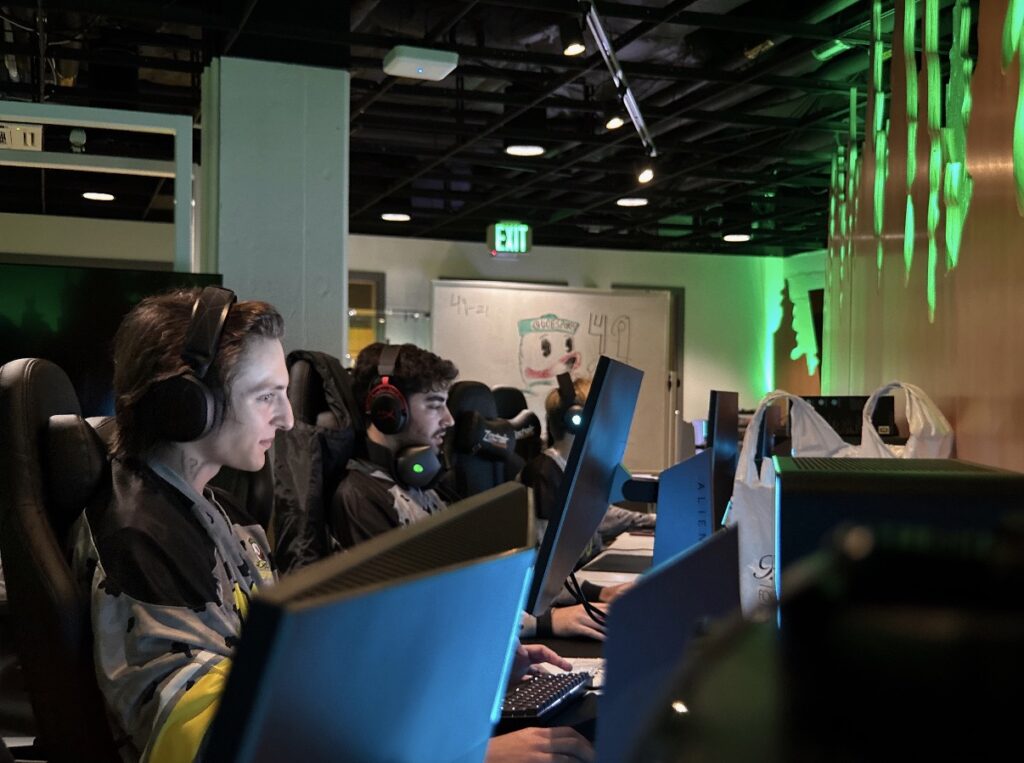
“We cannot say diversity, or we risk our organization being taken down,” Rodriguez said. “So we say ‘different.’ You don’t want us to say minorities, we’ll say ‘marginalized.’ We are still here no matter what.”
Chell acknowledges that the broader collegiate landscape is just as inconsistent. There is no NCAA for esports, and without a governing body, every program sets its own priorities. What gives him hope is where the pressure for change is actually coming from.
“The current college age is so tapped into social issues,” he said. “We have a lot of people in positions of team manager or event coordinator who are like, ‘We need more girls.’ The students are almost taking care of it themselves.”
What Comes Next
The infrastructure exists. The clubs are running, Discord servers are active, and the varsity rosters include women. What’s missing is the follow-through from organizations, universities, and the players themselves, who still hesitate to turn on their mics in a room that has always been designed for someone else.
Thimmesch believes colleges need to go further than just having a co-ed team. They need to actively create Game Changers-style spaces within their own programs, ensuring there’s not just a competitive track but also a developmental one. It should be a space where women can build their skills and confidence without having to spend their first two years just trying to prove they belong there.
“If we all stood together and helped other women feel seen in the industry, it can actually make a real change,” Thimmesch said.
Rodriguez built that model at FIU in under a year while navigating state legislation that sought to limit the language she could use to describe the community she served. She graduates this spring and has a simple message for anyone on the fence.
“Cringe is dead. We need to show up. Friends aren’t just going to spawn and fall into your lap,” Rodriguez said. “It goes by in the blink of an eye.”
Francois is living proof that it’s already working. She’s not calling for a revolution; she just wants people to recognize that this space exists.
“I hope that people, even men, will feel empowered to pursue what they love,” Francois said. “Because you should always follow your passion.”
One response to “Game On!”
This article was interesting and informative about what women in collegiate Esports are going through right now, further more it groups the experience that a lot of women could have lived in the gaming scene, which makes this article so relatable ! Loved being part of the interview and I hope this article will inspire people to follow their dreams no matter what !