
By: Mack Swenson and Meghan Holloran
Inside one of the Midwest’s premier waste exchange programs
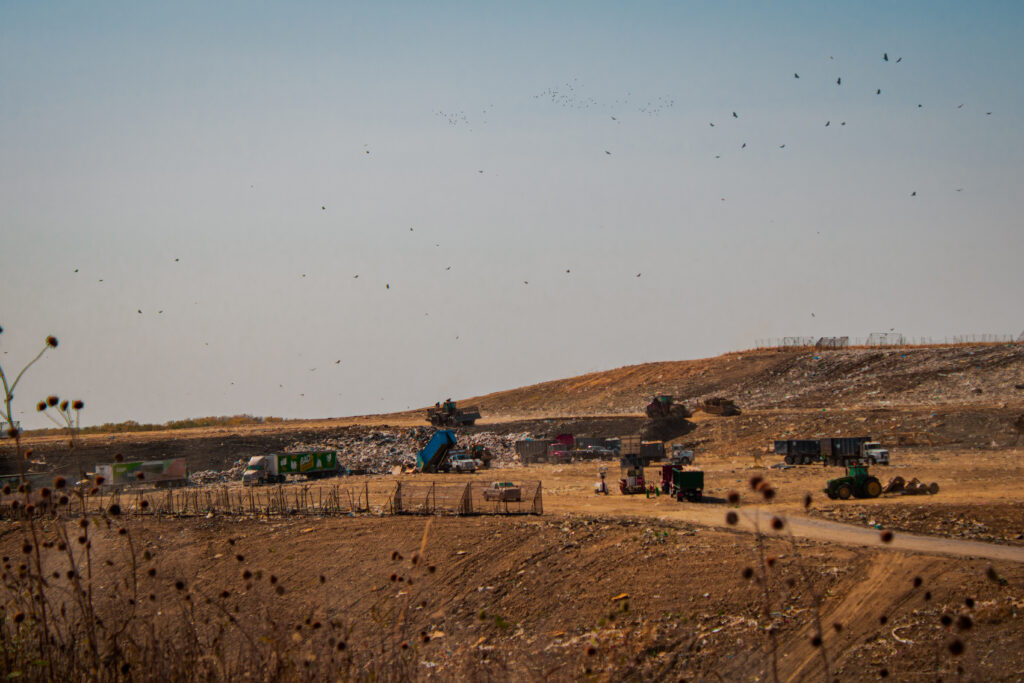
Trash, junk, waste, whatever it’s called— it’s an unpleasant fact of life. According to the Iowa Department of Natural Resources, Iowans generate 2.8 million tons of solid waste yearly, most of which will end up in landfills. Smelly, costly, and habitat-destroying, landfills aren’t an ideal waste disposal option. With roughly 2,600 landfills in the U.S. that will reach capacity within the next few decades, it’s critical to divert waste from landfills through programs like the Iowa Waste Exchange.
The Iowa Waste Exchange, a small DNR program, takes one person’s trash and makes it another’s treasure. Since the organization’s inception in 1990, it has diverted 4.3 million tons of waste from landfills, saving Iowans over $125 million and extending the life of Iowa’s landfills. That’s an average of 126,000 tons per year.
“We have a primary focus on industrial and commercial [waste] because those are the larger generators of waste, but we assist anybody that calls us — nonprofits, schools, even universities, community colleges,” IWE Representative Shelene Codner said.
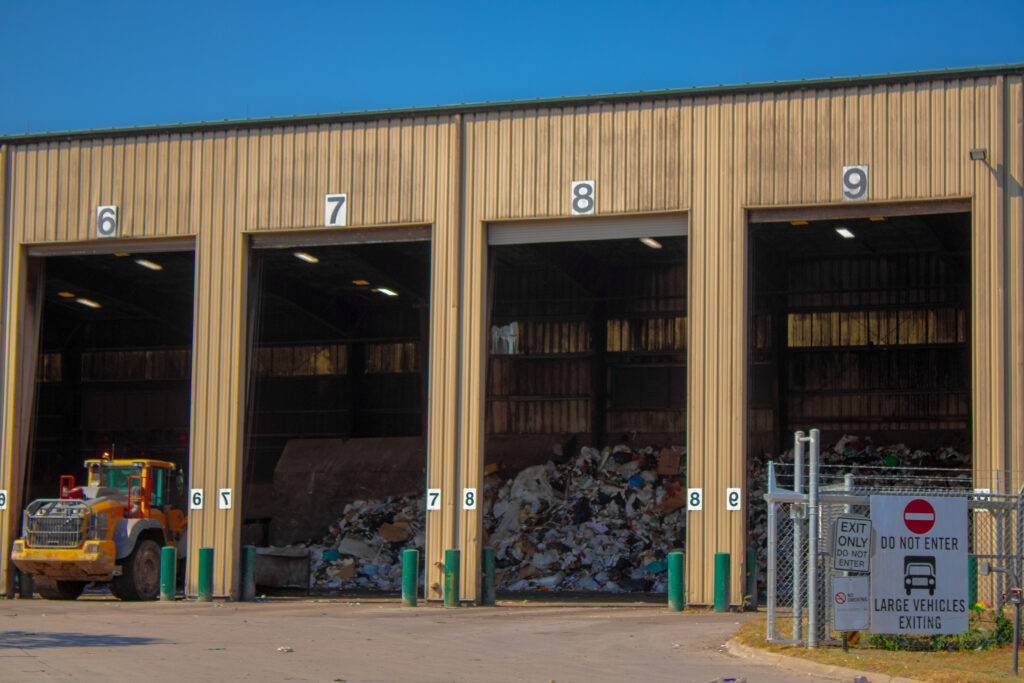
The Iowa Waste Exchange is funded by a portion of the fees customers pay landfills to dispose of their waste. IWE is unique in the waste exchange field — only two programs exist in the Midwest. The other, Minnesota Materials Exchange, also founded in 1990, diverts about 32 tons per year — 4,000 times less than Iowa.
The IWE is a free, confidential database for manufacturers and Iowa citizens alike. Users can list products they don’t want that someone else might need. Representatives from IWE then contact companies or individuals who might have a use for those products.
“Let’s say I have potash that’s coming off my product[ion] process, and there’s a cement company over here, and they need that for their mix. But we don’t know each other exists,” said Reid Bermel, IWE program administrator. “So the [representative] goes out, ‘Hey, did you know Reid Bermel has potash, and you make cement? You might need it for your cement.”
Almost any material can be exchanged, from furniture and textiles to fluorescent tubes and chemicals. Whatever can’t be exchanged is recycled, composted, or sent to the landfill. Although there is no fee to participate or list materials on the IWE database, the ‘buyer’ is responsible for transportation costs associated with picking up the materials.
Sometimes, after a match is made, the donor and recipient continue to exchange materials without IWE’s involvement.
“If we do our job correctly, they won’t need us anymore,” Codner said.
Four representatives form the backbone of IWE’s operation. Codner oversees the other three IWE representatives and coordinates matches in her area, encompassing the counties on either side of I-35 as it stretches across Iowa.
Codner says she gets the “best of both worlds,” rural and urban, working with businesses and schools near I-35. North of U.S. Highway 20, her clients are primarily rural. South of Route 30, most of her clients hail from Ames and the Des Moines metro. Codner hopes that waste management infrastructure in rural areas will receive more attention in the future.
“Removing barriers in all areas of the state would be my ultimate dream,” Codner said. “Some of the infrastructure in the metro areas is more conducive to recycling, but in some of the rural areas, they don’t have that infrastructure, and that’s based on a number of factors — distance, budget, population.”
Although IWE focuses on high-volume waste producers in the industrial and commercial sectors, Codner says she’s never turned away a call. If the materials are small enough, Codner occasionally transports them herself in her 2015 Dodge Grand Caravan. Ultimately, her role as a representative depends on various factors, including the type and quantity of material and the distance between the donor and recipient.
“Some of the things that we do, like the industrial waste and commercial waste, is very satisfying – the typical cardboard, paper, plastic, etc., but the ones that keep me going are getting toothbrushes to nonprofits,” Codner said.
Even though recipients usually coordinate their own transportation for the materials, Codner’s favorite exchanges often are the ones she arranges herself.
She recalled IWE’s assistance with Sweet Dreams for Spencer, a program that aimed to provide mattresses and beds to every child in Spencer, IA, following severe flooding in July 2024. Because Spencer lacked transportation capacity, Codner contacted Des Moines Area Community College and Sukup Manufacturing Co. With each providing a semi, IWE was able to transport 200 mattresses and 80 beds donated by Iowa State University.
Not all materials can be exchanged or recycled. Some materials will inevitably end up in a landfill. However, through programs like IWE, less waste ends up in landfills, prolonging their lifespan.
“I think we understand that it’s necessary to have these landfills and to use them, but nobody wants a new one in their backyard, so if it’s not in your backyard, or in my backyard, that doesn’t leave much room left in the state,” Bermel said. “It’s great that we are making these efforts to extend the life of the current landfills that we have.”