
What makes Thanksgiving complete? Lacing up your sneakers or savoring the comfort of staying home?
As the sun rises on Thanksgiving morning, some Midwesterners hit the pavement, while others hit snooze – two coveted traditions, one holiday. Thanksgiving morning reveals two very different kinds of families: those who partake in a Turkey Trot, and those who don’t.
“My husband and I get to wake up early, start the day together in a good mood from all of the endorphins, and then spread that joy to our family later,” said Turkey Trot enthusiast Kali Johnson, a Minnesota resident.
But not all people have such positive feelings about the early morning, multi-mile run.
“It’s way too cold and way too early,” said Julie Kuklock, a Minnesota native who does not participate inTurkey Trots. “Thanksgiving is one of the few days we can slow down and enjoy family. I wouldn’t want to waste my time running a race when I could be at home with my kids.”
Love it or hate it, Turkey Trots are quickly growing in popularity and have held the title for the most popular race in America since 2015.
According to runnersworld.com, the inaugural Turkey Trot took place in 1896 in Buffalo, New York. The 8K race brought in a meager six participants. Only four runners crossed the finish line that first year, but organizers saw potential and decided to continue hosting it. Year after year, the race gained traction, and copycat races began popping up across the country. The Turkey Trot is the oldest continuous footrace in North America—even older than the famous Boston Marathon, which didn’t kick off until 1897.
This year, 128 years after the first race, an estimated 842 Turkey Trots were held across all 50 states, drawing in over one million runners. Although they are gaining more attention each year, only some are ready to give up their Thanksgiving morning to run.
“I just can’t get over the cold,” Kuklock said. “I’ve tried running in the cold and snow before, but feeling my sweat freeze on my face while I slip on ice isn’t my idea of a good time.”
Snow, sleet, and below-zero wind chills can be expected on a late-November day in the Land of 10,000 Lakes. However, that doesn’t stop thousands of Minnesotans from participating in the Turkey-Trot phenomenon. Minneapolis’ annual Turkey Day 5K is the largest Thanksgiving race in the state. It brought in about 7,000 runners in 2024, a 40% increase in participants from 2023.
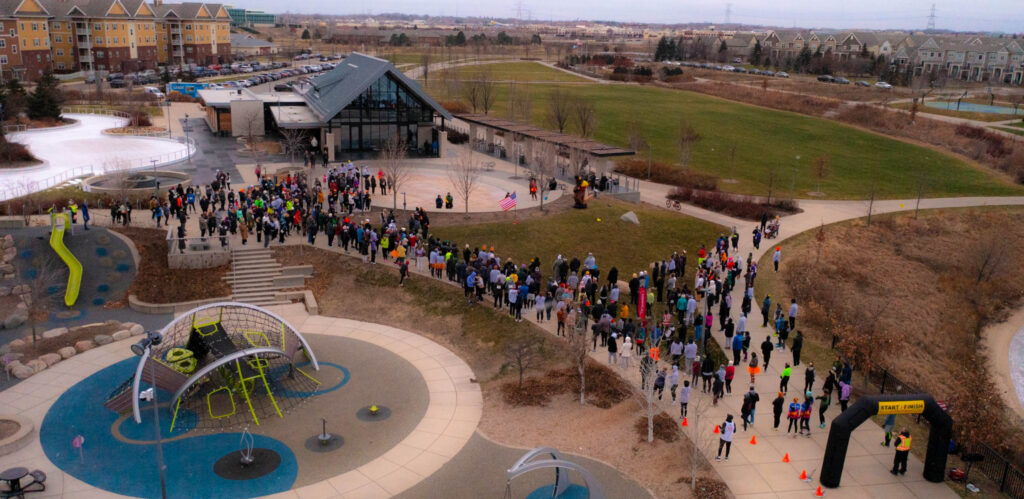
Though the Minneapolis race is a 31-year-old mainstay, several nearby cities have since begun hosting their own Turkey Trots for runners who prefer a less crowded atmosphere. 2024 marked the city’s inaugural race for the Northwest suburb of Maple Grove.
“[Registration] blew up,” said Anne Anderson, general manager at Experience Maple Grove, the company that organized the event. “In one and a half weeks, we had 500 runners. There was no way we could’ve kept the sign-up open for three weeks like we had originally planned and had enough space for potentially over a thousand people.”
Anderson said that because of limited space, they had to turn away more people than they were expecting – the first Maple Grove Turkey Trot was a trail run through the heart of the mid-sized suburban city. However, due to the high demand, Anderson explained they are already planning an expansion — transforming it into a road race so they can accommodate more runners.
“There’s just nothing on this side of the [Twin] Cities,” Anderson said. “There are races in Minneapolis and St. Paul and on the Southern side of the metro, but nowhere on the Northside. And in Maple Grove, you get that small town feeling in a bigger, more developed city, which is unique.”
Organizers also partnered with local bars and restaurants to provide free food and drink tickets for all registered participants, which allowed runners to support local small businesses on a weekend all about giving thanks.
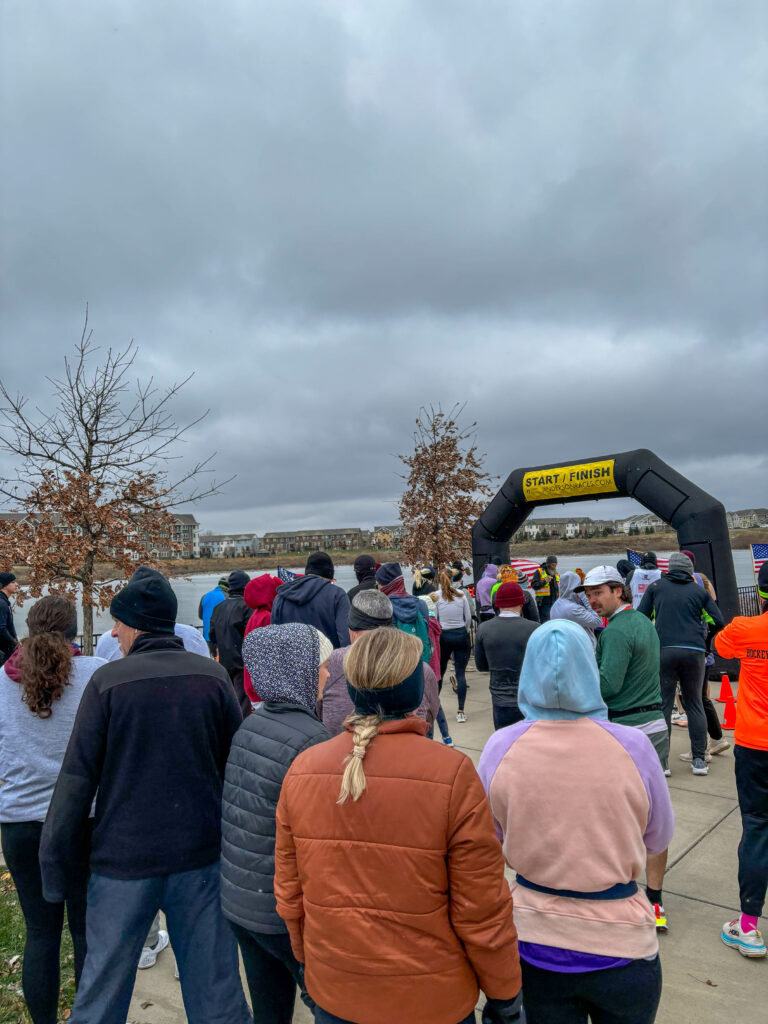
On Thanksgiving morning, 500 runners and dozens of spectators braved sub-twenty-degree temperatures to participate in the inaugural Maple Grove race. Runners came in costumes, hiding their winter coats under inflatable turkey outfits, tutus, and festive T-shirts.
“I grew up in a Turkey Trot family,” said Jordan Johnson, Kali’s husband and new Minnesota resident. “My parents were both educators and really valued supporting our community and giving back and being a part of something bigger than just our individual family unit.”
This year, Jordan talked his wife, Kali, into joining him for the run. The young couple is new to Maple Grove and has no family nearby, so they were looking to start their own tradition.
“My family has never even thought about doing a Turkey Trot, but I knew when I married Jordan, my Thanksgiving mornings would look different,” said Kali. “Now, I’m so grateful because we push each other, and [running] strengthens our relationship.”
The challenge of an early morning run tests their relationship, bodies, and minds.
“You don’t get better at your relationship unless you go through some challenges, whether it’s a physical one, like running, or even just having good communication. We have some of our best conversations during our runs,” said Jordan.
Though thousands of Americans have hopped on the Turkey Trot bandwagon over the years, others are still not sold.
“Running is the very last thing I want to do on Thanksgiving morning, and for those who try to sell it as ‘running off the calories,’ I say that’s what Thanksgiving is all about. Being together with family and friends and packing on the pounds with good food,” Kuklock said.
After over a century of debating “the correct way” to spend Thanksgiving morning, the country remains divided – to Turkey Trot or not? Whether born and raised an avid turkey trotter, married into the tradition, or devoutly against it, the meaning of the day remains the same – spending quality time with loved ones and remembering what there is to be grateful for. Anderson said she believes the longstanding debate will continue for years to come but thinks the popularity of Turkey Trots will only continue to grow more and more every year.
“No matter how old you are or what shape you’re in, a Turkey Trot is something anyone can do,” said Anderson. “A grandma can do it with her 10-year-old grandson, and I think that’s what makes these races so special.”