
Why the Midwest’s local businesses are at risk in the face of urban development.
Urbanization is creating a significant shift for small businesses in the Midwest. As urban areas become more populated, local shops and services may experience an increase in potential customers and access to better infrastructure. Cities such as Des Moines, Iowa and Fargo, North Dakota are seeing a steady increase in population growth since 2010. This growth has provided small businesses the chance to cater to a diverse set of consumer needs and preferences. The growing economies of these Midwestern cities are also in hand with the necessary amenities needed to compete with large cities around the United States.
However, the influx of people and resources doesn’t come without challenges. Increased competition from large retail chains is a significant concern for small businesses. As urban areas attract big-box stores and franchises, local businesses often struggle to keep pace. Stores such as Walmart offer customers lower prices, while having the financial stability to perform no matter the increase in cost of rent or utilities. The rise in operational costs, such as rent, utilities, and supplies, also pressures small companies. Many are forced to make tough decisions to stay afloat, like reducing inventory, cutting staff, or raising prices. Within five years of the arrival of a Walmart store, cities across the Midwest have found an average loss of four to five small retail business.
The 2020 Census revealed that 10 of 11 Midwest states have experienced population growth and a shift toward urban living since 2019; Illinois has seen a decrease. This trend is evident in larger cities like Columbus, Minneapolis, and Des Moines, as well as smaller metropolitan areas like Dubuque, Iowa, and Waukesha, Wisconsin. These cities are experiencing both the benefits and challenges of urbanization firsthand.
Mickey McCarthy, an employee at Maker’s Market in Dubuque, Iowa, describes how urbanization has affected their business. Maker’s Market offers a variety of handcrafted goods, including unique home decor, artisan jewelry, locally made clothing, specialty foods, and creative artwork from regional makers.
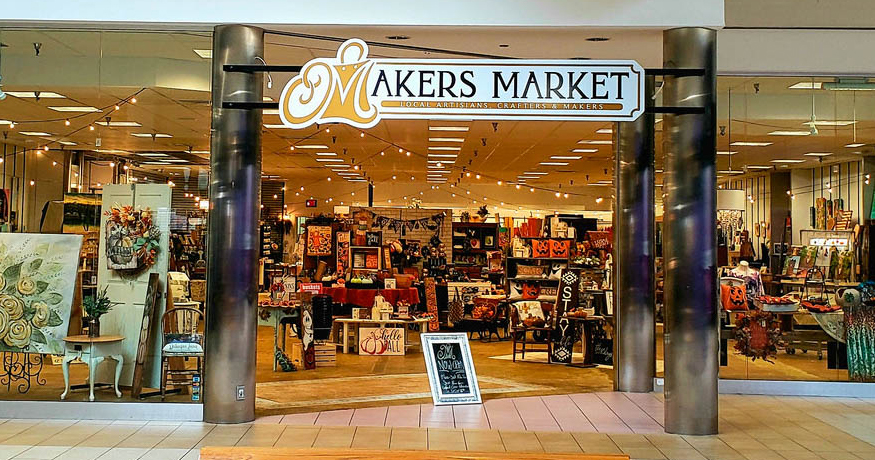
“As Dubuque has grown, it has become somewhat difficult to compete with the larger chains coming into the area,” McCarthy said. “HomeGoods across from Maker’s Market has created mixed outcomes. While it has increased traction to this side of the mall, it feels as if it has been attracting more of our customers.”
The growing presence of large retail chains, like HomeGoods and TJ Maxx, has created direct competition for Maker’s Market. These larger stores often offer mass-produced items that create a similar artisanal feel to Maker’s Market’s products but at lower prices, making it harder for the small business to stand out.
In Waukesha, Wisconsin, Penny Olson, owner of Waukesha Antique Mall, echoes similar concerns. Urban growth has led to increased rents, higher wages, and a rise in the cost of utilities, creating a burden for local businesses. Olson and other local business owners find it challenging to compete with larger competitors with the resources available.
“We’re feeling the pinch of operational costs,” Olson said.
Urbanization also affects small businesses’ ability to retain employees. As urban areas continue to expand, workers are often drawn to higher-paying jobs at larger companies, leaving small businesses struggling with staff shortages. For instance, industries like food service, which tend to have lower wages, report particularly high turnover rates as workers leave for better opportunities, leaving small businesses with staffing challenges. According to the U.S. Bureau of Labor Statistics, the average number of employees quitting each month in the Midwest is 2.5%, compared to the average of 1.7% to 2.1% in the other regions of the United States. The sectors of the workforce most impacted by quit levels include small, local businesses and education. These averages highlight the ongoing struggle for small businesses to maintain a stable workforce.
“Times like these make us really value the work people put into their products and the various ways they find to stand out,” McCarthy said.