
By: David Freeman
Why one Midwestern restaurant might hold the answer
On any given day, Wilson’s Ciderhouse is filled to the brim with bustling servers and eager customers, the air smelling crisply of apples and pumpkins. As the sun sets and the last wafts of sourdough-blackened pizza float gently from the restaurant, operations director Erin McMeen reflects for a moment on the importance of Wilson’s as a community gathering place.
“[This restaurant] is about community building, community outreach,” McMeen said. “It’s something that we have to make an investment in and something we believe in, and thankfully, in this community we get a lot of support for that.”
In recent years, the number of farm-to-table restaurants opening their doors across the Midwest has increased. Offering more sustainable and environmentally friendly eating options, these restaurants have captured the attention of both the average consumer and the food industry at large.

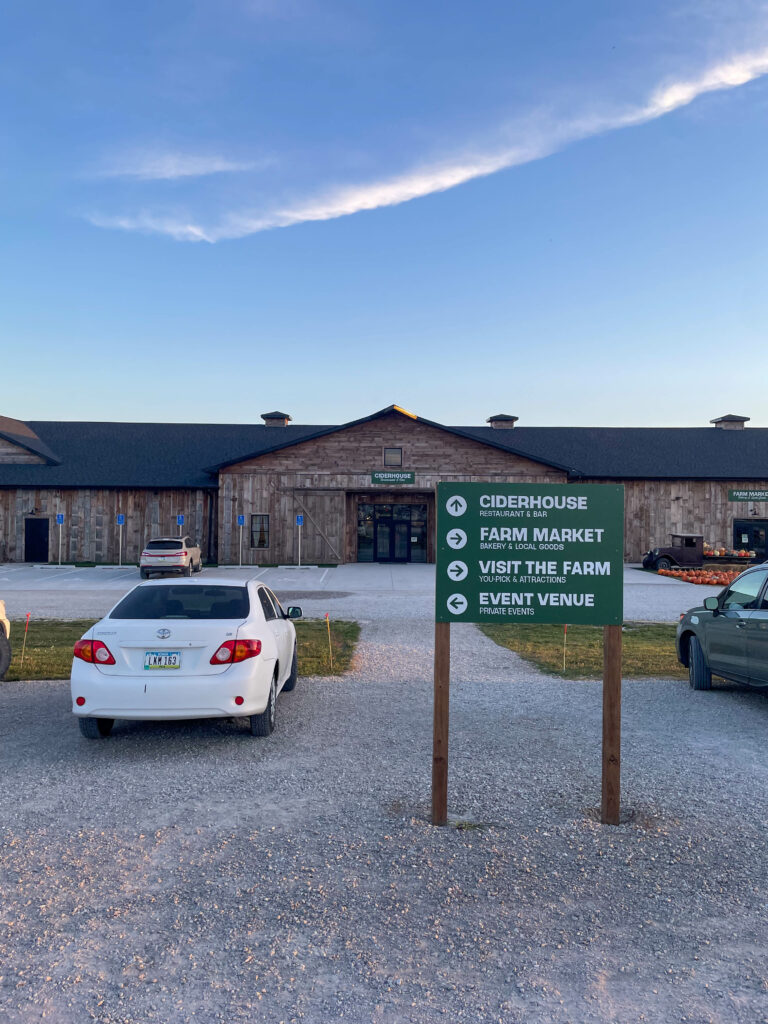
Wilson’s, founded in 1980, is a prime example of the potential of the farm-to-table model in the Midwest. Originally opened in Iowa City, they expanded in April, adding a second location in Cumming, Iowa — a small town about 30 minutes south of Des Moines.
McMeen said the Iowa City location sources ingredients from 15 different local farms in the Des Moines area, while the newly opened location in Cumming sources ingredients from two farms in the region with plans to add more soon. In addition, Wilson’s plans to begin growing ingredients on their own farm in the coming years.
“Our long-term vision is that we’re growing a lot of the food ourselves,” McMeen said. “It’s about utilizing our land in the best ways possible: crop rotation, soil management, and making sure that we’re leaving open space for pollinators.”
Methods and Results
Put simply, farm-to-table restaurants result from customers wanting a more eco-friendly alternative to the processed food served in many fast-food and fast-casual restaurants nationwide.
These restaurants achieve this through their operating methods, which can vary from restaurant to restaurant. Some farm-to-table restaurants have their own farms on-site that produce the ingredients used in their menus, while others source their ingredients from independent farms nearby.
The transportation of ingredients is the key to this increased sustainability. For fast-food restaurants, transportation is a long, costly process that harms the environment. Thanks to their use of local ingredients, farm-to-table restaurants do not share this same concern.
According to a 2023 study on farm-to-table practices featured in the International Conference on Business and Technology, the use of local ingredients in this model helps to reduce the carbon footprint associated with transportation.
At farm-to-table restaurants, the increased availability of fresh ingredients enhances the dining experience for customers and the culinary process for chefs.
Multiple studies, including one from Ohio State University, have found that in restaurants with fresh, local ingredients available, the dining and culinary experience for chefs and customers improved compared to restaurants serving processed food.
Beyond higher quality ingredients, one explanation for this phenomenon is the ability these restaurants have to vary menus based on what crop is flourishing at different times of the year.
So far, at Wilson’s Cumming location the menu has been changing around every four weeks. However, according to McMeen, the ideal amount of menu changes for Wilson’s is around every eight weeks.
“We would be doing a real menu change so that we’re able to make more meaningful changes,” McMeen said. “This would allow our farmers to kind of dictate our menu, as opposed to trying to source a new farm every time that one’s out of tomatoes.”
Wilson’s customers have responded very positively to these changes.
“You’d be shocked at the amount of customers that come back just to see what changes have been made to the menu,” said Hailey Grotluschen, a server at Wilson’s.
These restaurants, through their commitment to authenticity and transparency in the food sourcing process, create and foster a sense of community between restaurant and customer.
Community and Challenges
Following the opening of their location in Cumming, Wilson’s is still seeking to make a name for themselves in the busy Des Moines restaurant scene.
“The amount of support we’ve gotten from our local community has been really great,” McMeen said. “But we know that there are leaps and bounds to make, and that’s one thing that I’ve learned since joining this company: farming is such a long-term vision.”
This sense of community could signify a positive change in the way consumers interact with restaurants. According to a study by the International Journal for Multidimensional Research Perspectives, the traceability of farm-to-table restaurants creates a high level of trust between restaurants and consumers.
It is possible that an industry shift towards farm-to-table restaurants could replace the bleak, algorithm-focused corporation-to-consumer interaction with a restaurant-to-consumer interaction based on shared values, transparency, and trust.
However, this model has its challenges. Most prominently, the cost of sourcing from local farms instead of large-scale distributors creates a need to increase the prices of menu items, often to a degree the average consumer cannot afford. Therefore, these restaurants risk becoming a destination almost exclusively for those well-off enough to afford them.
When discussing the difficulty of keeping prices low at Wilson’s, McMeen offers a potential solution: instead of using more expensive cuts such as chicken breasts, they use chicken thighs. They also use locally sourced ground beef and slightly smaller portions to keep prices down.
“You can use local toppings and local ingredients in a really effective way without it having to be a full entree-size portion of something, so it doesn’t have to impact your costs the same way as if you were putting a 12-ounce steak on the menu,” McMeen said. Innovative methods like these are the key to the continued growth of the farm-to-table restaurant.

Overall, it’s hard to gauge how successful farm-to-table restaurants will be going forward. However, thanks to the combination of an increasingly environmentally aware public and an innovative, problem-solving approach by restaurant staff, it is not difficult to envision a future in which farm-to-table restaurants are a staple of the food industry, not just in the Midwest but across the country.
“It’s about conscientiousness,” McMeen says. “It’s about spending your money to help your community thrive, and I think we’ll see more of this conscientious decision-making and a lot more farm-to-table restaurants thriving in the future.”